


Thousands of doctors and nurses have left state health facilities, sparking fears the public system cannot support the NHI.
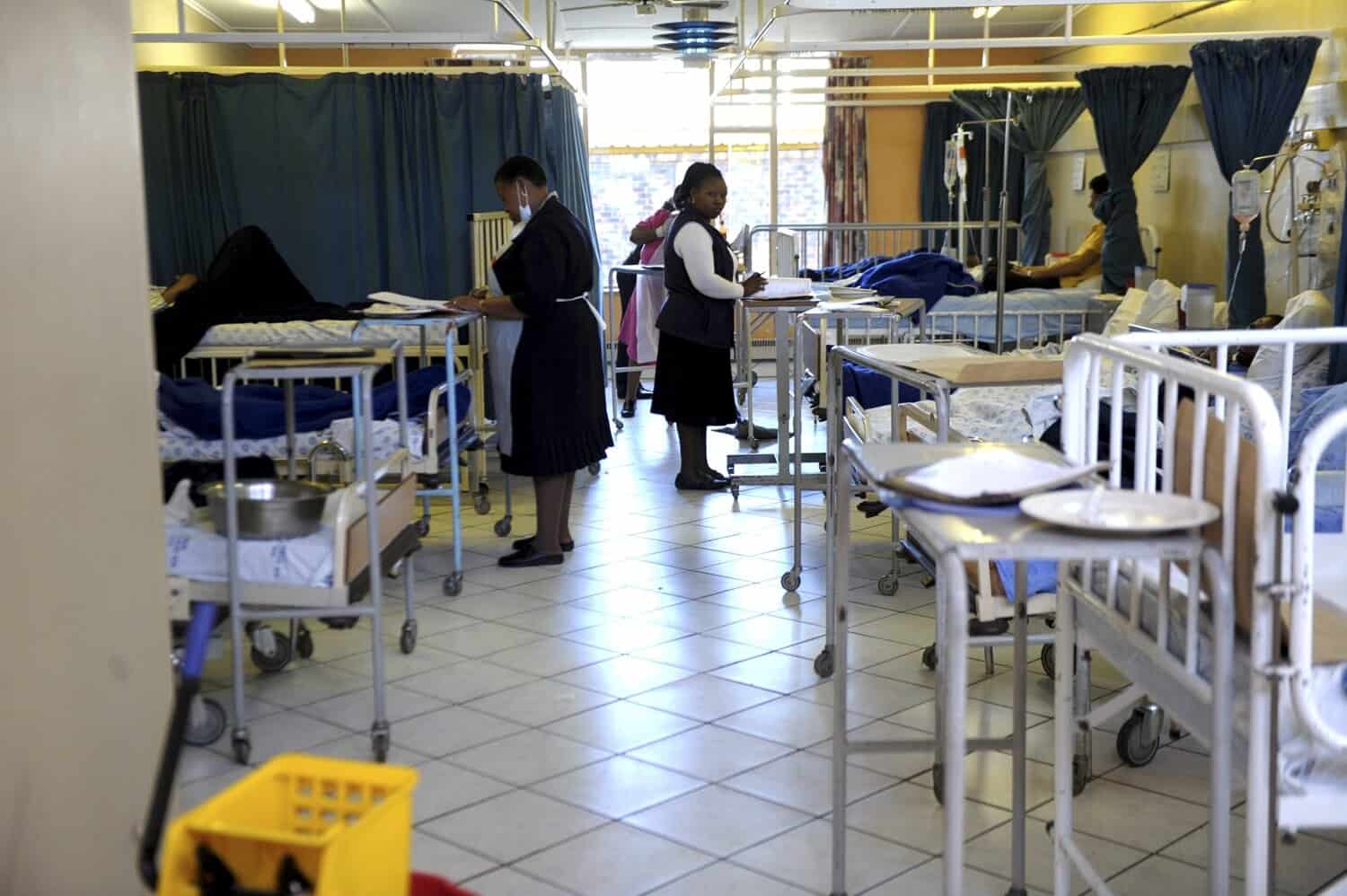
Nurses do their morning rounds at the Tshepong Hospital in Klerksdorp. Experts have expressed their concerns over the exit of specialist staff from government hospitals. Pictures: Gallo Images


If the department of health does not create a conducive working environment, specialist doctors and other practitioners will keep on moving to the private sector, say experts.
And the exodus could affect the National Health Insurance (NHI), medical experts have warned.
The experts were commenting on recent reports that specialist doctors were continuing to resign from the government hospitals to join the private sector.
Health department lost 12k doctors
Statistics from the national department of health revealed that between 2013 and this year, it lost about 12 745 doctors.
It further revealed 58 897 nurses, 1 341 pharmacists and 23 941 administrative personnel resigned during the same period.
Health expert Dr Atiya Mosam said the escalating resignation of specialist doctors from the public health sector was a warning of a system under strain, driven by frozen posts, austerity measures and increasingly heavier workloads for junior staff and specialists that remain in the system.
ALSO READ: ‘Drowning in the paperwork’: Inside a doctor’s breaking point
Mosam said this threatens the quality of care, worsens inequities between the public and private sectors and undermines clinical supervision and specialist training.
“The NHI depends on a functional public health system with adequate specialist capacity to support referral pathways, clinical governance and continuity of care, and this crisis underscores the urgent need to strengthen primary health care (PHC) as weaknesses in PHC means that many patients are reaching specialists for conditions that should have been prevented, detected earlier, or managed at PHC level, unnecessarily overburdening specialist services,” said Mosam.
“This will reduce avoidable hospital demand, allowing specialists to focus on complex care. Therefore, we need decisive action to retain specialists while simultaneously investing in PHC.”
Specialist doctor exodus not isolated incident
Mosam said the NHI was still in the making, hence the impact on doctors and what they decide to do was difficult to predict.
SA Medical Association (Sama) CEO Dr Mzulungile Nodikida said the recent departure of multiple cardiologists and ear, nose and throat specialists from Chris Hani Baragwanath Hospital was not an isolated incident.
Nodikida said the exodus reflected a deepening systemic crisis on a national level in the public health system that has been allowed to persist for far too long, with devastating consequences for patient care, training platforms, and the long-term sustainability of specialist services.
ALSO READ: Specialist shortages could derail NHI rollout
“Sama is unequivocal that this exodus is driven by chronic failures in workforce planning and management. Doctors continue to face intolerable working conditions characterised by severe staff shortages, unfilled funded posts, crumbling infrastructure, excessive workloads, delayed or disputed overtime payments, and remuneration that has steadily declined in real terms.”
“These conditions have eroded morale and made retention of highly skilled professionals increasingly impossible, despite repeated warnings from the profession.”
Nodikida has called for urgent and decisive action from both provincial and national health authorities.
Immediately fill critical specialist posts – Sama
The organisation stated that the action required from the government must include the immediate filling of critical specialist posts, stabilisation of employment conditions, strict adherence to commuted overtime agreements and genuine engagement with health care professionals to develop a credible and sustainable retention strategy.
“Failure to act decisively will further weaken the public health system and place the health and lives of South Africans, particularly the most vulnerable, at unacceptable risk.”
Nodikida said the ongoing exodus of specialists from the public health sector poses a serious and direct threat to the implementation of the NHI.
ALSO READ: KZN Health Dept announces 270 new doctors and nurses posts
According to him, NHI was fundamentally dependent on a stable, adequately staffed and skilled health care workforce to deliver services equitably across the system.
He added that when experienced specialists leave state hospitals, service capacity is weakened, waiting times increase and clinical outcomes deteriorate, all of which undermine the very objectives of NHI.
“A financing framework, no matter how ambitious, cannot succeed in the absence of the human resources required to translate policy into care at the facility level.
‘Financing framework cannot succeed in absence of human resources’
“This trend also exposes a critical sequencing problem in NHI implementation. Large-scale health system reform cannot be built on an unstable foundation.
“The current inability to retain specialists signals unresolved governance, management and working-condition failures that must be addressed before expanding purchasing, contracting and accreditation under NHI.
“Without stabilising the workforce and restoring confidence among health care professionals, NHI risks becoming an administrative exercise that promises universal access on paper while falling short in practice.
ALSO READ: Health care crisis: SA loses nearly 6 000 doctors and nurses a year
“Furthermore, the loss of specialists from academic and tertiary hospitals undermines training platforms that are essential for producing the next generation of doctors needed under NHI.
“If training capacity continues to erode, South Africa will face an even deeper skills shortage in the medium to long term, making universal coverage increasingly difficult to achieve. In this context, retaining health care professionals is not optional or secondary to NHI; it is a prerequisite for its success,” he added.
Dr Jack Bloom, the DA’s spokesperson for health in Gauteng, said the loss of specialists is devastating to the health service.
Devastating to health service
“This is due to appalling mismanagement and corruption in all health departments, except the Western Cape. It is yet another reason why the NHI will fail unless it is drastically revised.”
Bloom said the NHI was unlikely to happen soon, as there was no funding for it. He, however, said if it was implemented, many doctors would emigrate as they would not want to work in an inefficient and corrupt system.
Positive Women’s Network health expert Lindiwe Mahlangu said the exit of specialists can lead to understaffing, overcrowded hospitals and disparities in access to quality medical care.
ALSO READ: Burned out and breaking: Doctors battle mental strain in silence
“This brain drain can pose challenges to the effective implementation of NHI, as there may be a shortage of skilled medical professionals to support the system. This can lead to increased pressure on the remaining health care workers, affecting the quality of care provided to patients.”
Mahlangu said to address the challenges, the government needs to improve the working conditions before the implementation of the NHI.
Support Local Journalism
Add The Citizen as a Preferred Source on Google and follow us on Google News to see more of our trusted reporting in Google News and Top Stories.

