

UPL chemical disaster case heads to court
The warehouse was set alight during the July unrest on July 12, 2021.
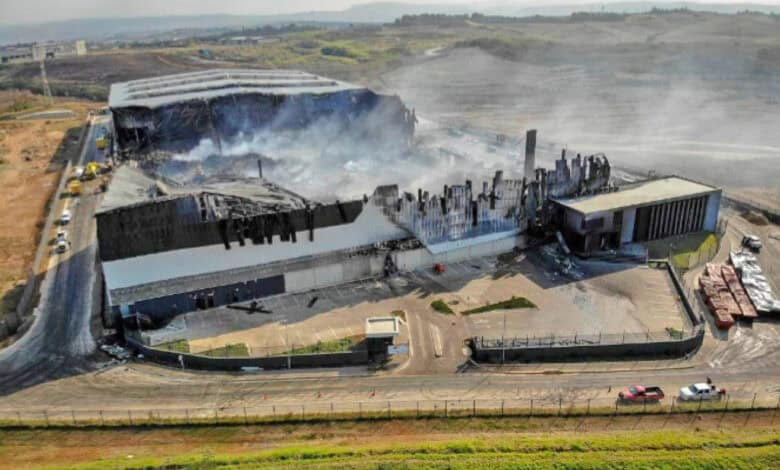
Five years after the UPL chemical disaster caused widespread environmental damage along parts of the North Coast, the company and three of its directors are facing criminal charges.
United Phosphorus Limited SA (Pty) Ltd (UPL) and directors Marcel Dreyer (60), Jan Jonathan Botha (71) and Paul De Gryse (50) appeared in the Durban Regional Court on Wednesday, September 30, facing criminal charges linked to the 2021 fire and chemical spill at the company’s Cornubia warehouse. The warehouse was set alight during the July unrest on July 12, 2021.
The charges are brought under the National Environmental Management Act and an eThekwini Municipality by-law and include allegedly operating a facility for storing dangerous goods without environmental authorisation, causing significant pollution or degradation to the environment and storing hazardous substances without written permission from the municipality.
ALSO READ: Court weighs class action bid against UPL over 2021 chemical spill
The first two charges each carry a maximum penalty of a R10-million fine, 10 years’ imprisonment, or both. The third carries a maximum fine of R100 000, two years’ imprisonment, or both.
The State alleges the company did not have adequate measures in place to contain contaminated water or deal with a chemical fire which caused about one million litres of water from the warehouse’s fire-protection system, mixed with hazardous chemicals to flow into the Ohlanga tributary.
The resulting pollution caused severe environmental damage, including fish deaths, dying vegetation, contamination of watercourse sediment and possible groundwater contamination.
According to the State’s case, the arson did not absolve the accused of responsibility for the conditions at the warehouse. It argues that the environmental damage was not caused by the fire alone, but was also linked to the accused’s failure to have reasonable safety and containment measures in place.
Documents before the court state that the warehouse was built before UPL became the tenant, but the State alleges UPL later turned it into a dangerous-goods storage facility, despite the property’s environmental approval requiring additional permission for such use. A government compliance investigation after the disaster found that UPL did not have the required environmental authorisation before establishing its Cornubia operations.
Last Wednesday, the State filed its response to the defence’s previous request for further particulars and the case was adjourned to December 4 for any interlocutory applications or, alternatively, a pre-trial conference.
Stay in the loop with The North Coast Courier on Facebook, X, Instagram & YouTube for the latest news.
Mobile users can join our WhatsApp Broadcast Service here, or if you’re on desktop, scan the QR code below.