

People have a morbid curiosity about murders, the gorier the details, the greater the interest.
But what happens after a crime has been committed and the police have taken their evidence and left the blood smattered scene and often a traumatised family?
The crime scene has to be cleaned up which is not a job for the faint-hearted.
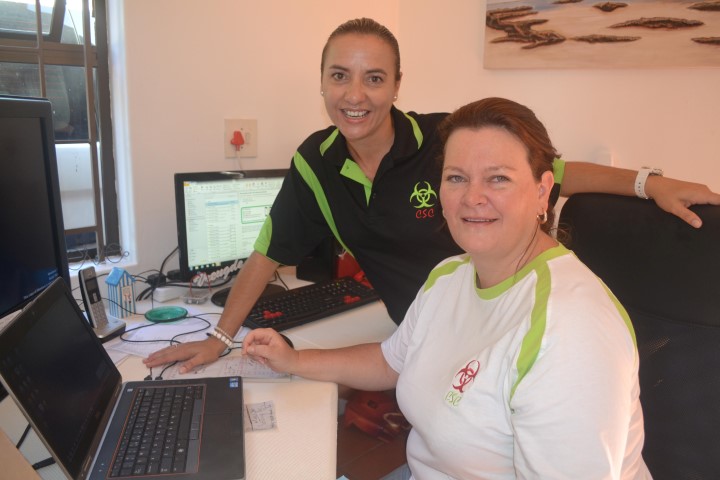
Enter two women with strong constitutions but whose compassion and empathy is palpable: Roelene Schutte and Eileen de Jager, aka the “Blood Sisters” – also the name of their first book.
If people do think about a crime-scene clean-up they usually imagine a team of workers armed with buckets and mops. Not the reality.
Only two people do it. “Too many people would spread the contamination and they are armed with specially designed chemicals, are fully suited and follow strict rules regarding the disposal of medical waste. The waste is in fact logged from a scene, to the truck, to the final destination where it is incinerated. It also has to be packaged a certain way,” said Eileen.
First things first
It all started when Rolene and Eileen went on a a working holiday in the United Kingdom.
A friend of an aunt was involved with crime scene clean-ups and suggested Eileen should apply. At first she was not interested, but the high pay was a compelling reason so she did it and Roelene joined her a bit later.
They had to undergo stringent training courses before they could begin work.
When they returned home they did their own thing, but soon realised that in South Africa there weren’t many people doing crime-scene clean-ups professionally and decided to set up business: Crime Scene Clean-Up.
Their first challenge to face was that decomposition takes place faster in the warm climate South African climate and they had to adapt their knowledge.
To decontaminate: clean up and disinfect a scene, they also had to source the right chemicals. “Household cleaners simply do not do the job, and industrial cleaners can be too harsh on furniture,” said KZN franchise owner and Ballito resident, Lina Collazuol.
So they got together with a biochemist to make the special chemicals needed.
“An area is not clean when all the blood is wiped away. Bacteria in blood can stay behind on a scene which is why cleaning is followed by deep disinfecting,” said Eileen.
“We also had to import protective overalls and extra-long gloves to protect themselves, rubber boots, safety eye-wear, respirators and special caps to wear while cleaning. Local outlets are now importing the correct suits from the United States.”

A tough, physical job
When they started, it was just the two of them doing all the work. But the demand increased to the point when they had to establish several franchises.
Eileen and her husband, Francois, are based in Ballito while Roelene and her team mate, Belinda Brand stay in Pretoria.
They say, generally speaking, women have an eye for detail and are therefore better cleaners. People chosen are strong-willed, must have compassion, be outgoing with no anger issues.
Their training obviously includes how the body decomposes. They also have to remove furniture, curtains and linen that
has been contaminated.
Sticklers for details and knowing how bacteria in blood can linger, they make sure every nook and cranny is cleaned and properly
decontaminated.
This work is labour intensive, not only the actual cleaning that tediously requires a few processes including spraying a degreaser and steam cleaning, but also moving the contaminated furniture.

Coping
But how do these women manage to do this macabre and grisly job?
They consider it a God-given career to make sure those confronted by death has someone to help them through it.
They often find themselves counselling those who are traumatised and grief-stricken and give hugs and dry tears before they start work.
Their faith plays a huge role and they feel angels protect them.
“We often feel the oppressive atmosphere of a scene, especially where brutal murders have taken place, and sense the evil. Then we begin with prayer,” said Eileen.
Eileen insists their work is a ministry for few can stomach this job without God’s help. “But someone has to do it and we do it respecting the dignity of the deceased and their families.
They clean up the scenes where suicides, and crimes like armed robberies and farm murders have taken place or where people have died of natural causes but are only discovered long after decomposition has progressed.
The high from the adrenaline which is ignited at the first phone call keeps them going.
They also clean up after industrial accidents and decontaminate illegal drug labs which can stay toxic for up to 15 years depending on the chemical used.
“We clean up and disinfect hoarders’ homes, said Lina. “We work with a psychologist in this case.”
The scenes they find most traumatic are where children are involved and the malicious and brutal farm murders.
They have had to clean up some strange places like a nudist farm where they were expected to also go nude so as not upset the guests. Which they point blank refused to do.
Knowing that they makes a huge difference in people’s lives, keep them going. This job may appear to require only cleaning, but you need nerves of steel, knowledge of chemistry, the law and regulations. They are also accredited by most insurance companies.
WATCH: video of Lina explaining the necessity of professional crime-scene cleaners.
Their two books: Blood Sisters and Flesh and Blood is an interesting exposition of their work and experiences such as the sleuthing skills they have developed as they can “read” a crime scene pretty accurately and have often pointed out suspicious circumstances to the police.
Fascinating facts
· Doctors record the time of death when the heart stops beating. That is the moment one loses consciousness and the muscles relax completely.
· Brain cells remain alive for a further three to seven minutes.
· During the 24 hours after death: the skin loses its elasticity, blood sinks due to gravity, lactic acid is released into the muscles, bacteria in the human stomach multiply at great speed.
· The whole body liquefies eventually due to chemical reactions and bacterial sand insect activity.
· High volumes of preservatives in modern day food processing greatly influence the speed at which decomposition takes place.
Do you want to receive news alerts via WhatsApp? Send us a WhatsApp message with your name and surname to 061 718 4438.
Please read our WhatsApp broadcast list disclaimer.
Join us on BBM at 59015786
Join the conversation on Facebook, Twitter and Instagram.
Stay in the loop with The North Coast Courier on Facebook, X, Instagram & YouTube for the latest news.
Mobile users can join our WhatsApp Broadcast Service here, or if you’re on desktop, scan the QR code below.