

The journey of electricity down the wire
For the electricity to be transmitted safely and efficiently, it must be at a high voltage (pressure) and a low current.
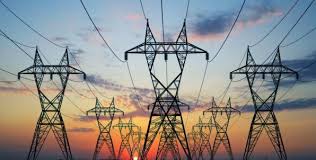
When you next switch on the electric light, kettle or the television, stop to think for a moment of all the work which has been done to generate (make) electricity and to get it to your home. Eskom explains.
Power stations all over South Africa are linked by transmission lines and towers called pylons.
Transmission lines send the electricity through thick aluminium and copper wires.
The network of transmission lines is called the National Grid.
In order for the electricity to be transmitted safely and efficiently, it must be at a high voltage (pressure) and a low current.
This is because if the current is too high, the cable would heat up too much and even melt and if the voltage were too low, hardly any energy would be carried.
Remember that we need the pressure volts to enable us to transmit electricity over vast distances.
The generators in the power stations produce electricity at 20 000 volts.
This voltage is raised or transformed before it is sent out at 132 000, 275 000, 400 000 or even 765 000 volts onto the transmission grid.
These very high voltages are necessary to push the required flow of electricity through the wires and keep costs down.
The electricity is transformed down to 11 000 volts for local distribution and then further reduced according to the need – for example, 240 (220) volts for domestic use.
The electricity entering your home at 240 volts has had an eventful journey – from the initial high voltage transmission grid to a lower voltage distribution network.
Travelling over ground and (probably) underground for many kilometres, it has been transformed many times on the way.
You’ve probably seen some of the equipment, which performs these operations in your local area.
They are known as substations, which can be found in many sizes – small transformers mounted on wooden poles, larger transformers sitting behind high fences and huge arrays of strangely shaped devices on sites occupying several hectares.
Do you want to receive news alerts via WhatsApp? Send us a WhatsApp message with your name and surname to 061 718 4438.
Please read our WhatsApp broadcast list disclaimer.
Join us on BBM at 59015786
Join the conversation on Facebook, Twitter and Instagram.
Please don’t send an SMS
Stay in the loop with The North Coast Courier on Facebook, X, Instagram & YouTube for the latest news.
Mobile users can join our WhatsApp Broadcast Service here, or if you’re on desktop, scan the QR code below.