

Christmas is a time for giving…blood
The life of the person who receives blood depends on the honesty of the donors who have given their blood.
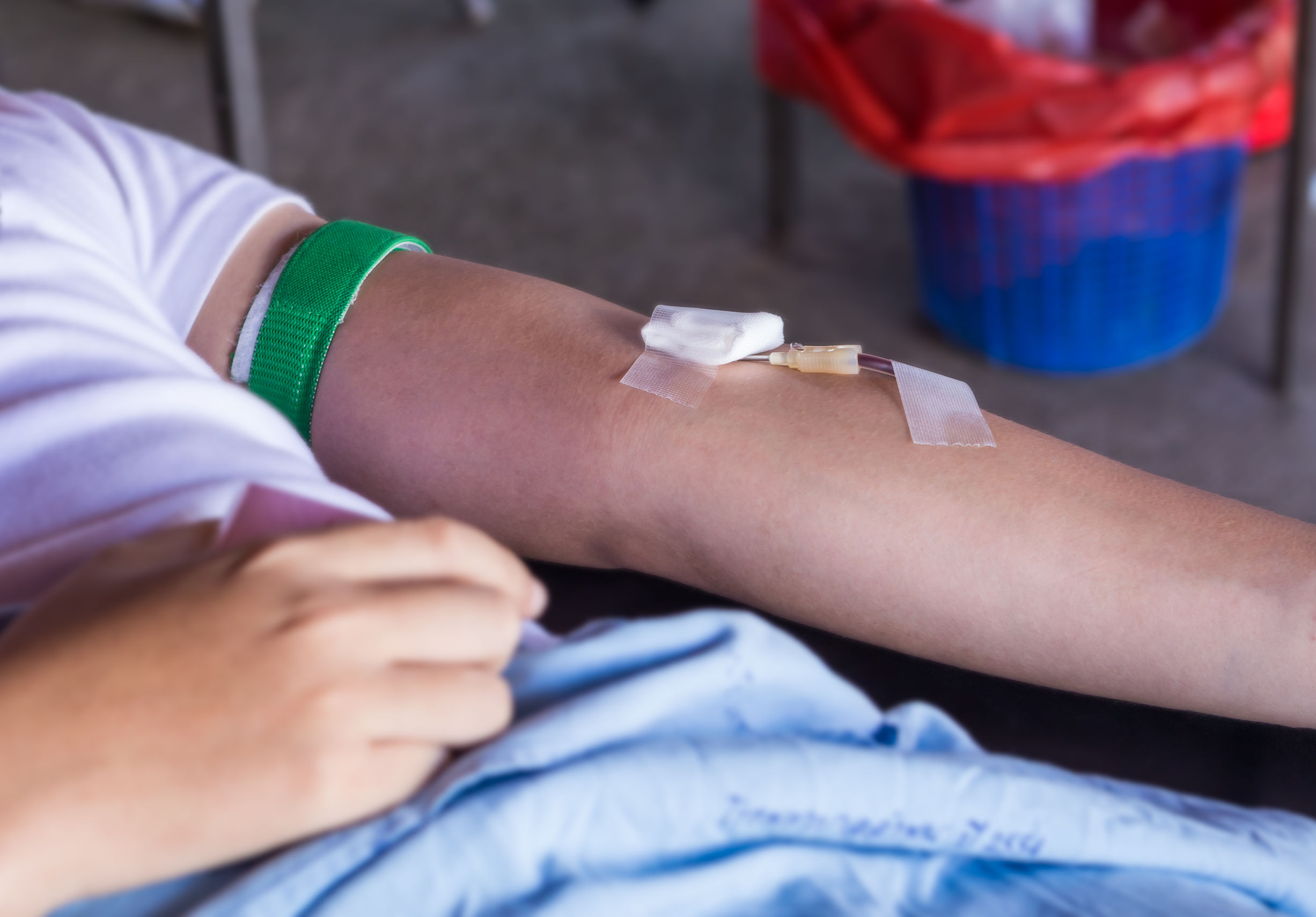
For many in need of a blood donation, finding that perfect match isn’t always easy.
It goes far beyond blood type.
That is why every person who donates blood is unique and special.
Your blood could be one of a kind.
Blood donors can be the single person of the seven billion on the planet needed to save another human life.
Inspire and motivate your friends to donate blood and help them realise the profound impact they can have on someone’s life.
The South African National Blood Service hosts a blood clinic every second Tuesday of the month at the Ballito Library from 10am to 6pm.
The next clinic is next week Tuesday, December 16.
Fact File: all you need to know about donating blood
A Unit of blood can save up to three lives
To meet the daily demand for blood, SANBS must collect an average of 3 000 units of blood a day.
When blood is donated a single “whole blood” donation may help as many as three patients.
Each unit of blood can be separated into it’s various components – red cells, plasma and platelets – and given to patients with different needs.
What’s more a unit of blood is also used to help advance the science of blood-related medicine worldwide if it is used for research purposes.
That’s because SANBS is one of the premier blood services in the world.
Frequency of donations and blood safety
The more regularly a donor donates, the more useful the donation will be.
Thus, the blood donated by regular donors, which is less likely to be in the infectious window period, will be used for the production of blood components, such as blood platelets.
Because blood lasts only 42 days after donation, regular donors are essential for sustainability and blood can be donated every 56 days.
Less than 2% of those who are eligible actually give blood.
The lives of all patients in need of blood and blood components depend on the generosity of our blood donors.
All 800 000 donations collected annually will go through the Nucleic acid Amplification Test (NAT), which is designed to detect the presence of very small quantities of the HIV and hepatitis B and C viruses through viral amplification technology.
This method significantly reduces the window period of infections compared to the laboratory tests that were previously used by SANBS.
What do I need to know about blood donation?
The decision to become a safe blood donor means that you commit to participating in a vital community service that ultimately improves the quality of life for many.
It is an honour to be able to help save lives, but not everybody can become a blood donor.
The SANBS has various measures in place to protect the health and well-being of both blood donors and patients.
These measures ensure that the blood supply is among the safest in the world.
To become a safe blood donor you must:
- Weigh at least 50kg
- Be between the ages of 16 and 65
- Be in good health
- Lead a sexually safe lifestyle
- Consider your blood safe for transfusion to a patient
- Commit to donating blood regularly
Do not donate blood if your lifestyle puts you at risk:
- If you’ve had more than one sexual partner in the past six months
- If you’ve had sexual contact with someone whose sexual background is unknown to you
- If you are a man who has had sex with another man in the past six months
- If you have or may have contracted a sexually transmitted disease (STD) such as HIV or syphillis, that can be passed on to a patient through your blood.
- If you have ever injected yourself with drugs
- If you just want to give blood in order to get an AIDS test
Donating blood is safe
You can’t get AIDS from donating blood.
All needles and fingerprick lancets are new, sterile and used only once.
After use, each lancet and needle is placed in a special medical-waste container and incinerated.
Trained staff collect all blood donations and very strict protocols are followed to ensure that all blood donation procedures are safe and hygienic.
The Window Period: What is it?
- When a person is first infected with the Human Immunodeficiency Virus (HIV), there are very small amounts of the virus in the person’s bloodstream. In spite of introducing state-of-the-art technology there is still a period in which the tests are not sufficiently sensitive to detect the virus in small quantities. The virus has to grow sufficiently and only then do laboratory tests become positive. Currently SANBS estimates this period to be between 5 – 10 days.
- The danger is that although a person tests “negative” during this period, the virus is still in their blood and it can be passed on to a patient through their blood donation.
- A person can be infected with HIV without knowing it through unsafe sex and other high-risk behaviours. This is why we ask people who have been involved in high-risk behaviour not to donate blood.

The blood service is not here to judge a potential donor’s activities, only to ensure that the blood supply is safe for the patient.
Where the blood goes:
Medical cases: eg cancer treatment 27%
Childbirth & gynaecological cases 26%
Surgical cases: eg cardiac surgery 21%
Paediatric cases: eg leukaemia 10%
Orthopaedic cases: eg hip replacements 6%
Research/laboratory 6%
Casualty: eg trauma patients 4%
What are the Main Blood Groups?
Chemical substances found on red blood cells determine blood groups.
The two most important blood group systems are the ABO system and the Rhesus (Rh) system.
Within the ABO system, people can be four types: O, A, B or AB. Within the Rh system, people can be either Rh positive or Rh negative.
Each system is inherited independently of the other and therefore there are eight main groups.
Distribution of Blood Groups among Blood Donors in South Africa.
| ABOGroup | RhPositive | RhNegative | Total |
| O | 39% | 6% | 45% |
| A | 32% | 5% | 37% |
| B | 12% | 2% | 14% |
| AB | 3% | 1% | 4% |
| Total | 86% | 13% | 100% |
Who are the safest donors?
Voluntary, non-remunerated (unpaid) donors who give blood regularly are the safest blood donors.
Research from many countries shows that people who give blood freely and without financial reward have little reason to conceal information about their lifestyle that may make them unsuitable to give blood, either temporarily or permanently.
Their primary motivation is to help other people and not to obtain any personal benefit, except the satisfaction of knowing they have helped to save a life.
The life of the person who receives blood depends on the honesty of the donors who have given their blood.
Where does my blood go?
Blood has many uses.
It is made up of red cells, white cells and platelets suspended in a clear straw-coloured fluid called plasma.
Contained in the plasma are vital soluble substances essential for good health.
These include clotting proteins, sugars and antibodies.
Common questions asked:
Why can’t I donate if I fail the copper sulphate (iron) test? Is there something wrong with me?
The test measures iron levels and if yours is already low a donation could make you anaemic.
This not only leaves you feeling unwell, but you will not be able to donate again for a long time.
The acceptance level is set above normal so that if you fail, it does not mean you are anaemic.
I am gay – why am I excluded as a blood donor? Do I not have a right to be a blood donor?
You are not excluded because of your sexual orientation.
The sexual act, not the sexual orientation, is the source of the potential risk in terms of blood transfusion.
Our criteria is only that you do not donate blood if you have practiced male to male sex in the past 6 months.
The 6 month deferral period is the same as it would be for a new hetero-sexual relationship, a tattoo or a piercing.
All of these deferrals are based on preventative measures to minimise potential HIV and/or Hepatitis transmissions.
Although blood is tested, the risk of a “window period” transfusion remains a possibility.
We are one of the most advanced countries in the world when it comes to accepting donations from the gay community.
In the case of blood transfusion, the right of a patient to the safest possible blood has to be balanced against the “right” to be a blood donor.
Blood donors need to qualify to donate blood and SANBS has a number of deferral markers in place to ensure the safety of the blood supply.

I’m on antibiotics but I’m feeling better today. Why can’t I give blood?
The antibiotics in your blood could affect the patient who receives it.
He/she may be allergic to that particular antibiotic.
Besides if you are on antibiotics, you cannot be in perfect health yourself and taking your blood is not advisable.
You must be off the antibiotics for at least two weeks and feel well before donating blood.
Is blood tested after each donation for HIV?
Yes, the blood is not only tested for HIV but also for Hepatitis and other sexually transmitted diseases using NAT testing.
Your blood type is also checked every time.
How soon will I replace the blood I’ve lost?
The fluid or plasma will be replaced within half an hour, when you have had something to drink such as a cup of tea or juice.
The red cells take longer, up to several weeks to be replaced.
Thus the limit of 56 days between donations.
How many pints (or litres) of blood do I have in my body?
Blood volume is dependent on body mass. About 80ml/kg body weight.
The larger the person, the more the blood volume. If you weigh 60 kg, you will have 60 x 80 = 4 800 ml blood which is 4,8 litres.
How much blood is taken at one time?
Between 450ml and 480 ml.
How long is blood kept for?
The red cells are stored in the refrigerator (between 1◦ and 6◦) for up to 42 days.
The platelets are kept for five days at room temperature.
The plasma products are processed in many different ways and are then stored, either at room temperature or in a refrigerator, for extended periods of time, up to 5 years.
SANBS is even able to freeze red blood cells in special circumstances, when the blood group is extremely rare.
Which are the rarest and most common blood groups?
The most common group is O Rh-positive and the rarest is AB Rh-negative.
The fact that most donors are the former means that most patients are also group O Rh-positive, so belonging to a common group makes you more valuable as a donor.
In addition group O blood, and particularly group O Rh-negative blood, is known as the universal blood type as it is compatible with all other bood types and is used for emergency transfusions.
Why must we have our finger pricked every time?
Everybody’s iron level/haemoglobin/red cell level varies according to their fitness, diet etc.
Thus SANBS needs to be sure at every donation that you are not short of red cells.
If you were, it would be wrong to take your blood and could cause you to become anaemic.
Can I donate blood if I’ve not recently eaten?
Not eating greatly increases your chance of having a reaction when you donate.
It would, therefore, be most unwise to take your blood.
You should not donate blood unless you’ve had something to eat within the preceding 4 hours.
Will I lose weight after donating?
No.
How long does it take to give blood?
It should not take more than 30 minutes of your time.
Once the actual donation has started, it should take no more than 10 minutes.
Will it hurt?
Your may feel slight discomfort when the needle goes in but once it is comfortably in place, there should be no further discomfort.
Getting over the fear of the needle can be the greatest hurdle but it can save so many lives – so give it a try.
The patients’ need is greater than your fear.
Why do you sell my blood to the patient when I donate it for free?
No charge is made for the blood but SANBS charges a service fee which covers the cost of collecting, testing and processing it.
SANBS would go insolvent if we were not able to cover these costs.
SANBS is self funded and does not receive any subsidy from the goverment.

Do you want to receive news alerts via WhatsApp? Send us a WhatsApp message (not an sms) with your name and surname to 061 718 4438.
Please read our WhatsApp broadcast list disclaimer.
Join us on BBM at 59015786
Join the conversation on Facebook, Twitter and Instagram.
Stay in the loop with The North Coast Courier on Facebook, X, Instagram & YouTube for the latest news.
Mobile users can join our WhatsApp Broadcast Service here, or if you’re on desktop, scan the QR code below.