

Invasive plants: A woolly scourge
Originally from South America, the Bugweed or Solanum mauritianum has spread across South Africa and is a major problem
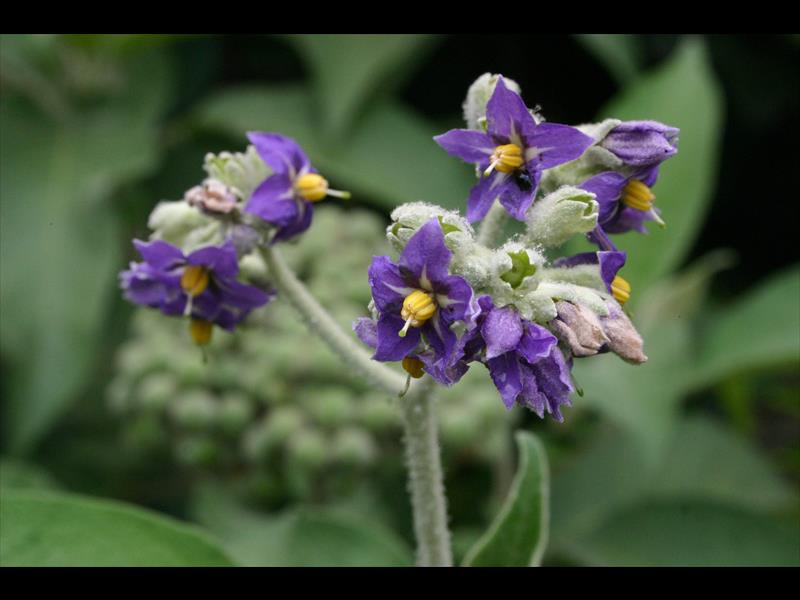
The struggle against invasive plant species is on to save the biodiversity of the KZN coastline.
Originally from South America, the Bugweed or Solanum mauritianum has spread across South Africa and is a major problem.
Bugweed is also called flannel weed or woolly nightshade in English; luisboom or groot bitterappel in Afrikaans; and uBhoqo or umbanga banga in Zulu.
For more on invasive plants click HERE
A shrub or small tree up to 4m high, Bugweed is covered with whitish-felty hairs and has dull green leaves that are velvety above and white-felty beneath and emit a strong smell when bruised.
It has purple flowers all year round in compact, terminal clusters on the densely felty stalks up to 10cm long as well as spherical berries which start off green and turn yellow, also in compact terminal clusters.
The hairy leaves and stems are a respiratory tract and skin irritant and the unripe fruits are poisonous.
Aside from its danger as an irritant and poison, Bugweed competes with and replaces indigenous riverine and forest margin species. It is also a host to the KwaZulu-Natal fruit fly which is an economic pest.
It has no fodder value and the plants are generally avoided by grazing animals.
If you suspect you may have an invasive plant in your garden, contact the Dolphin Coast Conservancy’s Di Jones at 083 612 0859 for advice.
>> Ready to say ‘I Do’ on the Dolphin Coast? Meet the team ready to advise, help and deliver on your big day.
>> Visit our Education feature for a collection of all the best schools, tutoring systems, and even some colleges and training facilities on the North Coast.

Do you want to receive news alerts via WhatsApp? Send us a WhatsApp message (not an sms) with your name and surname to 061 718 4438.
Please read our WhatsApp broadcast list disclaimer.
Join us on BBM at 59015786
Join the conversation on Facebook, Twitter and Instagram
Stay in the loop with The North Coast Courier on Facebook, X, Instagram & YouTube for the latest news.
Mobile users can join our WhatsApp Broadcast Service here, or if you’re on desktop, scan the QR code below.