

Invasive plants: Plants that suffocate life
Most of the invasive water plants in SA were bought for aquariums and fish tanks.

In recent weeks The Courier has run a series of articles on invasive plant species and their effect on indigenous ecosystems.
For the final installment we spoke to Prinavin Naidu, Stanger local and MSc (Master of Science) candidate from the Centre for Biological Control at Rhodes University, about invasive aquatic plants strangling SA’s freshwater ecosystems.
For more from our invasive plants series click HERE
“Freshwater is a scarce resource worldwide and of all the ecosystems present in South Africa, the country’s freshwater ecosystems are its most vulnerable.
“The continual increase in urbanisation, industrialisation, farming refuse and sewage in SA has contributed to nutrient enriched waters, which has led to the success of non-indigenous aquatic plants becoming invasive in the country,” said Naidu.
Naidu said most of the invasive water plants in SA were bought for aquariums and fish tanks.
“People then disposed of these plants in rivers, streams, dams or ponds.”
Most of the major floating aquatic weeds such as Water Hyacinth, Water Lettuce, Red Water Fern, Kariba Weed and Parrot’s Feather were introduced this way and have dominated freshwater ecosystems in SA since the mid-1900’s.
According to Naidu invasive aquatic plants are harmful because they form dense mats that impede waterways.
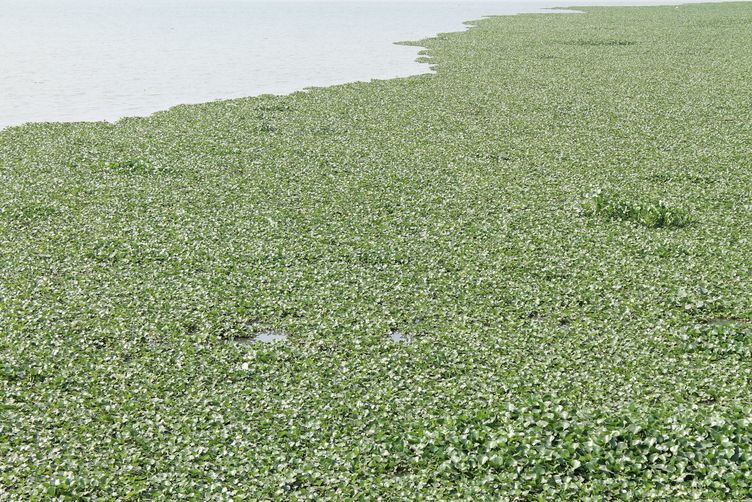
This prevents boats from accessing waterways but, more pressingly, also prevents oxygen from mixing with the water, affecting aquatic food webs and causing major declines in fish population at infested sites.
Presently all of the major aquatic invasive plants mentioned above are under control in the country with the exception of Water Hyacinth.
Naidu said facilities across the country continue to release biological control agents against the major aquatic invasive plants.
“In KZN alone numerous biological control agents continue to be released on Water Hyacinth, Parrot’s Feather and Water Lettuce at numerous dams, ponds and rivers, with successful control achieved in many of the infested sites.
“However, with the successful control of the major floating aquatic weeds, the newly open, nutrient rich waters are now affected by a new suite of invasive, submerged aquatic plants.”
Naidu said prevention was better than cure in reducing the risk of invasion, and reminded people that aquarium plants purchased from pet stores should not be disposed of in rivers, dams or ponds.
>> Ready to say ‘I Do’ on the Dolphin Coast? Meet the team ready to advise, help and deliver on your big day.
>> Visit our Education feature for a collection of all the best schools, tutoring systems, and even some colleges and training facilities on the North Coast.

Do you want to receive news alerts via WhatsApp? Send us a WhatsApp message (not an sms) with your name and surname to 061 718 4438.
Please read our WhatsApp broadcast list disclaimer.
Join us on BBM at 59015786
Join the conversation on Facebook, Twitter and Instagram
Stay in the loop with The North Coast Courier on Facebook, X, Instagram & YouTube for the latest news.
Mobile users can join our WhatsApp Broadcast Service here, or if you’re on desktop, scan the QR code below.