

The birth and history of Ballito Village
Rubenstein was a shrewd Johannesburg doctor with a history of township development, and after he spotted a smattering of beach houses along the Dolphin Coast, he could not be dissuaded from pursuing further development.

Ballito has a long and storied history, having grown exponentially in the 66 years since township status was granted in 1954.
Originally, Ballito was nothing more than commercial sugar-cane plots and natural bush, but that all changed when Eddie Rubenstein took an interest in the area.
Rubenstein was a shrewd Johannesburg doctor with a history of township development, and after he spotted a smattering of beach houses along the Dolphin Coast, he could not be dissuaded from pursuing further development.
With a crack team of Ashley Clive-Smith (property agent), Ray Paul (surveyor) and Jack Nash (marketing and advertising), the best laid plans began.
“We were on our way to visit Basil Townsend, the Squire of Compensation, and persuade him to sell off a portion of his vast sugar-cane estate for the development of a coastal township,” said Jack Nash in his book, ‘Ballito, The story of a township, 1953 – 1963.’
It was not all plain sailing, but eventually Townsend was persuaded to part with 200 acres of his land and Ballito was born.
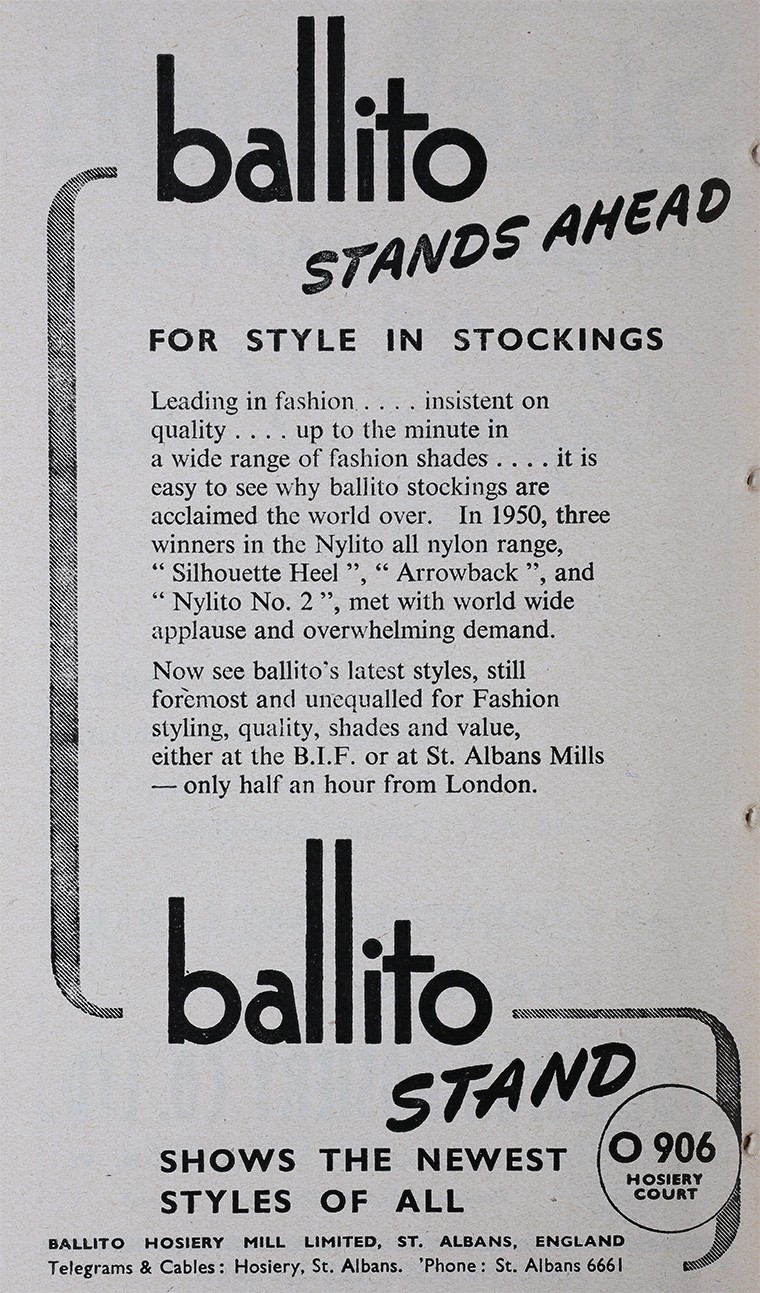
When talk began of naming the town, an advertisement for Ballito Hosiery in St. Alban’s, England, was spotted by Dr. Rubenstein.
“I saw him reach in the pocket of his jacket and bring out a page torn from a glossy magazine. I remember being rather amused to view a pair of shapely female limbs encased in the sheerest silk hosiery,” wrote Nash.
Though it was an inauspicious start, the name stuck and became the foundation for Nash’s first slogan, ‘Buy, build and play at Ballito Bay.’
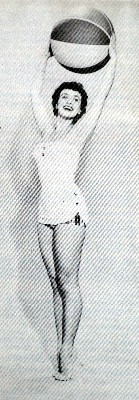
At the same time, Ballito was mistranslated as ‘small ball’ in Italian by Clive-Smith and a glowing model can be seen holding a ball in initial Ballito advertisements.
The inaugural road names in Ballito are borne from this same group of people who collectively kickstarted the growth of the township.
Edward Place after Dr. Rubenstein, Minerva after his wife, Ashley Place after Clive-Smith and Patricia, Lindsay and Roger for his family, Sandra Road for Ray Paul’s daughter and Ellis place for Nash.
With a grand plan in place, the real work had to begin and it took construction workers and foremen from Scottburgh to create roads to facilitate sales.
In just under a year, the team was able to electrify, supply water and provide roads for the quickly growing town.
The first advertisement in the Sunday Tribune was published in early 1954 with plots listed from £395 (R800), “on very easy terms.”
By November 1954, sales were booming in the town, and Nash recalled selling 70 plots on a single day.
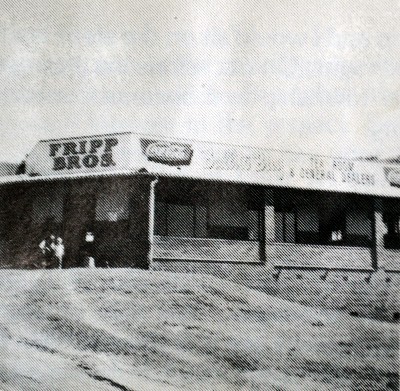
A number of the first houses were built by Reg Fripp and such was his contribution to the town that a running joke started, petitioning for the town to be renamed Frippville.
In the heart of Ballito Village, he is commemorated by Reg Fripp Place which runs past the Ballito KwikSpar.
The birth of the Ballito Village soon followed as a burgeoning town found the need for shops and amenities and the first shop was the Fripp Bros: Tea Room.
Today, Ballito Village continues to be a hub for local business, retaining its ‘small village’ charm despite now being a thriving town.

Stay in the loop with The North Coast Courier on Facebook, X, Instagram & YouTube for the latest news.
Mobile users can join our WhatsApp Broadcast Service here, or if you’re on desktop, scan the QR code below.