

Average South African’s budget to be crippled by record-high fuel price hikes
With rent, fuel costs, utilities and food totalling about R13 584.65 per month for the average South African, an average salary of R15 042 doesn't leave much room for necessities like car insurance, let alone your car installment.
Salary data from BankServAfrica’s Take-home Pay Index indicates that after tax, the average salary paid to an employee in South Africa is around R15 042 – meaning that on average it now cost you 8.42% of your salary to fill up your car.
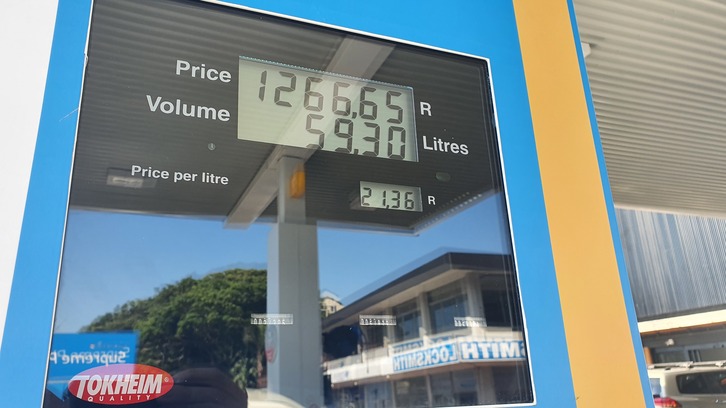
At present, it costs R1 266.65 in Ballito to fill your car’s tank just shy of 60 litres of petrol, and the Central Energy Fund (CEF) has indicated the country could be faced with another fuel increase of around R1.93 per litre in April, with diesel potentially increasing by as much as R3.00 per litre.

Exact fuel price increase figures are released at the end of the month and are regulated by the Department of Mineral Resources and Energy (DMRE).
If this fuel price increase comes to pass, expect to pay R1 381.04 for the same amount of fuel – 9.18% of an average income per month.
With that much going towards fuel, Local Real Estate’s Graham White says with the average small 1-2 bedroom apartment in Ballito going for between R7-8 000 per month, the cost of living will continue to rise sharply.
Expatica Communications, which provides vital information to migrants, lists average utility costs in South Africa as R1 700 per month, with the ‘moderate-cost healthy basket’ of groceries averaging R3 618 per month.
However, finance minister Enoch Godongwana on March 23 said government was in talks to ease the impact of an already record-high fuel price over the coming months.
It was noted that the interventions would be only temporary, while National Treasury and DMRE were considering long-term options.
Measures to ease the impact on the pockets of motorists were not specified, but immediate steps were possible for April and May in particular.
Under consideration for a long-term review were adjustments to the basic fuel price.
The Ukraine-Russian war has driven record high fuel prices in recent weeks, with specific concerns around supply as Russia is the world’s third largest producer of crude oil.
For breaking news follow The North Coast Courier on Facebook, Twitter, Instagram and YouTube.
Join our Telegram Broadcast Service at: https://t.me/joinchat/yJULuN8NaCs5OGM0
Join our WhatsApp Broadcast Service: Simply add 082 792 9405 (North Coast Courier) as a contact to your phone, and WhatsApp your name and surname to the same number to be added.
Stay in the loop with The North Coast Courier on Facebook, X, Instagram & YouTube for the latest news.
Mobile users can join our WhatsApp Broadcast Service here, or if you’re on desktop, scan the QR code below.