

Essentials for going off the grid
Standard Ballito households could save as much as 75% on their monthly electricity bill with solar energy, depending on other factors such as the space available to be used for solar installation.
Going completely off the electricity grid would likely cost you more than R350 000, but it could also protect you from facing an “uninsurable event” in the event of a total collapse of the national power grid.
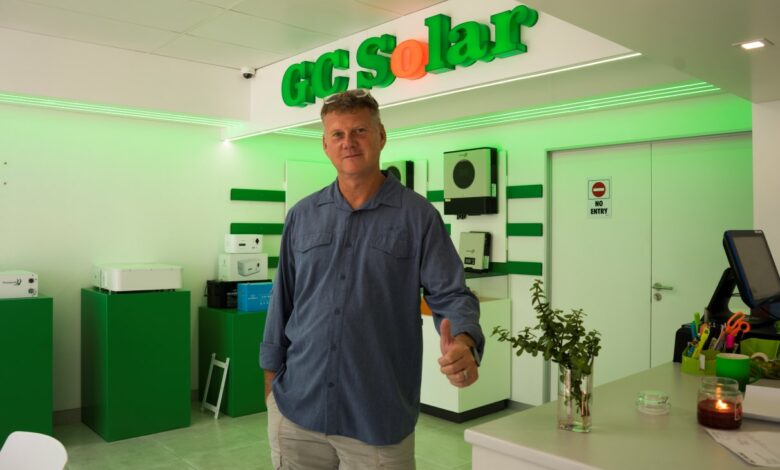
GC Solar Ballito’s Bernie Ruthven said on average equipping one’s home with a solar connection could cost between R150 000 to R350 000, but these systems generally still relied on some power from Eskom to run the power hungry stove, oven and geysers.
According to Ruthven, standard Ballito households could save as much as 75% on their monthly electricity bill with solar energy, depending on other factors such as the space available to be used for solar installation.
He said with Eskom’s growing issues around stable electrical supply, there was definitely a need for solar and other alternatives.
“This is not only because of Eskom and loadshedding however, but also because of a push to an eco-friendlier lifestyle and cleaner living,” he said.
Ruthven noted that ever since opening in 2013, they had seen a push specifically on the North Coast for cleaner energy alternatives, with demand for solar running high.
When you have solar installed there are two critically important factors to consider, a certificate of compliance and insurance.
The electrician who installs your system must comply with the rules and regulations to ensure a safe installation.
If you do not have a certificate of compliance, you cannot prove that reasonable precautions were taken during the installation, which could see insurance companies refusing to pay out for damages, or in the worst case scenario, you could be held liable for injury or death as a result of something going wrong after the installation.
“As with all electrical installations, I would say human life and safety is the first and most important factor. If not installed properly, and safety measures were not adhered to, loss of life and property is a possibility,” Ruthven said.
When a home is sold, one must also be able to provide a certificate of compliance not older than two years. These certificates are always required before lodgment at the deeds office, with some banks even using experts to scrutinise these.
Recently several large South African insurers have changed the rules on how and when they will pay out after a electricity outage.
Many will no longer cover damages owing to the failure of Eskom’s power grid, because reinsurers (companies that provides financial protection to insurance companies) have refused to provide coverage to these companies in the event of a complete grid failure (what they are calling an “uninsurable event”).
To protect themselves, these insurance companies have introduced exclusionary clauses which exempt them from paying out claims which arise from electrical grid failure, not to be confused with standard loadshedding, but rather the collapse of the national power grid.
BetterSure, a home insurance provider, noted that claims relating to power surges shot up by 250% last year.
Claims are frequently submitted to insurers for appliances, easily damaged by the constant off and on switching after loadshedding, with power supply often taking time to stabilise after loadshedding ends.
Ruthven said installing an inverter was the best way to protect your home against surges and voltage spikes.
If going completely off grid is simply beyond your means, consider a hybrid system (solar power and battery storage with grid connection) which, according to the South African Photovoltaic Industry Association, ranges in pricing from
R95 000 to R190 000 depending on the quality of solar components and more. A typical hybrid system consists of 6kW solar PV panels, 5kW inverter and 10kW battery storage.
Follow The North Coast Courier on Facebook, Twitter, Instagram & YouTube for breaking news
Telegram Broadcast Service: https://t.me/joinchat/yJULuN8NaCs5OGM0
WhatsApp Broadcast Service: Add The Courier to WhatsApp at 082 792 9405 and WhatsApp your name and surname to be added.

Stay in the loop with The North Coast Courier on Facebook, X, Instagram & YouTube for the latest news.
Mobile users can join our WhatsApp Broadcast Service here, or if you’re on desktop, scan the QR code below.