

Siza Water concession agreement scrutinised
Allegations against Siza were levelled by municipal officials during a seminar hosted by the Vuthela iLembe Local Economic Development Programme earlier this month.
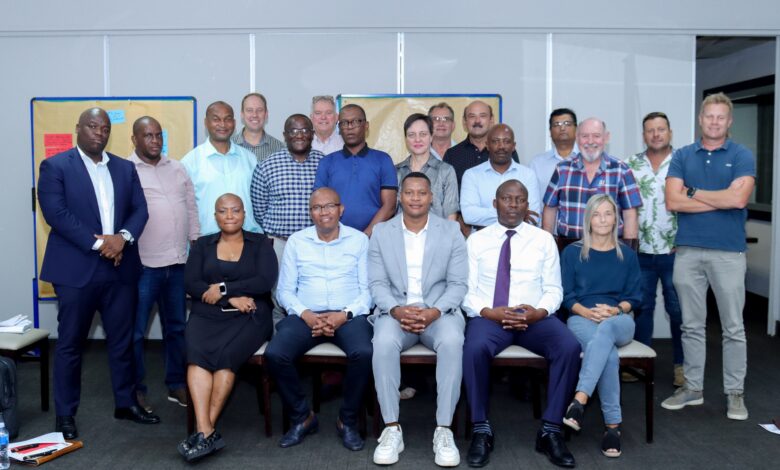
Siza Water managing director Shyam Misra has defended the company against allegations that it neglects the poorer communities in its concession area.
Speaking to the Courier, Misra said he felt confident that Siza was meeting all of the obligations and key performance indicators (KPI) set out within the concession agreement.
This after allegations against Siza were levelled by municipal officials during a seminar hosted by the Vuthela iLembe Local Economic Development Programme earlier this month.
Although the majority of delegates at the seminar spoke of the positive aspects of the pioneering public-private partnership (PPP), both Sikhumbuzo Hlongwane and Cingisa Mbola had some reservations.
Hlongwane is the executive director for Economic Development and Planning at KwaDukuza municipality (KDM), and Mbola is the senior manager for Technical Services at the iLembe District
municipality (IDM).
“PPPs perpetuate inequality and underdevelopment. Private sector investment in services tends to go into areas where the company will make money, but we have indigent areas which are a legacy of Apartheid,” said Hlongwane.
“How do we address this legacy of Apartheid – this is a big issue for us.”
While agreeing that the entirety of the concession area did not get the same level of service, Misra said Siza had invested more than R500-million in infrastructure and that all service levels were in line with the concession agreement.
“It is important to note that the concession agreement came about in 1999 because the then Borough of Dolphin Coast could not manage the service and infrastructure. The concession was put out to tender, it is not something that was pushed by private companies,” said Misra.
“Our KPIs are very specific and our performance is regularly reviewed by the IDM. If adequate service was not being delivered then the concession agreement would be terminated.”
Misra said the company would be open to discussing further investment, should it be viable.
“Ultimately we have shareholders we need to appease, but we are always willing to sit down and discuss legitimate suggestions. At the moment, the reason we are able to make profits is because we limit water losses, while procuring faster and cheaper than municipal processes.”
He said this was how they were able to absorb the increase in tariffs that Siza has been forced to pay to bulk water supplier, Umgeni Water, since 2021.
It was on the issue of tariffs for residents that Mbola cited what she believed were shortfalls.
She said the tariff structure was too high for indigent residents, while free indigent water provision of 10kl per household was not being delivered.
Mbola further indicated a need for a review of the profit share agreement between Siza and the IDM.
“The tariff structure is again mandated by the concession agreement, while the free indigent water provision was implemented after the concession agreement was registered. The 10kl is subsidised by national government through the IDM, from whom we claim for the provision,” said Misra.
As for profit sharing, the structure is clearly laid out in a supplementary concession agreement signed between Siza and the IDM in 2012.
Any gains beyond the 15% set out in the original financial modelling of the concession, are split equally between Siza and the IDM.
The 30-year concession agreement will lapse in just over six years in April 2029, and it remains unclear whether the municipality will seek an extension.
Per the majority of speakers at the seminar, including the acting chief director of the PPP unit in the provincial treasury, Kirsch Bezuidenhout, the agreement has been largely successful.
“It remains a shining example of how a well-managed PPP agreement should be, in spite of the difficulties arising along the way, as with any relationship. This PPP agreement could serve as a
blueprint for water and sanitation services across the country and it is a contract that KwaZulu-Natal should take pride in,” said Bezuidenhout.
Follow The North Coast Courier on Facebook, Twitter, Instagram & YouTube for breaking news
Telegram Broadcast Service: https://t.me/joinchat/yJULuN8NaCs5OGM0
WhatsApp Broadcast Service: Add The Courier to WhatsApp at 082 792 9405 and WhatsApp your name and surname to be added.

Stay in the loop with The North Coast Courier on Facebook, X, Instagram & YouTube for the latest news.
Mobile users can join our WhatsApp Broadcast Service here, or if you’re on desktop, scan the QR code below.