

End of an era for Tongaat Hulett Developments
As Tongaat Hulett Developments grapples with overwhelming debt, preferential creditors are likely to recover only seven cents in the rand, while unsecured creditors may receive nothing.
Tongaat Hulett Developments’ (THD) preferential creditors will only recover around seven cents in the rand should business rescue proceedings be successful.
Unsecured creditors – which are non-preferential creditors that do not hold collateral against the company – are unlikely to recover any funds.
This was revealed as part of the THD business rescue plan published last Friday, which provides an outline on recovery processes put in place by the company’s business rescue practitioners (BRPs).
THD, a subsidiary of Tongaat Hulett Limited, entered into voluntary business rescue at the same time as its parent company last October after it was discovered that skyrocketing debts could sink the operation without intervention.
Per the rescue plan, THD owes creditors R7.2-billion, while direct liabilities of R400-million put the company’s total debt near R7.6-billion.
“We realise this is a very difficult situation. We have therefore spent a significant amount of time since business rescue commencement evaluating opportunities where construction activities or property development projects could potentially continue with the support of THD’s post-commencement financiers,” said the BRPs.
Some work has continued in the interim by way of R100-million in post-commencement funding, but it has been at a lower volume.
The business model of THD has historically been that the development wing would purchase agricultural land from Tongaat Hulett to convert it for residential, industrial or commercial purposes.
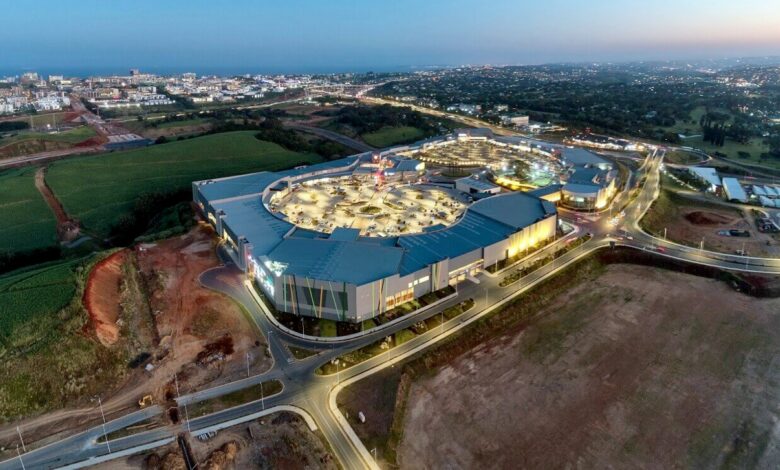
Large swathes of land on the North Coast were originally owned by and developed through THD, including many recognisable major developments such Zimbali Estate, Sibaya Precinct, Cornubia Mall and Mt Edgecombe.
Despite its past successes however, the company now faces an uphill battle to honour its debt obligations.
“The reality is that THD’s liabilities significantly exceed the value of its assets, which will only satisfy around 7% of creditor claims. In line with the Companies Act, secured creditors (in whose favour all THD’s assets are secured) rank highest in a business rescue.
“Due to secured creditors’ claims of around R7.2-billion and the limited funds available to THD, the payment of a dividend to unsecured creditors is unfortunately not possible,” said the BRPs.
The BRPs say that the 7% return is better than the projected 2.5% return that creditors would get if the company went into liquidation.
To better serve its creditors, THD plans to continue land development opportunities through third-party purchasers, while selling off its remaining undeveloped land.
This would allow projects already underway at the time of business rescue to be completed while retaining jobs and avoiding adverse effects on the KZN property market, said the BRPs.
“Where there is a direct short-term benefit to THD, the BRPs will aim to bring existing property developments to partial or final completion to optimise net sale cash inflows and/or avoid payment demands for bonds or guarantees.”
The completion of these processes will help the BRPs to wind down THD’s operations and it appears that once business rescue has concluded, THD will be shuttered.
It has set a bittersweet tone for creditors who now wait for the release of Tongaat Hulett’s business rescue plan at the end of this month.
Follow The North Coast Courier on Facebook, Twitter, Instagram & YouTube for breaking news
Telegram Broadcast Service: https://t.me/joinchat/yJULuN8NaCs5OGM0

Stay in the loop with The North Coast Courier on Facebook, X, Instagram & YouTube for the latest news.
Mobile users can join our WhatsApp Broadcast Service here, or if you’re on desktop, scan the QR code below.




