

Breast cancer on the rise among South African women in their 30s
Younger women are being diagnosed with more aggressive forms of the disease, underscoring the need for early detection.

Breast cancer, the most prevalent cancer among South African women, is increasingly being detected in women under 40.
This trend mirrors global patterns, where younger women are being diagnosed with more aggressive forms of the disease, underscoring the need for early detection and awareness.
A South African study reported that the average age of breast cancer diagnosis for women under 40 was 34 years. Across all ages, breast cancer affects 1 in 27 women in the country, accounting for 23% of all cancers diagnosed.
The Breast Imaging Society of South Africa (BISSA), a sub-specialty group of the Radiological Society of South Africa, warns that young women are more likely to develop breast cancers with aggressive biological characteristics.
These cancers often present with larger tumours and more advanced stages of the disease at diagnosis, making early detection vital for improving outcomes.
BISSA chairperson, Dr Peter Schoub, emphasises the importance of early detection through regular self-examinations, starting in a woman’s 20s, and annual mammograms from age 40.
“Awareness and education about breast cancer in young women can lead to earlier diagnoses and less invasive treatment options. The growing number of younger women being diagnosed highlights the need to expand awareness campaigns and improve screening programmes, especially for those at higher risk,” says Dr Schoub.
One of the biggest hurdles in South Africa remains the late-stage diagnosis of breast cancer, which severely limits treatment options and reduces survival rates.
Late diagnoses are often attributed to a combination of factors, including a lack of awareness, socio-economic disparities, and limited access to healthcare facilities.
“Although most major medical schemes offer free mammogram screenings for women over 40, only about 20% of women take advantage of this,” says Dr Schoub.
“We must also be mindful that breast cancer is increasingly being detected in women in their 30s, who experience more aggressive forms of the disease that can spread rapidly if not detected early.”
While breast cancer risk increases with age, the disease does not discriminate – women of all ages, races, and socio-economic backgrounds can be affected.
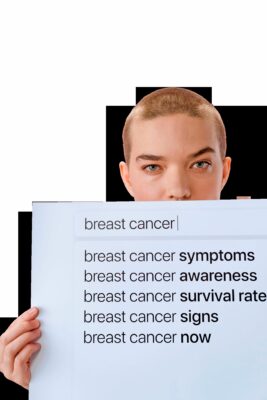
“This is why routine self-examinations and clinical breast checks by a healthcare professional at least once a year are essential. Any abnormality, regardless of age or family history, should be evaluated by a medical professional immediately.”
The goal of breast cancer screening is to detect the disease before symptoms emerge.
“Cancers found through routine screening are often smaller and localised, increasing the chances of successful treatment and survival. The size of the tumour and whether the cancer has spread are key factors in determining the prognosis.”
How to self-examine your breasts
The breast changes throughout the menstrual cycle, so it is important to always self-examine at the same time of the month, usually a week after your period when your breasts are less tender due to fluctuations in hormone levels.
Visual examination: Sit or stand, without clothing, in front of a mirror with your arms to your side and look for changes in size, shape, symmetry, puckering and dimpling.
Physical examination: Lying down so that your breast tissue spreads out making it easier to feel, or in the shower using soap to glide more easily over your breasts:
Use the pads of your three middle fingers, not your fingertips, to examine. Apply different pressure levels, light to feel the breast tissue closest to the skin, medium to feel deeper, and firm to feel the tissue closest to the chest and ribs.
Use a methodical technique such as beginning near the collarbone, then moving towards the nipples, in a clockwork fashion.
Allow enough time and don’t rush the examination.
Stay in the loop with The North Coast Courier on Facebook, X, Instagram & YouTube for the latest news.
Mobile users can join our WhatsApp Broadcast Service here or if you’re on desktop, scan the QR code below.

Stay in the loop with The North Coast Courier on Facebook, X, Instagram & YouTube for the latest news.
Mobile users can join our WhatsApp Broadcast Service here, or if you’re on desktop, scan the QR code below.