

High temperatures blamed for mass fish death at two beaches
Full testing results and chemical analysis are still pending.
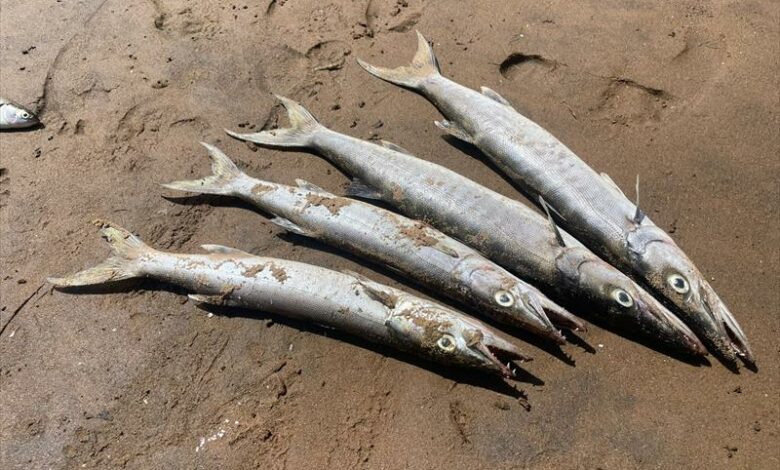
Thousands of fish washed up dead on local beaches in two separate incidents last week, prompting closures and urgent investigations by authorities.
The first die-off occurred at the Umhlali River estuary near Tinley Manor last Thursday, followed by a second at Chaka’s Cove tidal pool on Friday. Both beaches remained temporarily closed at the time of publication.
At the Umhlali River, barracuda, mullet, flathead and juvenile kingfish, along with crabs and shrimp, were among the aquatic species believed to have died overnight. Upstream, the river flows through Shakaskraal, passing several potential pollution sources, including informal settlements, an industrial area, illegal dump sites, illegal sand mining operations and a sewer plant.
Although the exact origin of the problem remains unclear, the die-off followed a thunderstorm that broke a three-week hot, dry spell during which temperatures consistently exceeded 30°C.
KwaDukuza municipality (KDM) spokesperson Bridget Shange confirmed that the municipality collected water samples for testing at an independent laboratory and that full chemical analysis was still pending. She said preliminary findings suggested elevated sea temperatures played a major role.
Ocean temperatures have hovered around 26°C in recent weeks, considered the higher end of the normal range for this time of year.
The second incident saw about 150 intertidal fish die in Chaka’s Cove tidal pool. Shange said initial assessments point to a combination of low tide, high sea and air temperatures and reduced oxygen levels.
Local ecologist Simon Bundy, who measured the pool’s temperature and oxygen level on Friday morning, agrees.
He recorded a water temperature of 30°C and a critically low oxygen level of 2.9%. By comparison, a bubbling stream typically measures 80-90% oxygen and other well-oxygenated sources around 70%. Bundy also discovered a layer of black, foul-smelling stagnant sand beneath the surface, indicating the pool had not been adequately flushed by tidal surges for some time.
Coral beds were also affected, with bleaching observed from Friday.
Dolphin Coast Conservancy chairperson Tessa Duane said it was an unfortunate loss.
“Fish can wash back in quickly, but the whole ecosystem in the tidal pool has been destroyed. It will regenerate, with favourable conditions we will get coral growth coming back, but it is got to start over again.”
Stay in the loop with The North Coast Courier on Facebook, X, Instagram & YouTube for the latest news.
Mobile users can join our WhatsApp Broadcast Service here or if you’re on desktop, scan the QR code below.

Stay in the loop with The North Coast Courier on Facebook, X, Instagram & YouTube for the latest news.
Mobile users can join our WhatsApp Broadcast Service here, or if you’re on desktop, scan the QR code below.