

Researcher tracks the unsual urban rise of woolly–necked storks in KZN
American researcher Dr Jonah Gula has focused on the movement and population ecology of African waterbirds, particularly long-legged waders such as storks, ibis, spoonbills, herons and egrets.
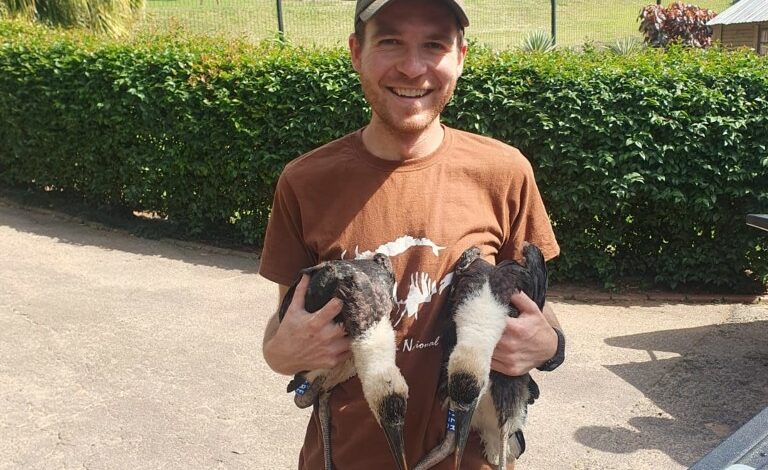
An 11-year study by American researcher Dr Jonah Gula is revealing how African woolly-necked storks have adapted to urban life in KwaZulu-Natal, with public sightings now playing a key role in tracking the species’ movements and survival.
Born and raised in San Diego, California, Jonah began working across southern Africa in 2015 and completed his PhD at the University of KwaZulu-Natal in 2025.
His research focused on the movement and population ecology of African waterbirds, particularly long-legged waders such as storks, ibis, spoonbills, herons and egrets.
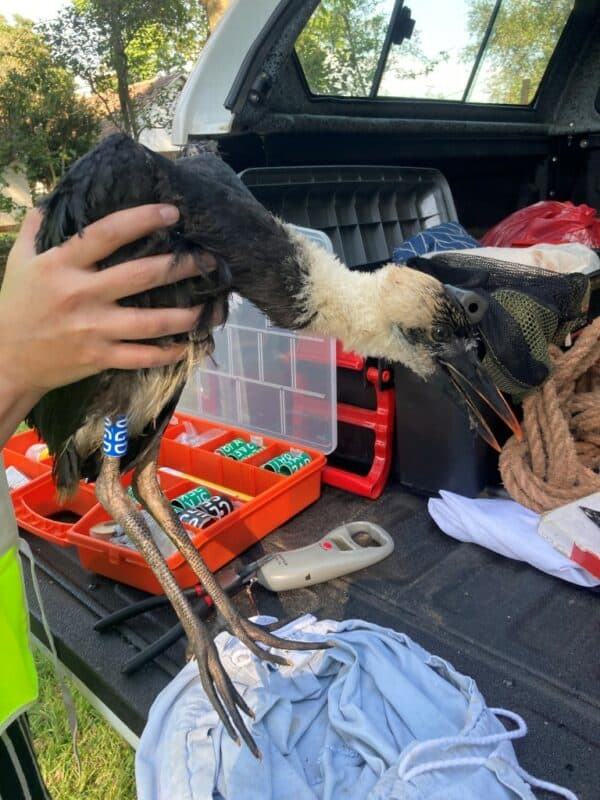
His doctoral study, Spatial Use of African Woolly-necked Storks (Ciconia microscelis) in a South African Mosaic Landscape, explored how the species has adapted to human-modified environments across KZN.
“Nowhere else in Africa are woolly-necked storks living in urban areas like they are here; it’s a unique situation,” said Jonah.
In the 1980s, only about 30 breeding pairs were recorded in KZN, but today the bird has become a familiar sight.
His project combined GPS tracking, nest monitoring and colour-ringing of nestlings across the province, including the North Coast. Over three breeding seasons, he colour-ringed young birds to study how far they move from their birth sites.
“This rapid rise to urban prominence is unprecedented for large waterbirds around the world, especially for a species that had always been described as shy and secretive, avoiding areas of human activity.”
While GPS tagging provides detailed movement data, colour-ringing allows for the long-term identification of individual birds. Jonah hopes to use public sightings of these rings to estimate juvenile survival rates.
One notable movement was recorded through a photograph uploaded to eBird, showing a tagged bird travelling from Kloof to Mtunzini.
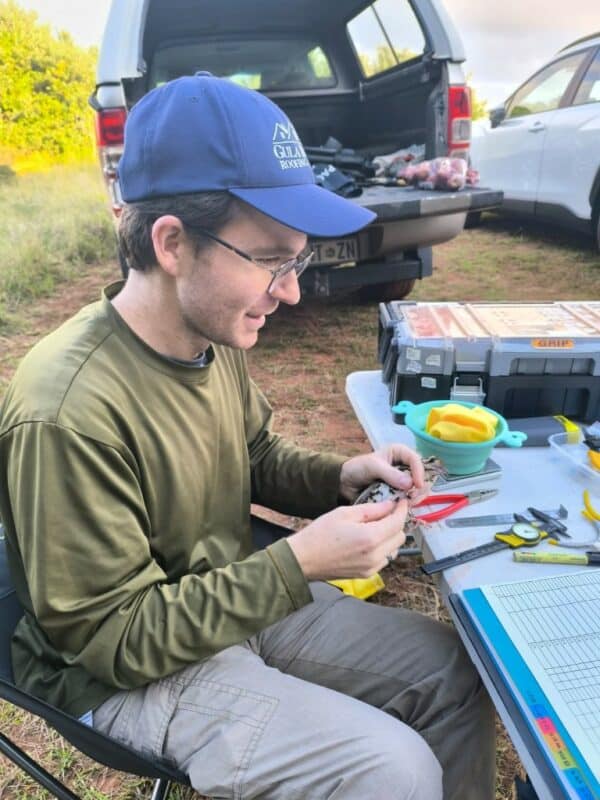
“I only saw the ring on an eBird photo because the observer didn’t know to report it. It’s a good thing I search eBird and iNaturalist every once in a while, but it shows how far some of the juveniles can disperse,” he said.
Although the study is nearing completion, further data collection is underway. Jonah has urged the public to report sightings of colour-ringed woolly-necked storks to support his research.
“It’s like a low-resolution way of tracking, but ultimately sightings from the public will allow us to estimate survival rates, which is something lacking for this species anywhere in Africa.”
If you spot a colour-ringed woolly-necked stork, contact Jonah on 071 190 0604.
Stay in the loop with The North Coast Courier on Facebook, X, Instagram & YouTube for the latest news.
Mobile users can join our WhatsApp Broadcast Service here, or if you’re on desktop, scan the QR code below.