

#Opinion: Stolen privilege, inherited advantage and the choice to stay
Guest columnist Warwick Chapman shares his experience of life in South Africa and why he is betting on unified potential rather than past pain.
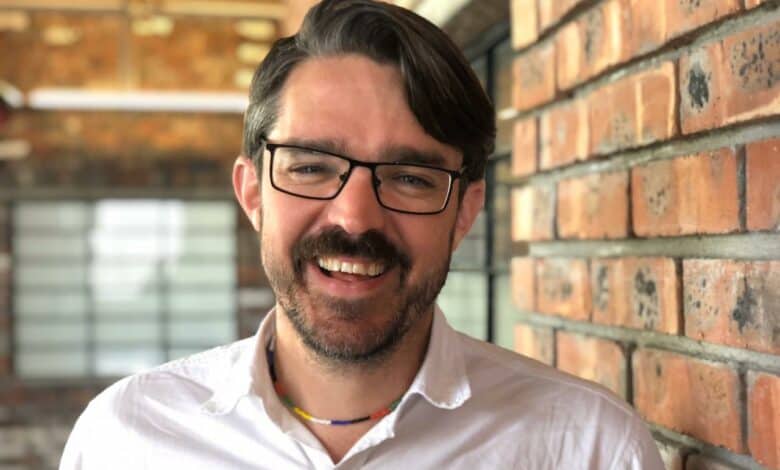
A Facebook friend recently used the phrase “stolen privilege” and it triggered me.
That’s usually a prompt for introspection. I’m 43 years old.
I was born white in apartheid South Africa. By definition, that meant I was born into privilege, certainly more so than the son of a black labourer or the daughter of an Indian clerk.
My parents arrived in South Africa from Zimbabwe after the war. My mother had lost her legs as a result of terrorism, and my father had been wounded seriously three times. They met in a rehabilitation hospital. It wasn’t just trauma they carried – it was loss, dislocation and the need to start over with nothing.
Within the white South Africa of the 1980s, we weren’t among the advantaged. We didn’t inherit wealth or status. Still, I had access to opportunities that others were systematically denied. I went to better schools, lived in safer neighbourhoods and had social mobility.
All of this was underpinned by the exclusionary architecture of apartheid.
Navigating a privileged path
For the last six years, I’ve been building a business that employs over 50 people, most of them black South Africans.
Through my 20s and early 30s, I built a technology company. For a decade between those businesses, I served as a public representative and official in a political party committed to strengthening our democracy. That work, too, was part of trying to build a better country.
For over 20 years now, I’ve been working to create value, provide jobs and grow skills in this country.
Did privilege help me along the way? Yes, in ways both visible and invisible. It helped with clients, with suppliers, with accessing networks.
But there have been constraints too. As a white-owned business without BEE compliance, we are effectively shut out of public sector and corporate work. Despite genuine attempts over the years, we haven’t found the right partner to transform that reality, and I refuse to front, as too many still do.
So did I steal my privilege? No. But I was born into a system that structurally advantaged me while deliberately excluding others. I’ve benefitted, not because others were robbed, but because they were systematically denied opportunities that should have been available to all of us.
Hard truths
We also need to acknowledge that apartheid didn’t just advantage whites. It created a hierarchy: whites over Indians over coloureds over blacks.
While whites had the most, Indians had better schools and more economic opportunity than others. Since 1994, they’ve shown the greatest income growth – not by accident, but because they combined that unlocked potential with a strong cultural emphasis on education, discipline and entrepreneurship.
It is also time we better understood the deeper roots of what people call “white supremacy.” Europeans didn’t conquer the world because they were smarter. We don’t have bigger brains. We aren’t genetically superior. Europeans were simply luckier.
Geography, as Jared Diamond argues in Guns, Germs and Steel, gave Eurasia a head start. Crops, animals and technologies could spread along an east-west axis with similar climates. In Africa, with its north-south orientation, diffusion was harder. The advantage was accidental, but it compounded over the centuries.
By the time Europeans arrived in Africa in the 1600s, they brought ships, guns, financial systems and industrial energy. That technological edge became power. Power became control. Apartheid took that advantage and enforced it with brutal efficiency, shutting out non-whites from professions, land and political rights.
Apartheid was condemned the world over, and rightly so. We must never forget that the architects of apartheid intended the system to limit blacks to being ‘hewers of wood and drawers of water’.
Opportunity to build
So where does that leave me? I don’t feel guilty for being born white. Even if race were something we could choose, who wouldn’t choose the path of advantage? Acting in one’s self-interest is human.
I don’t pretend that I got here on effort alone. I’ve worked hard. But I’ve also been fortunate – in family, geography and the history I was born into.
I have two brothers. We all run small businesses. We grew up with our parents running small businesses. My wife moved back here from Luxembourg and has built a small business. We have all created jobs here in South Africa. We’ve chosen to stay, not because it’s easy, but because we love this country and its people. Neither the apartheid government we were born into, nor the democratic governments that followed, have served us well.
But there’s something on the table now that few South Africans, of any race, have ever truly experienced: Good, clean, accountable government. That’s the opportunity. And it’s worth fighting for. Personally, I’ve chosen to serve South Africa. I build. I employ. I train. I pay taxes. I volunteer in civil organisations, and try to use my advantaged position to make things better for others – not as charity, but, perhaps, as a form of justice.
Self-serving, corrupt politicians behave as if opportunity is a finite resource, something to hoard and control. But it isn’t. South Africa’s economy can become a powerful engine of job creation. What we need is a government that creates the right conditions: Excellent infrastructure, quality education and clean, credible leadership that restores confidence and lifts our credit rating.
The power to unite
It certainly serves the political interests of the ANC, MK, EFF and SACP to treat opportunity as something limited – as if there’s only so much to go around, and whatever whites have must have been taken from blacks.
That message feeds resentment and division. It paints whites as permanent thieves, no matter what they do. This kind of “othering” is dangerous. History, including our own, shows how easily it can slide into violence when politicians use identity to divide people instead of unite them.
South Africa continues to benefit from the presence of a skilled and committed white population – people who, despite our country’s challenges, have chosen to stay, invest and build alongside others. Relatively speaking, whites have assets, skills and experience, enhanced by generational compounding effects that position us to contribute meaningfully to South Africa’s success. Every capable white South African who is pushed out is a loss, and another country’s gain in skills, capital and job creation.
The work of building a better South Africa doesn’t belong to one group. It belongs to all of us – white, black, coloured, Indian. We’ve all inherited a country shaped by pain, but full of potential. It’s time for each of us to step up: To do the work, to be honest about our history and to choose contribution over resentment. In 2026, we’ll all have a chance to vote, not just for a party, but for the kind of future we want to live in.
Let’s not waste it. Let’s choose leaders who build, not break, who care more about delivery than about telling more stories. Inkunzi isematholeni. The future belongs to those who are ready to build it.
Ed – shortened.
Stay in the loop with The North Coast Courier on Facebook, X, Instagram & YouTube for the latest news.
Mobile users can join our WhatsApp Broadcast Service here or if you’re on desktop, scan the QR code below.

Stay in the loop with The North Coast Courier on Facebook, X, Instagram & YouTube for the latest news.
Mobile users can join our WhatsApp Broadcast Service here, or if you’re on desktop, scan the QR code below.