Glen Hills organ recipient shares matters of the heart
In light of Organ Donor Awareness Month this August, Shane de Bruyn spoke to Northglen News journalist Candyce Krishna about his journey to receive a heart transplant
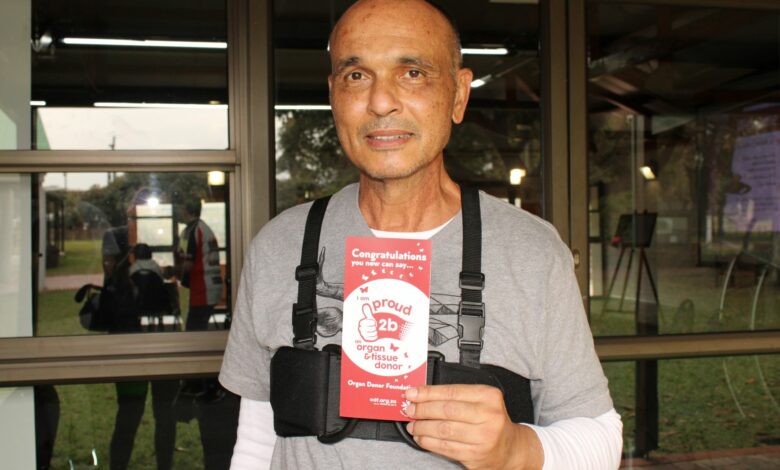
A GLEN Hills man, who waited five years for a new heart, received his gift of life last month.
READ ALSO: Steam train to still operate on Comrades weekend
CK: Tell us a bit about yourself.
SDB: I am an outdoors person who loved cycling, camping, keeping fit. I say ‘loved’ because for the past year or more, I really have not been able to enjoy the outdoors.
CK: Tell us about your medical condition and how you came to know that you needed a heart transplant.
SDB: Historically, I suffered with high cholesterol, and there has been a history of heart conditions in the family, so I have always been very aware of diet and fitness. About five years ago, I started feeling lethargic and not myself at all. At my wife’s insistence, I visited a GP and was prescribed some medication but felt worse after a few days. I visited a cardiologist. I was in ICU for about ten days, and we were told to prepare for the worst, as my heart could give in at any point. I was diagnosed with cardiomyopathy and heart failure. A heart transplant was required. I was told I would meet with various medical specialists and be added to a transplant list. I was introduced to transplant coordinator Cindy Goldie, who was fabulous.
CK: What was the procedure you had to follow in order to be put onto a waiting list for a new heart?
SDB: While in ICU, I was assessed to ascertain whether I ‘qualified’ for a heart transplant mentally and physically.
CK: Was it a long wait?
SDB: Just over five years. Over the past two years, it has felt a lot longer. I know I am still one of the lucky ones. I’m aware that there are so many people on the waiting list.
CK: How did the condition you were diagnosed with change your life?
SDB: After the initial diagnosis, I tried to live life as normal as possible. Mentally, I told myself that I would beat the medical conditions, and at times proved the doctors wrong. The initial first three years, post diagnosis, were okay; I just carried on. However, over the past two years, it rapidly changed the quality of my life, our lives. I suffered loss of weight, appetite, energy to do anything. The past six months or so, I just ‘existed’. I was in and out of hospital and was greeted by name by the ICU team.
CK: How did you feel when you received news that you were getting a new heart?
SDB: The day we received the news is a moment stamped in our memories forever. My wife took the call and approached me with tears in her eyes, and said, “It’s a match!”
It was extremely emotional, and I am not typically an emotional person. As we proceeded through the various steps and checks at hospital, my wife and I continuously thought of the donor and the donor’s family. We asked our family and friends to spare a moment of silence in respect. The guilt is something I am still working through.
CK: When did you go into theatre for the surgery?
SDB: On July 17, just after 20:30. I know that surgery was concluded before midnight.
CK: Were there any risks and if yes, what were they?
SDB: The primary risk was the rejection of the donor heart or an infection. The surgery itself carries a risk of complications such as infection, bleeding, blood clots, heart attack and stroke. The logistics and coordination from the hospital in Johannesburg. A traffic jam, a delayed flight could have all had a negative impact, and anything could have gone wrong. One does not appreciate the precise coordination of the respective team members. This is a true reflection of a human relay race. I always remained positive.
CK: How has your life changed since the transplant?
SDB: I am currently one month (four weeks) post the transplant and still in recovery. I’ve lost 20kgs in fluid since the procedure. I am looking forward to the day I can do the things I once loved to do: ride my bicycle, go camping and just feel great. I will live life to the maximum as a tribute to my donor, and the donor’s family. I’d like to thank Cindy Goldie and the teams at Lenmed Ethekweni Heart Hospital and SCCU. Have those tough discussions about organ donations, your end-of-life wishes, your will, and the like. It is tough, but it can be someone’s ray of hope, and second chance at a good quality of life.