Department launches free rabies vaccination campaign in north Durban
The vaccination programme will target Durban North, Glen Hills, uMhlanga, La Lucia and Virginia.
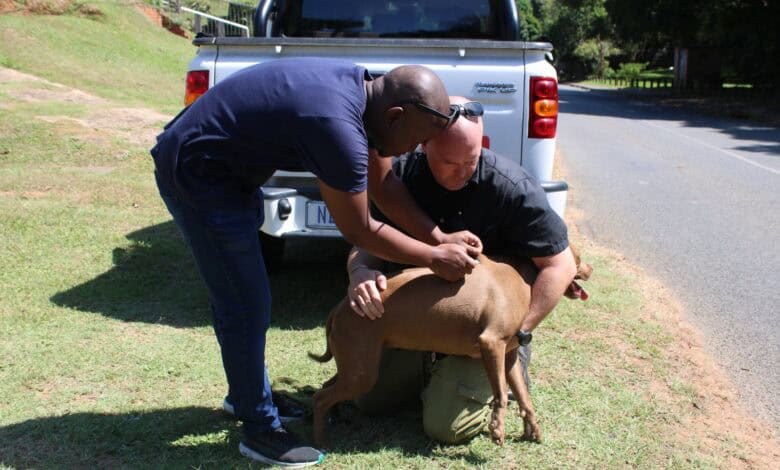
THE KwaZulu-Natal Department of Agriculture and Rural Development will host its first round of free rabies vaccination programmes for dogs and cats in various areas from next Monday (March 10).
According to the department, rabies is a very serious, mostly fatal zoonotic disease, meaning that it can be passed from infected animals to humans.
The rabies virus is transmitted through the saliva of an infected animal when it bites, scratches or licks a person.
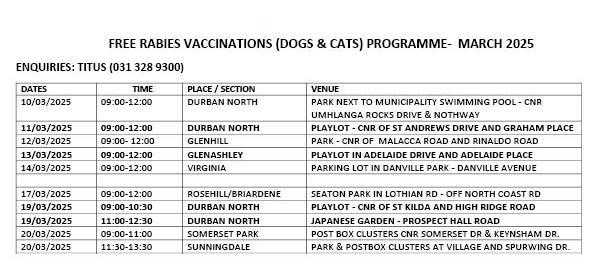
Animal health technician Titus Letsoalo said they will target Durban North, Glen Hills, uMhlanga, La Lucia and Virginia in their campaign.
“It is compulsory for all domestic pets to be vaccinated against rabies, and failure to do so is illegal and a public health risk. We had an outstanding response from the north Durban community in the past, and we hope more residents come out to support this drive. For us, it is also important to drive awareness campaigns to inform the public about rabies.
“The important thing for us is to see people bringing their pets and doing the responsible thing. Most rabies infections occur through animal bites, but scratches or licks on broken skin are also possible routes of infection,” he said.
For more from Northglen News, follow us on Facebook, X or Instagram. You can also check out our videos on our YouTube channel or follow us on TikTok.
Click to subscribe to our newsletter – here