
AI’s unprecedented rise raises questions about humanity’s future
Professor Benjamin Rosman argues that this rapid development has profound implications for humanity.
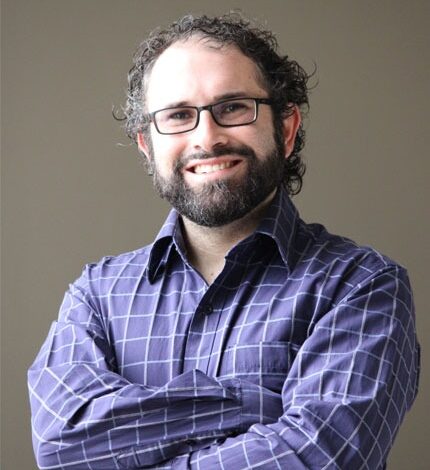
Artificial intelligence (AI) is advancing at a pace unlike anything seen before, and society is still grappling with what that means.
That’s the view of Professor Benjamin Rosman, of the School of Computer Science and Applied Mathematics at the University of the Witwatersrand, who warns that while these systems are powerful, our understanding of them remains limited.
Rosman explained that much of the public now associates AI almost entirely with large language models – systems like ChatGPT, that can generate text, images, audio, and even video.
Read more: Legacy Foundation celebrates 10 years of impact
These models, he said, emerge from deep learning, a branch of AI that relies on artificial neural networks inspired by the brain.
“People often think these systems store memory in databases, but that’s not the case.” Instead, information is captured through patterns of connection strengths between artificial neurons. This allows AI to generate entirely new material, rather than stitching together pieces of pre-existing data.
While the technology’s capabilities are growing, Rosman stressed that its direction is unpredictable.
“The speed of AI development is completely unprecedented. We don’t have a good handle on how to regulate it. In many cases, we’re not sure of the capabilities of these models. We’re not sure how they can be exploited, and we are not sure how these different things can work together.”
The debate over whether AI has reached, or even surpassed, human-level competence is ongoing, but Rosman believes the threshold may already have been crossed.
He argued that, across a wide range of tasks – from writing poetry, to financial accounting, to legal analysis – today’s AI systems often match or exceed the abilities of many people.
“If you pick any ten things that a human might do cognitively, there’s a good chance these systems already exceed many people.” He added that their rate of improvement continues to accelerate.
Also read: Partial restoration of streetlights amid ongoing theft challenges
This rapid development has profound implications for humanity. For millennia, humans have been the dominant intellectual species on Earth. That position may no longer be secure.
“We don’t know what this means for us. From a job perspective, it may take all our jobs. In terms of our relationship to it – whether that’s legal standing or rights, or just various kinds of interactions – we don’t know what this means.”
For Rosman, the rise of AI is not just about technology; it is forcing society to rethink its place in the world.
“It’s a shakeup for the whole way that we think about ourselves, we think about society, and we think of our place in society.”
Follow us on our Whatsapp channel, Facebook, X, Instagram, and TikTok for the latest updates