
Wits professor warns of double-edged future of AI
AI’s growth is unprecedented, says Wits professor, urging society to prepare for both breakthroughs and breakdowns.
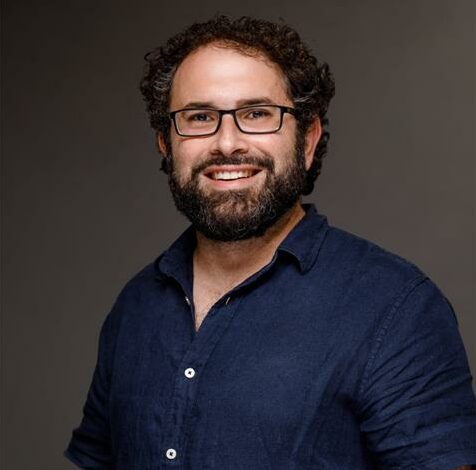
Artificial intelligence (AI) is advancing so quickly that even experts are struggling to keep up.
That’s according to Professor Benjamin Rosman, of the School of Computer Science and Applied Mathematics at the University of the Witwatersrand, who says the world is only beginning to grasp the scale of the changes unfolding.
Rosman explained that many people now equate AI with large language models, such as ChatGPT – tools that generate text, images, audio and even video. While the public may imagine these systems as simply drawing from databases, he stressed they are far more sophisticated.
Read more: City of Johannesburg Revenue Shared Services Centre visits Emmarentia
“It’s not gluing together elements from a database. It’s actually generating something new from a pattern of activity across artificial neurons.”
Breakthroughs in the field, Rosman admitted, have surprised even seasoned researchers.
The release of ChatGPT in 2022 caught the community off guard, and since then, the pace has only quickened. From winning gold medals at mathematics Olympiads, to assisting in computer programming, the abilities of AI tools are broadening rapidly.
Rosman sees enormous potential in areas such as healthcare and education, where AI could help solve pressing challenges.
“Intelligence is the way we solve hard problems. We’re going to see huge breakthroughs in those spaces.” He added that individuals are already leveraging AI to launch businesses, with services ranging from legal advice to accounting now accessible in their pocket, but these advances come with stark warnings for the world of work.
Job losses, Rosman said, are already a reality, with companies needing fewer interns and junior staff as AI systems handle tasks once reserved for them. Over time, he predicted, teams that previously required dozens of employees may operate with only a handful of people, supported by AI.
“This is definitely going to change the whole dynamics of the job market.”
Also read: AI’s unprecedented rise raises questions about humanity’s future
Regulation remains a critical challenge. Rosman described the speed of AI development as completely unprecedented, noting that policymakers still don’t fully understand the capabilities – or the risks – of these systems.
On the horizon lies the contentious issue of artificial general intelligence, or AGI, the ability for an AI to reach human-like intelligence, and to be able to perform any intellectual task a human can, said Rosman.
While definitions vary, he believes we may already be nearing human-level competence across many tasks. This, he argued, forces society to confront profound questions about humanity’s role in a future where machines may outthink us.
“The stakes are high. If we get it wrong, there are disastrous scenarios. If we get it right, we could see things like curing all diseases within the next decade.”
Follow us on our Whatsapp channel, Facebook, X, Instagram, and TikTok for the latest updates