Broken promises leave Johannesburg’s most vulnerable homeless as severe municipal gaps widen
Without a fixed address, applying for employment becomes difficult. Without work, paying rent is impossible. Without stable housing, finding employment becomes even more challenging. It is a cycle that traps thousands of people across Johannesburg every day.
Johannesburg is often described as the city that never sleeps.
A place driven by the relentless pursuit of a better life, but while its lights continue to shine, thousands of people bed down beneath bridges, on pavements, in parks, and doorways, hoping to make it safely to another morning.
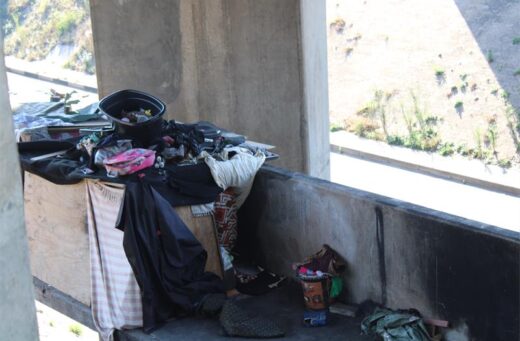
Behind every blanket spread across a pavement or every makeshift shelter hidden beneath a bridge is a story of loss, survival, and hope.
The reasons people become homeless are different. A lost job, domestic violence, untreated mental illness, addiction, rising living costs, or fractured family relationships can quickly push someone onto the streets. Getting there may happen suddenly but leaving is often far harder.
Read more: METRO MATTERS: Contractors and workers bear the brunt of city’s cash flow problems
According to Motsamai Motlhoalwa, from the Gauteng department of social development, there are currently five shelters operating within the City of Johannesburg, accommodating a total of 851 people. He said the largest facility is the 3 Kotze Shelter in Hillbrow, which has 350 beds and accommodates both men and women.
At the other end of the scale is Tudhope Shelter in Berea, with only 21 beds. A facility that is already full. Occupancy currently stands at 94%, leaving only about 50 beds available for people seeking emergency accommodation.
“The admission requirement is that the person should be between the ages of 19 to 59 years, have a copy of their ID or an affidavit from SAPS, or a referral, where one can be a walk into the shelter. A screening will be done before admission, or it can be a referral through DSD offices.”
Homeless, but not without rights
While homelessness is often viewed through the lenses of crime, poverty, or public safety, commissioner Aseza Gungubele, from the South African Human Rights Commission (SAHRC), says people living on the streets remain protected by the constitution.
Gungubele said those rights include dignity, equality, access to adequate housing, healthcare, food, water, social security, and, for children, the right to basic shelter and care. “Public authorities must therefore ensure that responses to homelessness respect human dignity and are consistent with constitutional and human rights standards.”
She added that homeless people are also protected against arbitrary or unlawful evictions under both the constitution and the Prevention of Illegal Eviction from and Unlawful Occupation of Land Act.
Gungubele said the commission continues to investigate complaints where rights may have been violated, engages with government, conducts research, and contributes to policy development.
“Municipalities and provincial governments should have clear plans, budgets, and programmes that address both the immediate needs of people experiencing homelessness and the structural causes that contribute to homelessness. Responses should also respect dignity, equality, and the right to adequate housing.”
Also read: Region B homelessness crisis exposes gaps support
One of their recent interventions has been providing input into the draft national policy on homelessness.
Government’s responsibility
According to Gungubele, municipalities and provincial governments have constitutional and statutory obligations to progressively realise the right of access to adequate housing. “This includes planning and implementing measures to prevent homelessness, providing emergency accommodation where required by law and court decisions, facilitating access to basic services where appropriate, and ensuring that any evictions comply with constitutional and legal requirements.”
She said government responses should not only address the immediate needs of homeless people, but also the structural causes that keep them on the streets.
Although the SAHRC does not maintain a national database of homeless people, it monitors government’s response through oversight, investigations, research, and engagement with municipalities, government departments, civil society organisations, and affected communities.
Between enforcement and compassion
Homelessness presents a challenge for the Johannesburg Metropolitan Police Department (JMPD). Xolani Fihla, from the JMPD, said their responsibility is to enforce municipal by-laws and maintain public safety, allowing officers to remove people illegally occupying public spaces or erecting informal structures.
However, he stressed that these actions must comply with the constitution and court rulings. “The JMPD cannot confiscate, destroy, or burn the personal belongings of homeless individuals.”
Also read: METRO MATTERS: Illegal connections and debt deepen crisis at City Power as losses near 27%
Fihla said while officers may instruct people to leave public spaces and enforce municipal by-laws, they must still respect people’s basic human rights and personal property, but, because belongings remain with those displaced, many are able to return and rebuild makeshift shelters once law enforcement leaves.
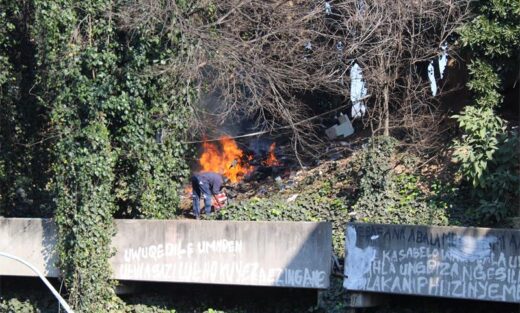
Fihla also confirmed that JMPD conducts search-and-seizure operations where criminal activity, including cable theft or the burning of copper, is suspected. “Cable theft and the burning of copper are serious criminal offenses under the Criminal Matters Amendment Act, and we treat these allegations with high priority.”
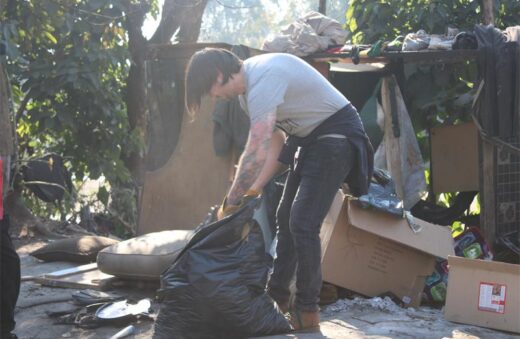
However, he acknowledged that enforcement alone cannot solve the problem. “There are currently not enough shelters to accommodate the high volume of homeless individuals residing within the city.” He added that some people also choose not to enter shelters because of conditions such as curfews, sobriety requirements, and structured routines.
The hidden cost beneath bridges
Johannesburg Roads Agency (JRA) also has a fair share in this vicious cycle.
Acting head of regional operations Mpho Maruping said the agency’s mandate is to build, maintain, and protect Johannesburg’s roads, bridges, and storm water systems.
When people occupy these spaces, Maruping said the JRA monitors the impact on infrastructure, reports by-law violations to law enforcement, and works with the department of social development, which is responsible for providing social services and facilitating relocation to shelters.
Also read: Metro Matters: Johannesburg’s sewage crisis reaches breaking point
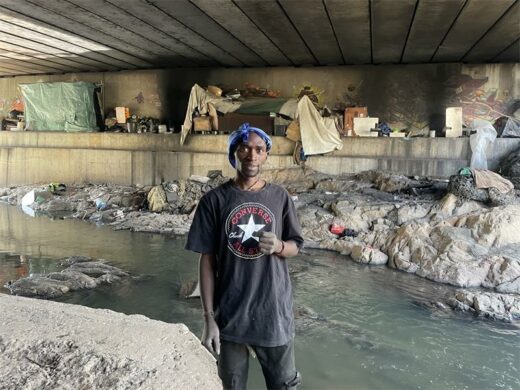
Maruping said JRA does not have the legal authority to remove people itself. Instead, its role is to identify the problem and refer it to the relevant authorities. He said occupations beneath bridges create serious risks for both people and infrastructure. Fires used for cooking or warmth can weaken concrete structures and expose steel reinforcements to corrosion.
Blocked storm water drains increase the risk of flooding and erosion around bridge foundations. The agency has also documented collapsed paving, embankment erosion, and deep sinkholes beneath several bridges, particularly along the M1 and M2.
Illegal occupation also makes routine inspections difficult. “The encampments create unsafe conditions for our inspection teams. Visual inspections are compromised as we cannot access critical structural elements that are hidden by makeshift structures and refuse.”
Maruping added that illegal excavation and vandalism result in costly repairs that divert resources from other maintenance projects.
Trapped in the cycle
For Gerson Mphephu (29), homelessness did not begin with addiction, but trauma. He left home at 17 because he was tired of watching his stepfather abuse his mother day in and out. He escaped home, hoping to return to Venda, to his grandmother, but he instead found himself stranded under Johannesburg’s bridges.
“I was not smoking when I got there, but the cold, hunger, and stress pushed me to use substances to numb the pain.”
He believes more accessible shelters are needed, particularly outside Johannesburg’s inner city. “For me it appears as the city doesn’t care. We are on the streets for different reasons, but accessing homeless shelters is difficult. They are far from the suburbs. That’s why many end up staying under bridges. They need to build more homeless shelters.”
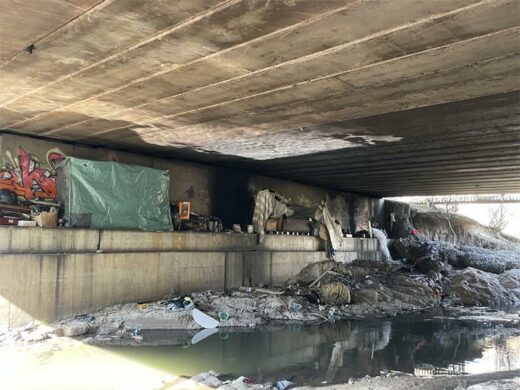
His experience echoes that of 39-year-old Philani Mngobozi who’s promises for employment were not fruitful. Mngobozi has been living on the streets since December 2025, after moving to Johannesburg in search of work. Despite attending job interviews, he was unable to secure stable employment, eventually exhausting his savings and losing the room he had been renting.
To survive, Mngobozi turned to collecting recyclable waste, saying it provides an honest income and helps him avoid turning to crime. Although homeless shelters are presented as an alternative to living on the streets, Mngobozi believes they do not provide a long-term solution.
Also read: Brixton Cemetery trapped in costly clean-up cycle
“You stay there for a few days, and then you have to figure something out again. If you don’t have a job or anywhere else to go, you end up back on the streets. That’s why, for me, staying here seems like the better option. I know I can recycle and earn something while I’m trying to get back on my feet.”
Like Mphephu, Mngobozi started substances on the street.
Breaking the cycle
Maruping said the roads agency believes the solution cannot come from one department alone. Instead, he calls for a unified, city-wide strategy that combines social intervention, co-ordinated law enforcement, and infrastructure planning.
The City of Johannesburg was contacted for their input into this feature. Despite assurances, no comment was received by the time of publication.
Infographic
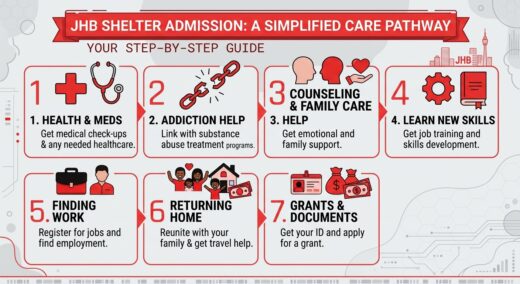
The following are services are provided once a homeless person when admitted to a shelter.
• Medical screening and referral to hospital which includes transportation,
• Linkage with registered substance abuse treatment facilities for homeless people with substance abuse problems,
• Social work services – psychosocial support, counselling, family mediation, tracking, reunification, and aftercare programmes,
• Skills development – linkage with skills development facilities and sponsored accredited skills training,
• Job placement – registration at the department of labour and placement in temporary work opportunities,
• Family reunification – tracking families, family therapy groups, and offered transport money for reuniting beneficiaries with their families, and
• Assistance with referral to home affairs for ID reprint and application with SRD grant
According to South African Human Rights Commission’s (SAHRC) Aseza Gongubele significant gaps remain between the responsibilities placed on government and their implementation in practice.
“The SAHRC does not suggest that all municipalities and provincial governments are failing in the same way.
However, its investigations, complaints, and monitoring of housing and local government service delivery have identified recurring challenges, including inadequate planning, weak co-ordination between spheres of government, limited municipal capacity, and insufficient provision for vulnerable communities.
These challenges directly affect the ability of government to progressively realise the right to adequate housing.”
The commission has previously raised concerns about the failure of municipalities to provide alternative accommodation or appropriate emergency housing in circumstances where people are rendered homeless.
Its work on the right to adequate housing has also identified a lack of comprehensive and co-ordinated responses to vulnerable groups, as well as capacity constraints at municipal level, according to Gongubele.
The commission considers that government has an important responsibility to move beyond short-term responses to homelessness.
Municipalities and provincial governments should have clear plans, budgets, and programmes that address both the immediate needs of people experiencing homelessness and the structural causes that contribute to homelessness. Responses should also respect dignity, equality, and the right to adequate housing.
Where government fails to meet these responsibilities, the commission can use its constitutional mandate to investigate complaints, monitor implementation, engage the relevant authorities, and make recommendations for corrective action.
“Importantly, the SAHRC’s contribution to the draft national policy on homelessness is part of this broader effort.
The commission’s position is that homelessness requires a co-ordinated, human rights-based response across all spheres of government.
The development and implementation of a national policy provides an opportunity to clarify institutional responsibilities, improve co-ordination, strengthen data and monitoring, and ensure that people experiencing homelessness are treated as rights-holders, rather than simply as recipients of temporary assistance.”
The City speaks out
City of Johannesburg spokesman, Nthatisi Modingoane confirmed that the City’s policy on homelessness, which was signed in September 2024 states that homeless shelters should be closer to people in all seven regions of the City.
“The City must ensure that people are not found traveling across regions, and for long distances in order to get access to a homeless shelter, therefore the City, as part of its long-term vision, would want to have a shelter/safe space in every region within the City. This however will be dependent on budget availability for both Capital expenditure (Capex) and operational costs,” he said.
Also read: METRO MATTERS: Behind Joburg’s rubbish crisis
Modingoane further confirmed that the City currently has 3 shelters for homeless people.
• Region B, the Windsor West Shelter is located at 23 Knight Avenue in Windsor West, in Ward 98, with a total bed capacity of 40 beds for males.
• Region C, 1 Dan Street in ward 70 has a bed capacity of 60 beds for males
• Region F, 3 Kotze Street has a total bed capacity of 350 beds, for both males and females.
A fourth shelter is currently being constructed in Region G, Devland, and upon completion will have a bed capacity of 200 people, for both males and females.
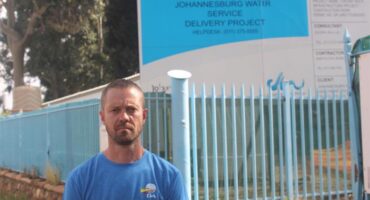
The facility is at approximately 90% completion. “The construction has been temporarily halted due to budgetary constraints.”
Follow us on our Whatsapp channel, Facebook, X, Instagram and TikTok for the latest updates!