End of drought could bring disaster of a worse kind
Mr Zuma did refer to the relief efforts in some provinces, but he let the opportunity slip by to make more of the positive nation-building potential that a drought brings, as demonstrated by countrywide, multi-community water relief initiatives.
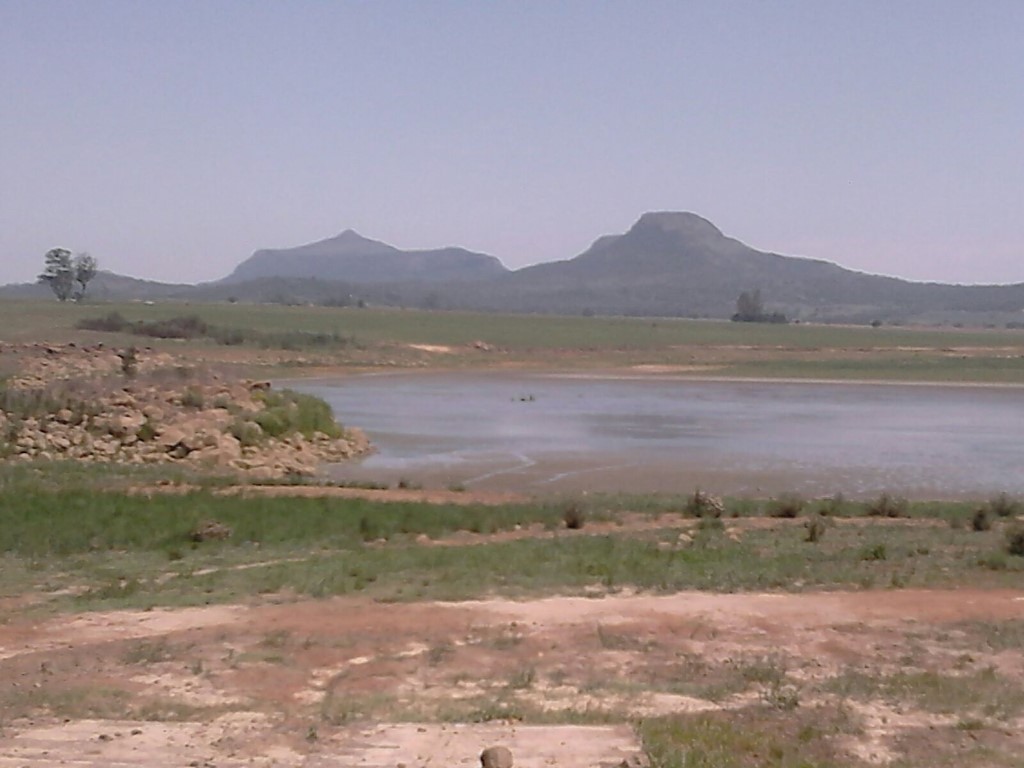
The United Nations World Food Programme (WFP) said last week that many as 49 million people in southern Africa could be affected by a drought that has been worsened by the most severe and longest El Niño weather pattern in 35 years.
However, if weather experts are correct, this part of the world might face extreme weather of a different kind – too much water – before the year is out, as weather patterns swing around from an El Niño phenomenon to a La Niña one. If this happens it would bring more directly life-threatening events to millions of people in southern Africa and elsewhere.
Under the heading “Wild Weather May Get Wilder” an article on the Environment360 website of Yale University last week stated that although nothing is certain “some smart money is on a big La Niña being underway by late 2016, as the warm waters rush back.”
If this happens, it “typically brings heavy rains over Indonesia, floods in southern Africa, tropical cyclones that blast the Chinese coast …”
Implications for southern Africa
In late 2008 and early 2009 floods plunged southern Africa into a major humanitarian crisis, killing dozens and displacing thousands of people.
Floods in this part of the continent typically affect the Zambezi River Basin severely, bringing death and disease to those living along the banks. The fourth largest river in Africa, has its source in Zambia and flows through Angola, back into Zambia, and along the borders of Namibia, Botswana and Zimbabwe to Mozambique, where it empties into the Indian Ocean.
Mozambique, in particular, is flood-prone and in the past South Africa often got involved in relief/rescue missions there, especially in 2000, when some 700 people were killed and 20 000 head of cattle lost. It happened again as recently as 2015.
This time round, ageing and neglected infrastructure poses additional and wider threats, including to South Africa. In September last year we reported that a flood in the Zambezi at this stage could put severe pressure on the Kariba dam and cause an “inland tsunami”.
Apart from the threat to human life, such an event will also put great strain on South Africa’s already tenuous electricity supply situation as it could threaten supply from Mozambique’s Cahora Bassa hydroelectric scheme.
Devastation of drought
In his State of the Nation Address last week President Jacob Zuma had disappointingly little to say about the impact of the drought.
Doug Stern, president of Agri Eastern Cape, was reported by Farmer’s Weekly as saying, the importance of South Africa’s farmers for food security had been “conveniently omitted”.
Mr Zuma did refer to the relief efforts in some provinces, but he let the opportunity slip by to make more of the positive nation-building potential that a drought brings, as demonstrated by countrywide, multi-community water relief initiatives.
As part of his motivation why the drought would not be declared a national disaster, Minister Cele also mentioned that of South Africa’s nine provinces, seven had already declared the drought a disaster, but a nationwide declaration “was not currently warranted”.
There seems to be a blind sport in government for the importance of commercial farming for long-term food security in the country and as generator of jobs.
Evidence is mounting that the drought is having devastating effects on farming across the board, but on commercial farming in particular.
This, for example, includes the fact that livestock farmers are soon to face serious financial and cash-flow hurdles, while attempting to rebuild their herds to normal levels after drought-enforced culling.
The impact goes far beyond just the farming community itself. As many as 49 million people in southern Africa could be affected by the drought as far as access to food is concerned, United Nations World Food Programme (WFP) said last week.
In South Africa itself, according to Professor Nick Vink of Stellenbosch University’s Department of Agricultural Economics, the poor are facing rising food prices. There is the potential for a large-scale disaster in agriculture …,” he recently wrote in an article on The Conversation website.
But commerce will also not escape the impact of the drought.
At its AGM last week agricultural products and services company Kaap Agri warned that the drought would wipe millions off the company’s bottom line, MoneyWeb reported.
At its AGM, also last week in Stellenbosch, Pioneer Food’s CEO Phil Roux warned that consumers should brace themselves for food price inflation of between 7% and 35% in the second half of this year. It is an input cost increase beyond the company’s ability to absorb.
For the maize industry on which the vast majority of the population depend as staple food, the drought caused a cost increase in the order of 74%, while wheat has been adversely affected by the weakening rand and an increase in the import tariff from R156 to R911 per tonne over 12 months, said Roux.