MUST READ: Can the Ncandu River be saved from death?
With urgent intervention and financial commitment, the Ncandu River can be rescued from its current polluted state.
Has time run out for the Ncandu River?
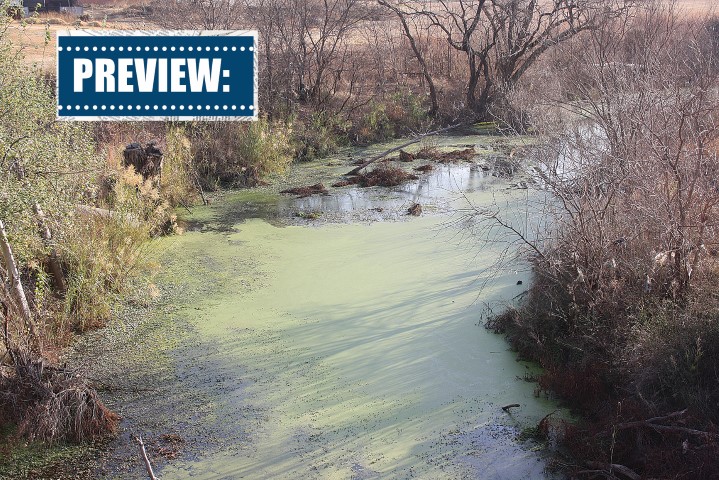
After years of ecological abuse, many fear the latest reports of sewage spilling into the river (in Barry Hertzog Park) are the final nail in its coffin.
The situation may be grim, but not entirely unsalvageable.
Angus Burns, Senior Manager for the World Wildlife Fund South Africa (WWF-SA) Land and Biodiversity Stewardship Programme, believed the river could be restored to its former glory in a few years, given an informed plan and sound implementation.
However, it was no longer up to the municipality alone to fix.
“I feel the problem is now beyond the municipality’s ability to address fully and will require a public/private partnership to rectify the problem.”
Burns explained a holistic plan needed to be developed and adequately supported.
He listed the first step as identifying the many source pollution points along the Ncandu River, which involved water testing, pollution monitoring and direct identification of problem areas.
Tests would set a baseline to indicate a status quo from which to work from.
“It must then be redone regularly to determine if the E. coli levels are going up or down.”
The second step would then be to introduce a systematic infrastructure repair initiative.
Starting at the highest points, Burns said pipes had to be fixed and sewage inflow ceased up until the lower reaches before the Amcor Dam.
Other contingency plans to address spillages had to be put in place, he added.
“Residents of Newcastle need to stop flushing or dumping objects into the sewer lines that will cause blockages. Local businesses need to stop polluting storm water drains with oils and other substances, as all of this contributes towards the problem – and happens to be illegal.”
Finally, Burns said the water cabbage problem had to be addressed, and suggested the municipality begin sustainable development of areas with river front views.
He believed this would foster a sense of pride in the natural asset.
However, Burns said this plan required political will, appropriate budget and support from the community to succeed.
“This problem has gone on for far too long and it is high time to do something meaningful about it.”
Burns went on to say a healthy and clean environment was a constitutional right.
When governments failed to deliver on this, he said they were in breach of the very mandate they were compelled to uphold in terms of the South African Constitution.
Burns added World Health Organisation (WHO) standards were clear.
“Basically anything above zero colonies of E. coli for 100ml of river water requires treatment for drinking purposes. When levels of sewage pollution start exceeding this and move into thousand of colonies per 100ml, it is classed as a pollution incident and is unsafe for recreational use as well as crop irrigation and livestock water.”
Burns called it a well-known fact that sewage effectively depleted oxygen levels, which caused the river’s ecology to collapse due to death of organisms including fish.
If this happened, he said the river would become a so-called dead river.
In addition, the constant input of nitrate and phosphate rich sewage caused algal blooms and plants including water cabbage to flourish, further impacting oxygen levels in the water.
Burns said the end result was eutrophication and an accompanying rotten smell.
“Humans, livestock, industry, irrigation farming and the environment all rely on water for survival. It is a critical component of any functional society and health environment, and should be a priority for any municipality to maintain, secure and protect.”
Burns foresaw a situation where pollution of the Ncandu River caused illness or death, to the point where the municipality could be held liable.
Thus he noted it was an issue which required urgent intervention.
As he mentioned earlier, if pollution sources were stopped or drastically reduced, and the impacts of pollution properly addressed, rivers such as the Ncandu were ‘quite forgiving’.
In his career, Burns had seen many instances where simple actions resulted in an almost complete turnaround.
“Of course there is no silver bullet to fix all of the problems outright – an example is where people defecate on the river banks. This washes into the river and exacerbates the already existing sewage problem.”
Many believe water cabbage is indicative of the Ncandu River’s plight.
However, Burns said this infestation was ironically a small – yet highly visible – indication of the distress signals sent out by the Ncandu River over many years.
A more serious warning was the death of fish reported on some years back.
“A few years back I received an urgent call… Apparently massive sections of the Ncandu River had turned blood red. Admittedly it was an alarming sight and would frighten most people.”
Upon investigation, Burns determined the redness was caused by algal bloom which turns red in sunlight, indicative of high pollution levels.
He said little was done to address the problem.
At the time, E. coli tests were sponsored by local industries and these results showed bacteria in excess of 45 000 colonies per 100ml in places.
“In summary, the water cabbage along with other problems including highly toxic blue green algal will persist and worsen over time, unless the cause of the problem is directly addressed and stopped.”
Remember to visit our Facebook, Twitter and Instagram pages.
Add us on WhatsApp today! 082 874 5550

and BBM pin D1EF333B.

You can also email our offices on Reveshni Douglas at reveshni@caxton.co.za Quinton Boucher at newsun@caxton.co.za Bruce Douglas at Newed2@caxton.co.za Tersia Gopi at newed@caxton.co.za Zianne Leibrandt at ncschools@caxton.co.za