Historian debunks Dundee myth of the ’empty grave’
A long-held myth about General William Penn Symons’ burial site has been clarified by local historians.
Dundee has many local myths and legends, many of which stem from the area’s historical connections to battles that took place there.
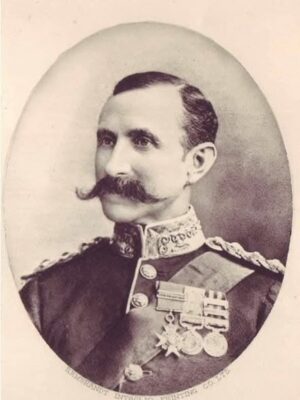
One ‘famous’ legend surrounds General William Penn Symons, who led the British at the battle of Talana in 1899, where he was fatally injured.
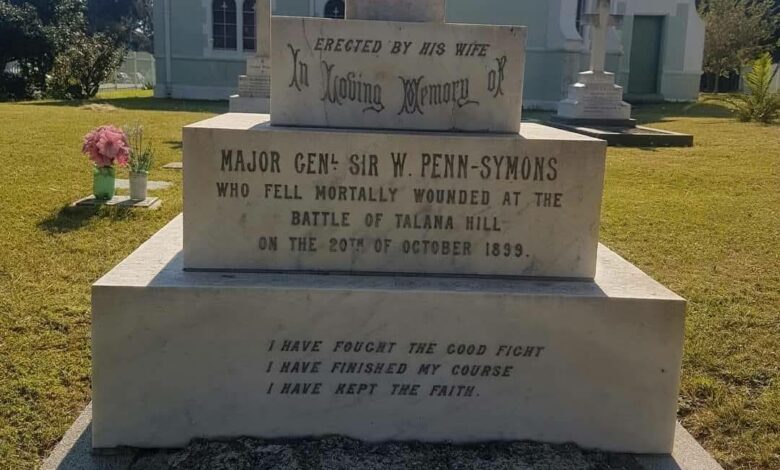
A local myth claims General William Penn Symons was reburied in Cornwall and that his grave at the St James Anglican Church on Boundary Street is empty.
However, local historian Pam McFadden has firmly debunked this.
Dundee historians set the record straight on Symons’ burial myth
“Despite repeated claims that his remains were moved to Cornwall, historical records confirm that Symons is still buried in St James’s churchyard in Dundee.”
Cornwall reburial story proven false
The myth appears to have grown from a comment reportedly made by his wife, who once suggested she might consider having him brought back to England. However, this never occurred, and no evidence has ever supported the claim.
Clarifying the name confusion
McFadden said another common misunderstanding involves his surname. “His correct surname is Symons, not Penn-Symons. ‘Penn’ is his middle name, chosen in honour of his family’s historical link to William Penn — founder of Pennsylvania — who himself is buried in England.
“Hopefully, this clarifies this issue and helps to preserve the accuracy of Dundee’s rich military heritage,” McFadden concluded.