Diggers discover a piece of history
He had to endure several verbal attacks from archaeologists, saying that what he is doing is wrong
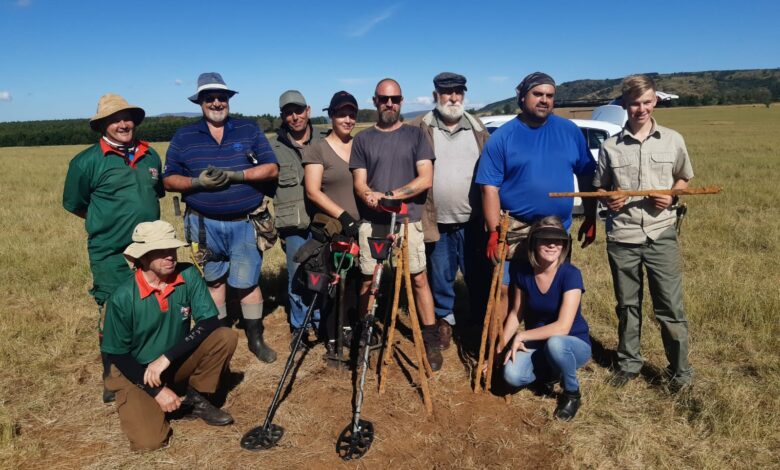
They are called the ‘Vryheid History Diggers’ and this group of metal detector ‘junkies’ recently discovered what is possibly one of the biggest treasures in South African history. Riaan Leeuwner explained to the Vryheid Herald that they follow the path of history, since it is a passion and a hobby. “There are so many artifacts beneath the soil that one can’t find with a naked eye,” he explained.
A few weeks ago, Riaan and the rest of the ‘diggers’ followed the path of the Zulu War in the Gluckstadt area, which led them to unknowingly stumble upon over 250 muskets dated from 1879. Riaan emphasises that they do not dig at Heritage Sites and they were not aware of the location of the guns that were buried a mere 50cm under the ground. Normally, a metal detector won’t pick up any kind of metal at that depth, but the wet soil created the perfect conditions for them to find the treasure. Riaan nostalgically tells of how they walked ‘in the footsteps of history’ and since the area has no fence, they asked permission from the ‘Induna’ to search. Normally, an old button or coin would make its appearance, but what they did not expect to find were antique muskets!
Riaan goes on to say that the guns were in pieces and the butts were broken off, with the barrels flattened. He says that according to his knowledge, the British probably broke the butts off to use them as fire wood, and flattened the barrels to make sure that they weren’t used again by the Zulus. Unfortunately, the diggers’ discovery also lured unwanted attention from locals, who wanted to know whether the guns could be sold. Riaan and his team decided that the best option would be to retrieve all the guns for safekeeping. They immediately realised that the muskets would have to go to a museum. Uncertain how to approach the situation and nervous about their discovery, the group took the guns home. Riaan contacted an archaeologist friend to try and find a way forward. The friend suggested that they donate the guns to a museum. Riaan got in contact with the Dundee Diehards, who are a history re-enactment group at Talana Museum. Charles Humphrey of the Diehards organised that they would take the guns, since they use the same guns and there are pieces they can utilise during their re-enactment scenes. Some of the muskets were donated to other museums.
Up until Thursday last week, Riaan stressed about the situation after he contacted the KwaZulu-Natal Amafa & Research Institute to declare his find. There was a slight dispute between the two parties, but fortunately the matter was resolved last week and Amafa decided that they would also visit the site where the muskets were found. No charges against Riaan will be laid by Amafa. Riaan also declared the weapons to police and sadly, it is impossible to determine the monetary value of the guns – but the historical value is monumental.
He had to endure several verbal attacks from archaeologists, saying that what he is doing is wrong, since they make use of metal detectors. But his defence was that he was digging on an open field that is not a Heritage Site and he had no knowledge of the weapons. Furthermore, the farmer uses the area to plant crops, and people living in rural areas are building their houses on old historical forts that haven’t been declared as Heritage Sites. His question remains: “Why is my find and what I do wrong, but destroying old forts is not?” The law regarding the finding of historical artifacts is very confusing and unclear, and hopefully Riaan has ruffled some feathers to open doors for future explorers…
ALSO READ: Tourism takes a turn in a new direction
The news provided to you in this link comes to you from the editorial staff of the Vryheid Herald, a sold newspaper distributed in the Vryheid area.