Watch: Surprise guest at mechanical workshop as hawk swoops in
Bird experts believe that the 'spider-friendly' raptor will eventually fly out of the business.
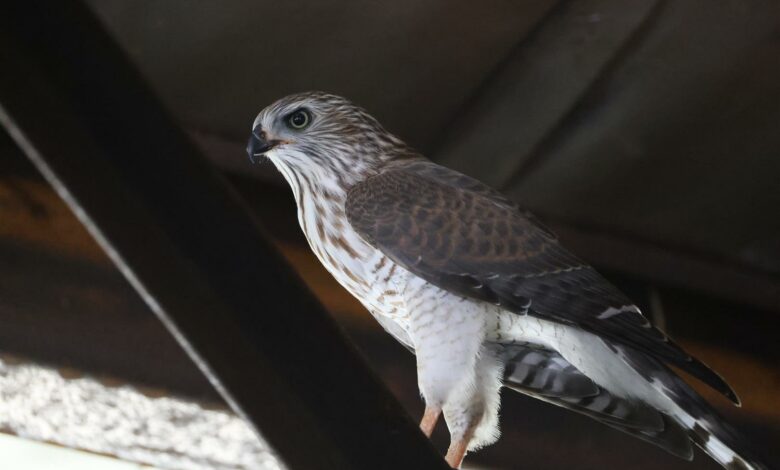
Update: The goshawk has since flown out of the building.
A mechanical workshop in Lyell Street had a surprise guest pop in for a visit today (January 6).
A Gabar Goshawk flew in, much to the surprise of staff, and has remained there, obviously confused about how to exit the large warehouse-type building.
Bird experts
Local birding experts are, however, not concerned, believing that the goshawk will eventually fly out.
“If, after a few days, it has not left of its own accord, we will contact a bird rescue organisation to capture the bird and release it,” says Ladysmith Birders president Peter Nelson.
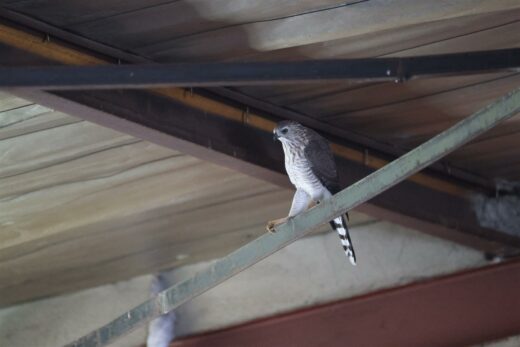
The Goshawk perched in the roof of the local business.
The Gabar Goshawk is widespread throughout much of sub-Saharan Africa. From savannas to open woodlands, thorn bushes, steppe habitats, agricultural fields and riparian areas, this species can be seen flying, hunting and perching in a wide variety of habitats throughout its range. However, it does avoid thick forests or extremely arid landscapes. Researchers have noted that, in relatively recent years, this hawk has started colonising urban areas in some parts of its range.
The bird most likely entered the building in search of food.
Least Concern
The Gabar Goshawk is categorised as a species of ‘Least Concern’, probably because it is widespread and common throughout open habitats of most of sub-Saharan Africa.
The Gabar Goshawk consumes many different types of prey, but it seems to prefer hunting birds of all sizes. It will even feed on eggs and nestlings of other bird species, particularly those of weavers. Apart from a long list of bird species it hunts, it will also feed on small mammals, including bats, reptiles and insects.
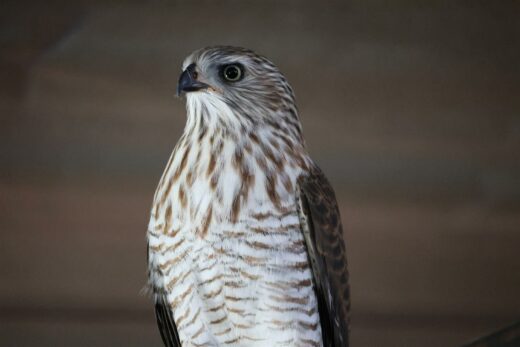
Interesting bird fact
The Gabar Goshawk (Micronisus gabar) uses live spiders and their webs, likely for camouflage and potentially pest control, when it nests. As the spider webs grow, they envelop the nest, hiding it and trapping insects attracted to the nest’s food scraps.
Click to receive news links via WhatsApp. Or for the latest news, visit our webpage or follow us on Facebook and Twitter. Join us there!