Captain Venter reflects on four decades of forensic service
Captain Piet Venter retires after 40 years of dedicated service in forensic policing.
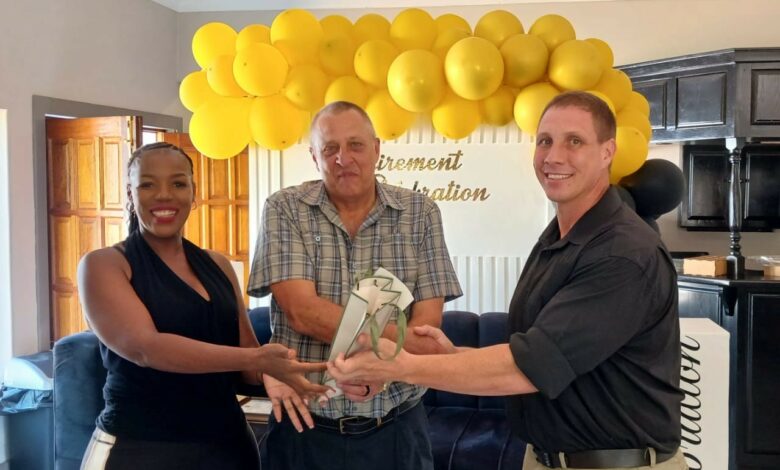
After 40 years of service, Captain Piet Venter officially retired at the end of February, bringing an important chapter in forensic policing in northern KwaZulu-Natal to a close.
Early career beginnings
Captain Venter joined the South African Police Service (SAPS) in the early 1980s, at a time when many young men had two main options after school: serve two years in the army or join the police. He chose the police. After completing his training, he was posted to Glückstadt SAPS, where an unexpected meeting would change the direction of his career.
“A fingerprint expert who helped me at a crime scene asked if I would be interested in joining their unit,” he recalls. After an interview, psychometric tests and specialised training, his career in forensic services began.
Evolution of forensic work
Over the next four decades, Captain Venter saw huge changes in how forensic investigations are done. In the early years, most of the work was done by hand and took a lot of time. Fingerprints had to be sorted and filed manually, and prints found at crime scenes were searched, developed and processed by hand. Photographs were taken using black-and-white film, which members developed and printed themselves before placing them in photo albums.
Members worked standby weeks, attending crime scenes to take photographs, lift fingerprints and collect other forensic evidence. Every morning the previous day’s work had to be handed in to a commander for inspection.
Today things look very different. Digital cameras have replaced film, and fingerprints are scanned straight into the Automated Fingerprint Identification System (AFIS). This national database allows fingerprints to be searched electronically, instead of being sorted by hand, while fingerprint experts confirm the matches.
DNA technology has also improved greatly, helping investigators link suspects to crime scenes with much more accuracy. Special light sources are used to find body fluids and hidden fingerprints. A fingerprint laboratory was also opened in Vryheid where exhibits from crime scenes can be chemically processed.
“It changed a lot,” Captain Venter says, thinking back on the move from black-and-white photographs to digital systems and a national database that is ‘right at your fingertips’.
Career highlights and challenging cases
One of his proudest achievements came in the early 1990s when Pongola experienced a wave of burglaries. Through careful fingerprint work, he managed to link one suspect to 13 separate cases. After the suspect was arrested, burglary incidents dropped.
For Captain Venter, moments like these were especially rewarding, calling a detective with a suspect’s name and knowing that careful forensic work helped solve a crime.
One of the most difficult cases he worked on was the murder of two British female tourists near Sodwana Bay in the early 1990s. Their bodies washed ashore while their vehicle was found somewhere else. The case drew international attention and involved several police units. At the time, the suspect’s fingerprints were not on the national database.
Four years later, on the anniversary of the murders, the suspect handed himself over to police and confessed. Fingerprint comparison confirmed who he was. He had been hiding in Mozambique and was later convicted of double murder.
“The real work is collecting forensic evidence and making sure it stays safe and uncontaminated,” Captain Venter explains. “People think we go back to the office and the crime is solved immediately. But not all criminals are on our databases.”
While television crime shows are ‘not too far from the truth’, he says real investigations depend on evidence collected at crime scenes and tested by specialised forensic laboratories, not instant results.
Reflections on retirement
Now settling into retirement, Captain Venter says he has mixed feelings. “The unknown about one’s future,” he says. “You get used to a routine.” For now, he has no immediate plans, but he says he will miss the challenges of the job and the colleagues who shared the journey.
Colonel Ferreira described him as “a dedicated and disciplined member of the SAPS and our Local Criminal Record Centre here in Vryheid.”
“He was well known as the fingerprint expert in the Zululand region and will be dearly missed by his colleagues and friends in the SAPS family. We wish him a wonderful retirement.”
If he had to choose again, Captain Venter says he would follow the same path.
“There were good times and many challenges.”
The news provided to you in this link comes to you from the editorial staff of the Vryheid Herald, a sold newspaper distributed in the Vryheid area.