Throwback Thursday: Remember the wonderful phone book?
Let's take a nostalgic look at South Africa’s phone book and how it once connected homes to essential services and people.
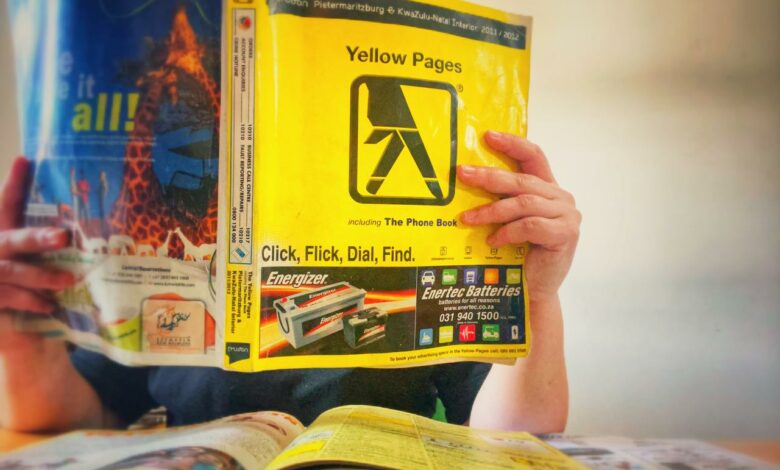
Flick, find, dial – not digital
Remember when the telephone book was basically the internet for our homes?
In South Africa, the arrival of the latest edition of the Phone Book and Yellow Pages was very exciting indeed. That thick, floppy book would come in the mail and all of a sudden, you had access to EVERYTHING – from plumbers to pizzas, with even a wedding guide.
White pages for people
You would go through the alphabet in your head, look up a surname and find the person you wanted in the ‘white pages’ section. In that way, you could trace a long-lost friend or relative, or even figure out who ‘missed called’ you on the landline.
The real magic was, of course, the Yellow Pages! The Facebook and Instagram of the day, with so many options to choose from. You were the ‘it’ company if your name was in the Yellow Pages.
A sort of comfort
Somehow, the book was comforting.
Load-shedding? No worries! The book did not go offline. No ads chasing you around with endless suggestions on what to do or buy next. Just hard-copy pages in your hands, that you could trust.
And let’s be honest… Who used it for a booster seat or a computer monitor stand? You couldn’t help it; it was just so versatile.
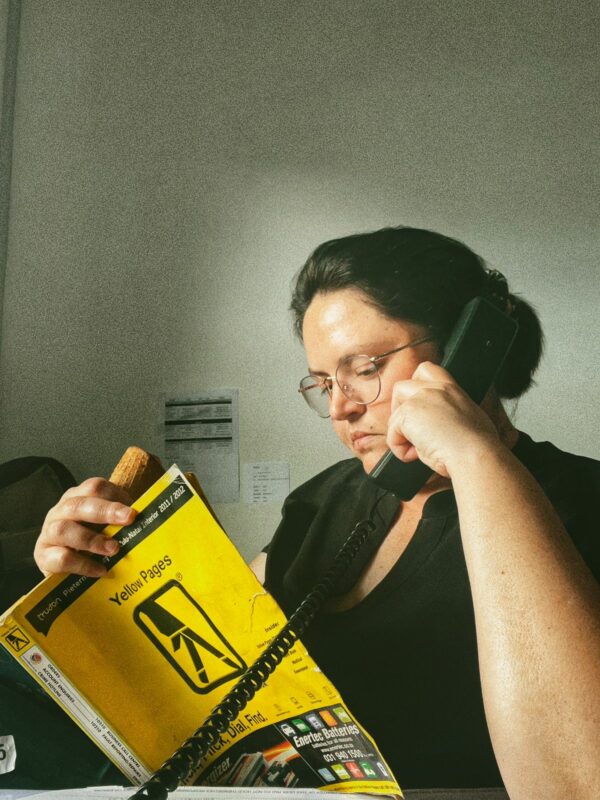 Today
Today
Today, the book would sing ‘all by myself’, because all our needs are in one rectangular device… Our cellphone or laptop.
Everything is quick and easy… And much, much lighter.
Somewhere, stuffed in a box full of dust lies the timeless Phone Book and Yellow Pages.
Forgotten.
Outdated.
But forevermore filled with memories.
Key facts
- Origin: Founded in 1950 by Maister Publishing;
- Initial setup: Maister sold the advertisements, while the Department of Posts & Telegraph managed the printing and distribution;
- Evolution: The service was known as the Telkom Directory Services;
- Digital shift: Electronic services were introduced in 1987, later evolving into online and mobile platforms.
(via ITWeb and lazertrix.co.za)
The news provided to you in this link has been investigated and compiled by the editorial staff of the Newcastle Advertiser, a sold newspaper distributed in the Newcastle area. Please follow us on Youtube and feel free to like, comment, and subscribe. For more local news, visit our webpage, follow us on Facebook and Twitter, and follow us on our WhatsApp Channel