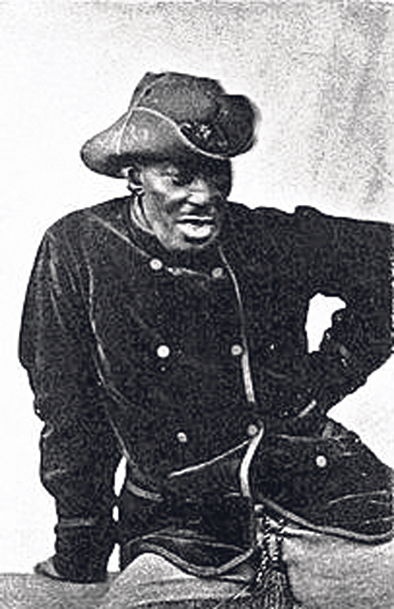
Tim Jeebodh
The arrival of the Amahlubi in the Estcourt area took place in December 1849. King Langalibalele was born in 1814 from the Amahlubi Tribe.The Amahlubi Tribe was a Bantu speaking Nguni tribe that settled in the Northern part of the province between the Buffalo and Blood River.
During the early nineteenth century the Mthethwa Chief Dingiswayo a neighbour of the Amahlubi set about consolidating the Nguni people under his leadership. In 1817 Chief Dingiswayo was killed in battle and power was past onto one of his lieutenants, King Shaka.
King Shaka expanded the Zulu Tribe to form a formidable army. King Langalibalele was the second son of Mthimkhulu the second. Mthimkhulu the second was killed in 1818, leaving behind Langalibalele and Dlomo who were infants at that time.
Mthimkhulu’s brother Mahwanqa assumed the regency. When Dlomo came of age Mahwanqa was reluctant to release the regency, but his troops revolted and he was killed in the battle.
Dlomo on gaining the Chieftainship paid a visit to the Zulu King Dingaan at the Royal Kraal in uMgungundlovu. Here Dlomo requested that King Dingaan return his cattle.
King Dingaan ordered the murder of Dlomo and Langalibalele became the King of the Amahlubi Tribe. In 1848 King Impande summoned King Langalibalele to the Royal Kraal and King Langalibalele mindful of what had happened to his brother refused.
King Impande incensed by King Langalibalele’s refusal launched an attack on the Amahlubi Tribe.The Amahlubi and the Amaputini fled across the Buffalo River into the Klipriver District.
King Langalibalele appealed to Martin West, the Lieutenant Governor of Natal for protection. In December 1849 Lord Shepstone granted the Amahlubi Tribe land on the Little Bushmen’s River for settlement.
The Amahlubi, about seven hundred thousand in number, were given 364 square kilometres which proved to be too little and it later grew to 6 000 square kilometres.
When the British Government started imposing a hut tax and marriage tax there was resentment rebellion from the Amahlubi people. This rebellion led to the British building a Fort under Colonel Durnford at the hill top in Estcourt which is today known as Fort Durnford.
At the same time with the discovery of diamonds in Kimberley many of the young men were employed as labourers in the mines and payment was done in guns rather than in money.
Many of those guns were in the hands of the labourers returning home. The then Magistrate John Macfarlane ordered that all guns be brought in for registration.
King Langalibalele refused and made plans to flee to Basutoland. Having reached Basutoland the Basuto King Molapo handed over King Langalibalele and his five sons to the authorities.
There was a travesty of British injustice done to King Langalibalele and he was sentenced to banishment for life at Robin Island. Bishop Colenso and many others approached the British Government for relief.
In 1887 King Langalibalele was allowed to leave Robin Island but was confined to Swartkop near Pietermaritzburg where he died in 1889. He was buried at Ntabamhlophe.