
RUGBY – Learn the Lingo
Have you found yourself on the couch, pondering rugby field zones?
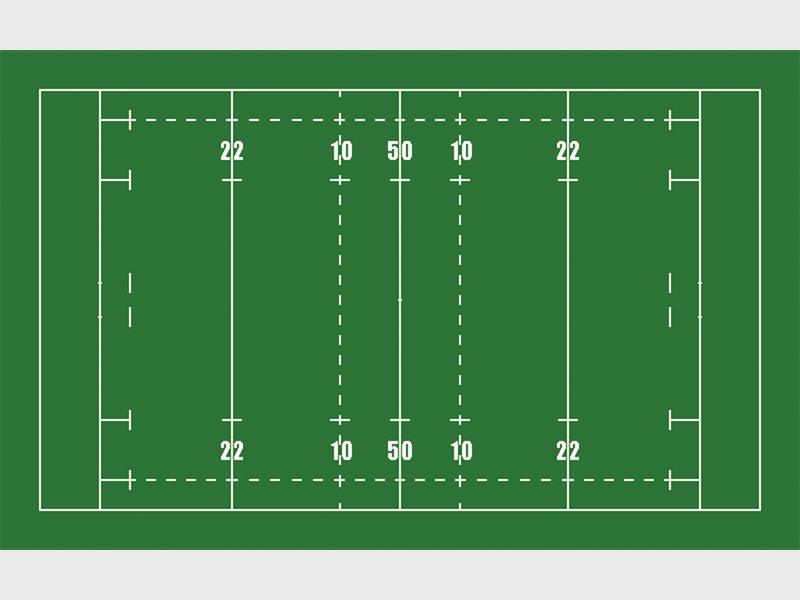
Have you found yourself on the couch, pondering rugby field zones?
Ever wondered the context of the 10-metre line, or what the ’22’ is all about?
In this edition of Learn the Lingo, we’ll tackle the different zones of the rugby field, and help you score some new knowledge.
The field as a whole
International standards dictate the rugby field is no longer than 100 metres and no wider than 70m, and is broken into several zones.
Solid lines mark borders of the field, including the halfway line, 22 and in-goal areas.
The goal area in rugby union is the same width as the rest of the field, and must be between 10 and 22 metres in length.
Getting across the line
The halfway line extends horizontally across the entire field, and is the spot where kick-offs are taken from.
A team will take a kick-off to start a match, or restart after the opposition scores.
When kicked off, the ball has to travel beyond the first 10-metre zone and may not go directly out – if the kick-off is short, the referee will call for a scrum on the halfway.
Breaking it down
After the halfway line and the first 10-metre line, the next important marking is the 22.
The 22 is where drop-outs are taken from – a drop-out is taken when the attacking team takes the ball beyond the goal area, or a defender touches down the ball in their own goal area.
Close to the line
The last important marking before the goal area is the five-metre line.
A five-metre line is the closest position a set piece (i.e. a line-out or scrum) can take place, and is likely where you will see attacking teams driving for the line in a rolling maul.