
A master of all things art
Reminiscing on her life's work, she thanked her mentors, family, friends and Eric Kubheka for believing in her, and helping her chase her dreams.
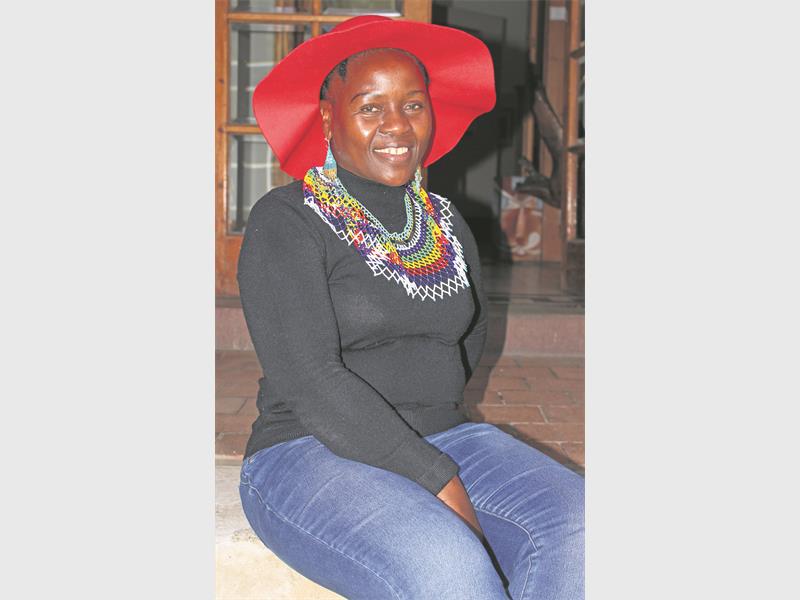
The odds were stacked against her; there was nowhere to go, but up.
Carnegie Art Gallery Curator, Phumzile Dlamini is anything but an Average Joe.
Born into a time when South Africa was plagued by the evils of the Apartheid era, Phumzile never imagined she would be where she is today.
Art became the answer
Growing up in Impendle, it dawned on Phumzile that although her mother was uneducated, she was an artist.
Raising her children alone, her mother was prohibited from seeking employment under the rule of the National Party.
“My mother was very brave. She said she couldn’t follow the culture, and wanted to work for her family,” she explained.
During this time, Phumzile’s mother taught her all the tricks of the trade. She learned to sew, and use mud and grass to craft practical items.
“I grew up in a rural area. When we went to the mountains, I collected flowers to show my mom.”
Drawing inspiration from their simplistic beauty, Phumzile said she soon found herself painting colourful pictures of wild flowers.
“I never thought it would become my career. When I matriculated, I was set on becoming a nurse,” she added.
She later applied for a nursing position at a hospital in Bloemfontein. However, when the time came for her to take office, she decided to pursue a career in the field of art instead.
“I stayed at home for a year. While I was unemployed, I crocheted and sold plants to the community.”
After creating vibrant vision boards, Phumzile finally acknowledged that art was a part of every moral fibre of her being.
With no idea where to start, she sought the assistance of an education officer at the Durban Art Gallery.
“She was very good at motivating people,” she said. “I showed her my story boards and portfolio, and she asked me to be at the gallery every Saturday in order to upgrade my skills.”
After interacting with artists, and sharing her skill set with others, Phumzile managed to obtain funds to take her love of art to the next level.
Over the next few years, she studied textile design, art administration, museology, archaeology, anthropology, public administration, marketing management, psychology and ballet, to name a few, at various institutions across the country.
From short courses to diplomas and a degree, it goes without saying that Phumzile is qualified to lead the pack on the local front.
“Everything I have studied has helped me understand the heritage of art; art is embedded to heritage.”
Before taking over from Judy Jordan last year, the dynamo exhibited in galleries in KwaZulu-Natal, the Western Cape, Pretoria and Mauritius.
She also participated in archaeological excavations and surveyed rock art in the southern Drakensberg mountains.
“I was also invited to present a paper on the history of beadwork at the Beadex Africa convention in Sandton,” she said. “These experiences have molded me into what I am today.”
Collections of some her artworks can be found at Tatham Art Gallery, Caversham Press, as well as the Mahatma Gandhi Institute and the South African Embassy in Mauritius.
Along came Newcastle
With a strong foundation on all things art-related, Phumzile decided to pack up and move to Newcastle.
“I used to live in Amiel Park, but then I changed my mind and moved to Blaauwbosch. This way, I can be closer to the disadvantaged people.”
Questioned on what she loves most about Newcastle, Phumzile said she loved the weather, people and the striking sculptures outside Newcastle Mall.
Despite facing unique challenges on a daily basis, she is firm in her belief that there are many talented artists on home ground.
Reminiscing on her life’s work, she thanked her mentors, family, friends and Eric Kubheka for believing in her, and helping her chase her dreams.
In future, she plans to inspire an unparalleled love of art among both urban and rural communities.
“Sometimes people undermine art because people don’t understand its importance. There is no communication without art,” Phumzile concluded.