
Six vegetables and fruits before and after humans modified them
Genetically engineering and selective breeding has changed the appearance of fruits and vegetables drastically over the years.
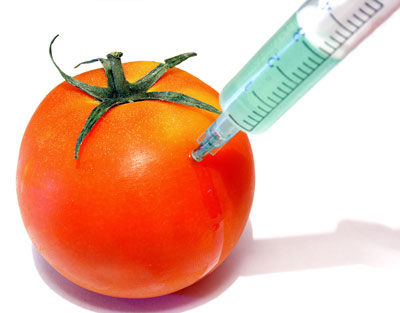
Would our ancestors recognise some of the fruits and vegetables we have become accustomed to consuming today?
Bruce Chasey, from the Biotechnology Center at the University of Illinois, said mankind has altered plants to such an extent, they would never survive in the wild without human care.
“Plants such as strawberries, wheat, cabbage, corn, and almost all the rest of our crops descended from ancestors that were nothing like strawberries or wheat or corn from back in the day,” he wrote in a 2007 paper.
Technology, such as selective breeding and genetically modifying plants, has not only been used to improve the look, taste and nutritional value of fruits and vegetables, but also made them more resistant to diseases and pests.
What does all this mean?
Genetically engineering plants involves a process of gene splicing, and transferring genes from one organism to another to produce the desired traits.
Selective breeding, on the other hand, is where crops which show the required characteristics for breeding are carefully chosen. This process may take years.
The introduction of genetically modified foods has stirred up strong emotions, with some questioning how the altered crops may affect their health, and whether it is safe to consume or not.
According to the Scientific American, only a handful of scientists raised questions regarding the safety of genetically modified crops. Those campaigning for the genetically modified crops argued the benefits (lower food prices, less pesticides, etc) outweighed the health risks.
Let’s take a look at fruits and vegetables before and after genetic alterations:
Wild banana vs. modern banana

Wild bananas were reportedly first cultivated approximately 7000 years ago in Papua New Guinea and Southeast Asia.
The variety which we now enjoy stemmed from the wild ones which has hard seeds.
The hybrid of the Musa acuminate and Musa balbisiana produced the modern banana with its peelable skin and long yellow shape.

Unlike its ancestor, the modern version also has tinier seeds and more nutrients.
Wild watermelon compared to modern watermelon

Giovanni Stanchi, a 17th century Italian artist, painted a watermelon modern people have not encountered.
The cut watermelon appears o have red swirl shapes with black seeds, separated into six triangular sections.

Modern watermelons were bred to develop a red and fleshier interior.
Wild peach versus modern peach

Peaches once resembled cherries in looks and tasted a tad bit on the salty side.
After thousands of years of selective breeding by farmers, peaches are now 64 times larger, 27 per cent juicier and four per cent sweeter.
Wild eggplant compared to modern eggplant

Historically, eggplants came in various colours and shapes such as azure, white, purple and yellow. Some of the earlier ones had spines where the stem connected to the flowers.

The eggplants we eat today are purple and oblong, without the spines.
Wild corn and modern corn

An essential part in agriculture, the domestication of corn began approximately 10 000 years ago and was bred from the barely edible grass called teosinte.

Corn as we now know it is larger, sweeter, easier to peel and simpler to cultivate than its ancestor.
Wild carrot versus modern carrot

Carrots were originally purple or white with forked, spindly roots.
However, when farmers domesticated it, carrots grew into the large orange roots we are now acquainted with.