
Weird Christmas traditions
Some of the weird Christmas traditions from around the world
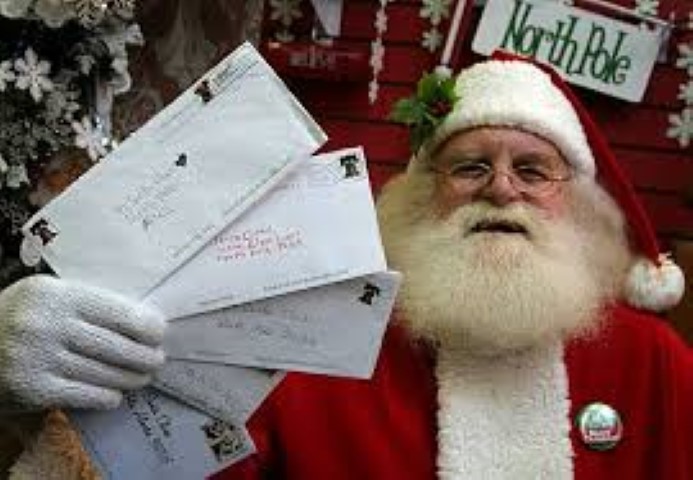
1. Santa’s Own Postal Code [H0H 0H0]
Where do you send your letters to Santa to? The North Pole? Santa’s workshop? Actually Santa has
his own postal code, H0H 0H0 (with zeros instead of the letter ‘o’) and it’s in Canada where postal
codes are alphanumeric. Letters – the kind that bypass parents – used to end up undelivered
because there was no centralized address for Kris Kringle.
2. A Christmas Log that Poops Presents: Catalonia, Spain

For most of us, the thought of holiday fun and defecation definitely do not go together. Sure, rich
holiday foods can often cause a troubled digestive system, but most of the time relieving ones
bowels is nothing to celebrate. That is, unless it is Christmas time and you are in Catalonia, Spain,
home of the extremely odd Caga Tio. Literally translated, Caga Tio means Pooping Log and this
hollowed out, smiley-faced piece of wood brings laughter and joy to Catalonian children in a long
established tradition. It is cherished because it poops out presents.
Beginning on the night of December 8, the Feast of the Immaculate Conception, the Caga Tio is
placed by the fireplace, covered with a blanket, and treated as a pet. Each evening the children of
the household feed the log fruit, nuts, and chocolate in hopes that it will grow bigger. Loving parents
secretly swap out the log with a progressively bigger one until magically, by Christmas, it is full
grown.
On Christmas day, the children of the household gather round their Pooping Log pet and sing songs
to urge it to release its loot. The song lyrics translate as Poop log, poop candy! If you don’t poop
well, I’ll hit you with a stick. Poop log The children then beat the little log with sticks to force it to
defecate traditional presents like Turon nougat candy, small toys, and coins.
3. Krampus, the Christmas Beast from Hell: The Alpine Region of Europe

While Santa Claus rewards good little children who dream peacefully of dancing fairies and sugar
plums, there is an ancient demon afoot in parts of Austria, Germany, Hungary, and some
neighbouring countries. This hairy, evil beast has horns, hooves, a long tongue, and sharp claws. He
is known by the name of Krampus.
His job is to wreak general havoc and dish out well-deserved punishment to the bad little children of
the world. He carries a large wicker basket on his back, similar to Santa’s sack. Instead of delivering
presents in his basket, however, he uses it to kidnap the naughtiest children and deliver them
straight to hell.
Since the early 1800’s, Krampus festivals have kick-started the holiday season in many parts of
Europe and it has become a holiday to celebrate with costumes, food, and strong drink. Weird and
interesting Krampus-themed cards have been exchanged since that time period, as well, and have
become quite collectible.
Today, Krampus is spreading to parts of America, particularly in more urban areas like Los Angeles
and New York. A new generation of people there have imported the tradition and use it as an excuse
to create elaborate Krampus costumes and throw bacchanal parties.
4. The not so wicked witch of Christmas: Italy

In addition to Santa Claus, who is known as Babbo Natale in Italy, good Italian children are doubly in
luck. Eleven days after Christmas, on January 5, the eve of the Ephinany, a haggard, old, and dusty
witch named La Befana flies by on her broomstick and delivers additional toys and candy to well-
behaved children. Soot covered, wearing shoes with holes and patched clothes in tatters, this well-
intentioned witch enters houses by flying down chimneys in order to deposit loot in kid’s shoes or
stockings. Children who have misbehaved are threatened with lumps of coal or perhaps just a sweet
lump of coal-colored sugar.
Originating from an ancient year-end pagan custom which burned an effigy of a withered old woman
on a pyre to symbolize death and rebirth, La Befana was recreated in the 13th century with
Christianity in mind. The established legend tells us that La Befana turned down an invite from the
three wise men to visit baby Jesus in his manger. Feeling guilty, she now travels the world on the eve
of the date when the wise men reached the manger, forever delivering presents to children to make
up for her regretful mistake.
5. Spiders Mean Extra Christmas Luck: Ukraine

Most people think of spider webs as a spooky Halloween symbol, but in the Ukraine spiders and
their webs represent a most lucky kind of Christmas. Tradition calls for Christmas trees in this part of
the world to be decorated with spider webs to insure blessings and good fortune in the coming year.
This custom is based on an ancient Ukrainian legend in which a poverty-stricken widow had no funds
to decorate her family’s Christmas tree.
Her desolate children were left saddened and crying. After
the children went to bed, some friendly spiders who had sympathized with the childre’s tears spun
gorgeous, light-reflective webs to decorate the bare tree. When the children awoke on Christmas
morning they were joyous to find the beautifully decorated tree. From that day forward the poor
family was prosperous and lucky.
6. Hide the Brooms from the Witch: Norway

Christmas Eve is regarded with great superstition in Norway. Very much like the Halloween tradition
in other countries, Norwegians believe that this is the night when evil spirits taunt the living. It is
customarily believed that this is when witches come out and search for brooms to steal from hapless
citizens in order to fly off into the cold, dark night.
In order to prevent this, it is a yearly tradition forwomen to hide all of the brooms and mops in a given household, lest a nearby witch might steal oneof them. The men are then responsible for firing guns into the sky to frighten away evil entities.
7. Go Bananas With Christmas: India

In India, only about 2.3% of the population are Christians, but because of the large population they
have, we are talking about 25 million people here! Christians here celebrate Christmas with midnight
mass and gift-giving like the rest of the world, but with the absence of fir trees or pine trees to
decorate, they usually made do with banana trees and mango trees instead.
8. Kentucky fried Christmas: Japan

No kidding – just like how Christmas turkey is a must on Christmas, for the Japanese it’s the Colonel’s
Chicken. Since the beginning of this marketing campaign four decades ago, KFC has been associated
with Christmas in the minds of the Japanese for generations, a tradition passed on from parent to
child in spite of its commercialized beginnings. More than 240,000 barrels of chicken will be sold
during Christmas, five to ten times its normal monthly sales. In Japan, Christmas equals KFC.
9. Let The Goat Live Until Christmas Sweden

In 1966 a 13-metre tall goat figure made of straw was erected in the town square of Gavle. At the
stroke of midnight, Christmas Eve, the goat went up in flames. But the town never stopped building
it year after year, and vandals never stopped trying to burn the goat down! By 2011, the goat has
already been burned down 25 times. The burning of the Gavle goat happened so often that
bookmakers began taking bets for the survival of the goat since 1988.
10. Don’t Stuff It In My Socks Phillipines

Christmas is huge in the Phillipines since 80% of the population are Christians. Celebrations last all
the way to January. Children will leave their brightly polished shoes and freshly washed socks on the
window sills for the Three Kings to leave gifts in when they pass through their houses at night. The ‘Feast of the Three Kings’ marks the end of the Christmas celebrations.

HAVE YOUR SAY:
Like our Facebook page, follow us on Twitter and Instagram or email us at dundee.courier@caxton.co.za. Add us on WhatsApp 071 277 1394.