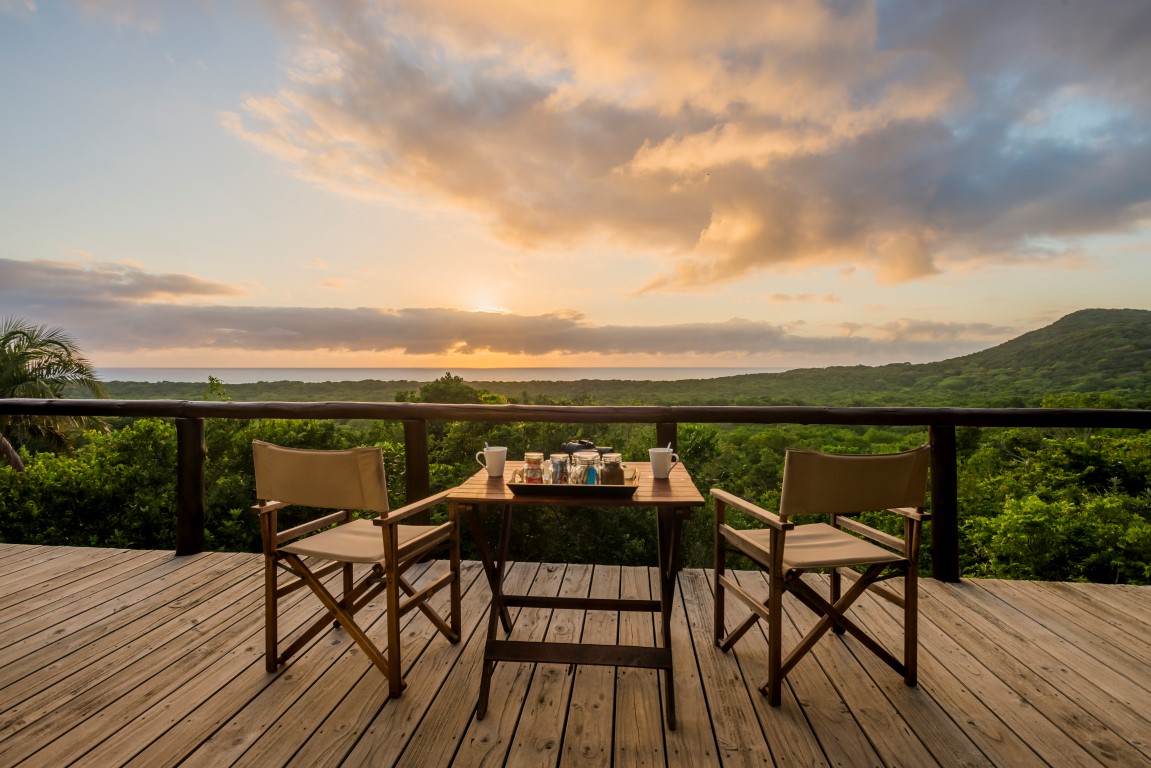
Nestled in the protected Maputaland Coastal Forest of KwaZulu Natal and only a short twenty minute walk from a pristine golden beach is Rocktail Beach Camp. It is a place often regarded as one of the best spots in the world for scuba diving and snorkeling, with untouched reefs teeming with ocean life – from various corals and fish species to sharks, dolphins and sea turtles.
The camp is equipped with sixteen en-suite bedrooms, six of which are two bedroom family units There is also a gorgeous honeymoon unit which offers breathtaking views of the ocean and surrounding dune forest.
It is a great spot for family vacations, with a large swimming pool and a playroom for the kids to enjoy. Kids are also entertained with a range of activities; including arts & crafts, guided nature walks, sand boarding, snorkeling and baking.
The nature walks are conducted within the coastal forest reserve and offer up-close encounters with red duiker, reedbuck and prolific birdlife.
Besides nature walks and snorkeling adventures, guests to the camp can also enjoy scuba diving, catch and release fishing, bird watching, ocean safaris, cultural village tours, massages and a morning safari experience in the Tembe Elephant Park.
The 30 000 hectare Tembe Elephant Park nestles between KwaZulu Natal and Mozambique and boasts a unique sand forest, swamp and savannah ecosystem. The park offers up-close encounters with some of Africa’s largest tuskers, as well as the famous Big Five. The oldest elephant to roam the park was 50 years old and stood 3,2 meters tall. The male elephant had tusks that were about 2,5 metres long and weighed more than 60 kgs.
Rocktail Bay is well-known for its population of endangered sea turtles – Loggerhead and Leatherback. Some turtles grow as long as two meters and weigh anything between 250 and 750 kg. From October to March the female turtles head inland to lay their eggs. They dig nests as deep as 1 meter and deposit 80 to 110 eggs. From January to the end of March, baby turtles hatch from their nests on the sand and make their own way to the ocean.