Red-billed Oxpecker named Bird of the Year
o learn more about fascinating birds, join the Feathers Bird Club's next meeting on April 24 at 18:30 in the hall at Sally Martin Park, where Colin Hamilton will give an illustrated talk on the birds of the Kruger National Park.
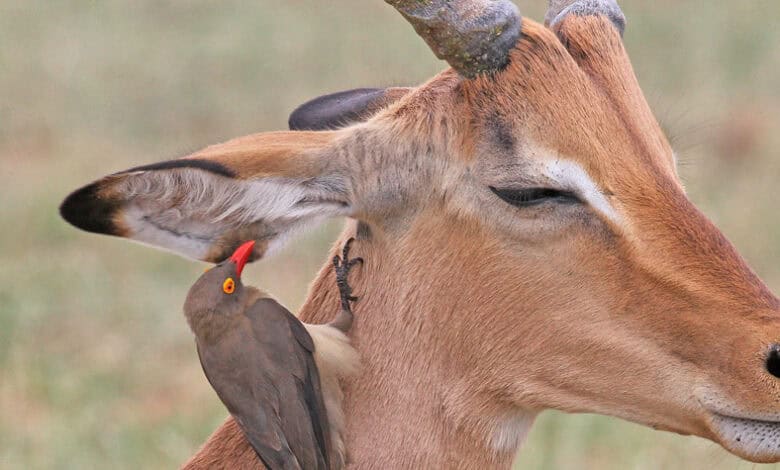
Across the savannas of eastern and southern Africa, a small but remarkable bird lives in close partnership with Africa’s largest animals. The Red-billed Oxpecker, proudly named Bird of the Year, plays a unique role in the ecosystem by helping mammals stay clean and healthy.
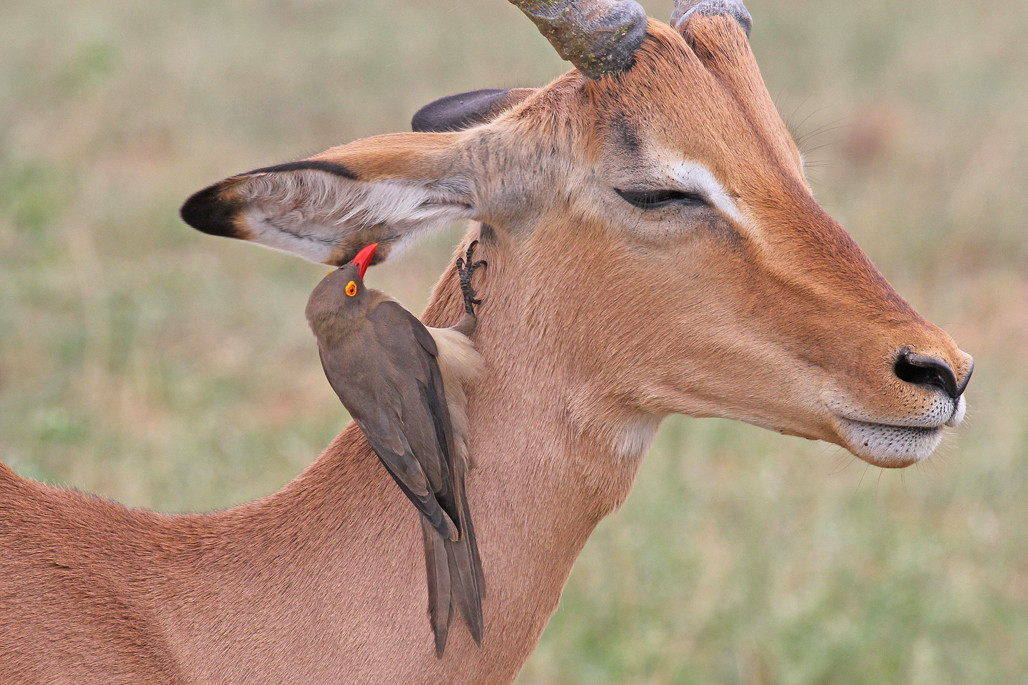
Measuring about 20cm and weighing just under 60g, the Red-billed Oxpecker is easy to spot. It has a dark brown body with a slightly lighter chest, a red, flattened bill, and a bright yellow or red eye surrounded by bare yellow skin. Males and females look the same, but young birds start with a yellow bill and dark eyes, which change colour as they grow older.
You’ll often find Red-billed Oxpeckers clinging to the backs of animals like giraffes, buffalo, rhinos, antelope and cattle. These birds spend most of their lives on the bodies of large mammals, where they search for ticks, flies, and other parasites. They are especially helpful in game reserves and farms, where they reduce the number of harmful pests. In fact, one oxpecker can eat thousands of tick larvae or over a hundred adult ticks in a single day.
Their behaviour is more complex than it seems. Red-billed Oxpeckers have also been seen pecking at wounds to drink blood, and sometimes even keeping a wound open to feed from it. While this might sound unpleasant, it is part of their natural feeding behaviour, and it may also prevent infections by removing dead tissue and parasites.
These birds are highly social. Their calls include a sharp “tsik tsik” when flying, and both males and females sing softly, especially during courtship. Their songs are also used to stay in contact with each other, and their alarm calls are even understood by some animals, like rhinos, which react to the warning sounds.
Red-billed Oxpeckers build their nests in tree holes. They usually breed after the rainy season and can raise three broods a year. A pair is helped by other birds—often their own grown-up young—to feed and raise the chicks.
Though once affected by the use of toxic farming chemicals and the loss of wild game, Red-billed Oxpeckers are now making a comeback. Thanks to conservation efforts, they are again found in many parts of their old range, especially in protected areas like the Kruger Park. Farmers are also starting to value them again, as natural pest controllers.
To learn more about fascinating birds, join the Feathers Bird Club’s next meeting on April 24 at 18:30 in the hall at Sally Martin Park, where Colin Hamilton will give an illustrated talk on the birds of the Kruger National Park. Everyone is welcome. For more information, contact Martin on 082 851 2121, Marisa on 064 963 5386, or Tertia on 083 287 7470.