
The northwest wind that whispers and sighs over the Dome bergland makes hiking – even on the hot midsummer days we are having – tolerable, even pleasant.
Anyone who spends time on foot in the Vredefort Dome knows that breeze. It arrives steadily from the Kalahari and, remarkably, it blows for much of the year.
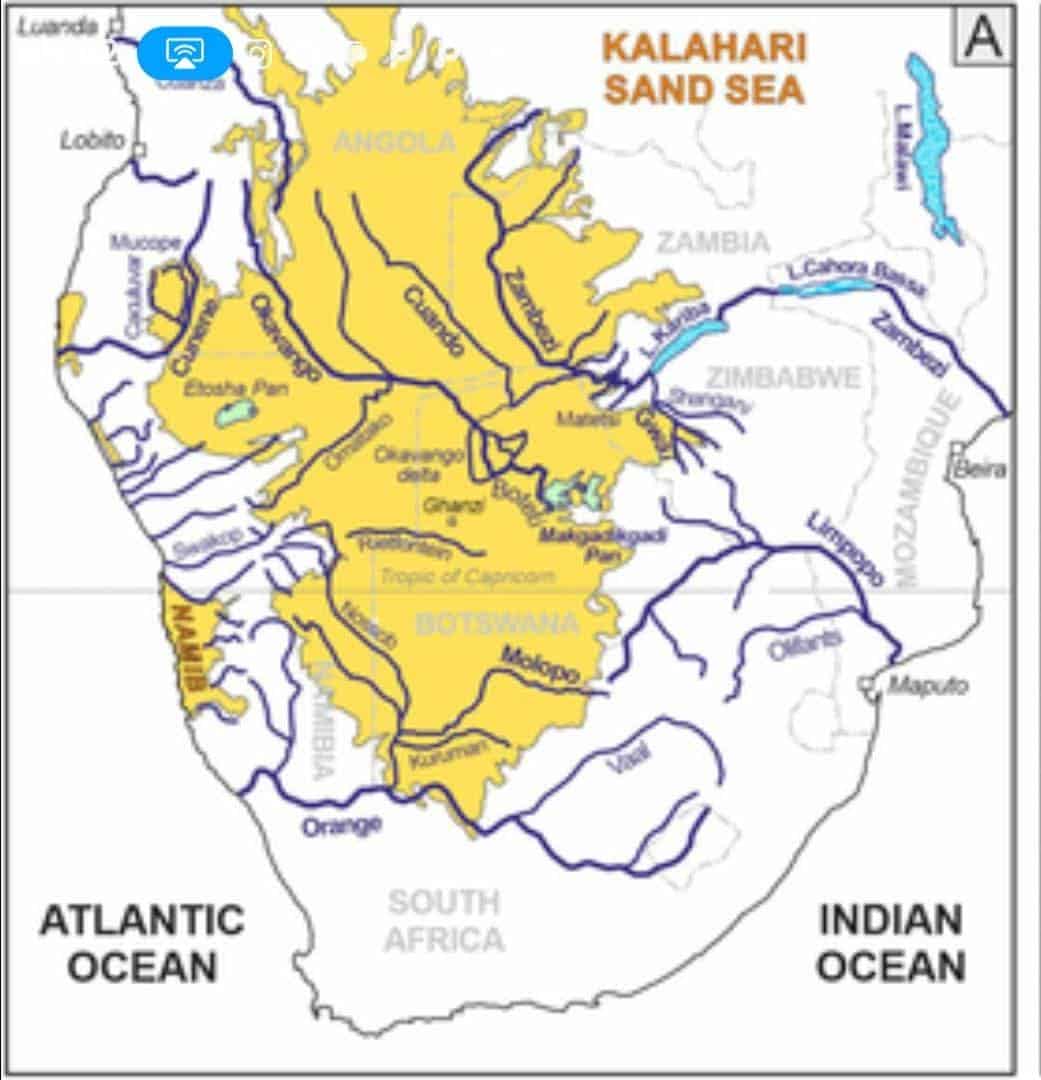
In earth-science terms this is what we call an ecological service. It is not just weather. It is part of a planetary circulation system that redistributes heat, moisture, and material. The dry continental air flowing off the Kalahari carries fine mineral dust rich in iron, silica, calcium and trace nutrients.
As it moves eastwards it reshapes soils, fertilises landscapes, and – when the finest fraction finally reaches the Indian Ocean – provides surfaces and micronutrients for plankton growth. Life in the sea quite literally clings to dust.
On my tours through the Vredefort Dome I make a special stop at a remarkable feature: a vast area of dropped, reddish Kalahari sand lying quite out of place beside the Vaal River. This is classic aeolian (wind-blown) sand. It is so fine that if you let a handful spill through your fingers it seems to vanish before it reaches the ground.
Some of this material has travelled long distances in the upper atmosphere, entrained in fast-moving airflow associated with subtropical jet streams. Other grains are coarser, carried closer to the ground by persistent low-level winds.
What makes the Dome special is the way the bergland interrupts this flow.
The ancient impact-uplifted hills act as a barrier, creating turbulence, lee-side eddies and back-vortices. As the air slows and spins, it drops its load. The result is a little piece of the Kalahari – kilometres wide – deposited in a summer-green landscape shaped by rainfall and rivers. It feels almost magical, and it is well worth a visit.
But there is a dark mirror to this gift of the gods.
As that same wind travels from its relatively unpolluted desert origins, it begins to pass over mining regions in Botswana and western South Africa, lifting fine dust from tailings, dumps and disturbed ground. Moving east, it then crosses some of the most heavily industrialised terrain in the country – Sasolburg, Vanderbijlpark and Vereeniging – where coal combustion, steelmaking and petrochemical processes release fly ash, sulphur compounds, nitrogen oxides and metal-laden aerosols into the air.
The tiny particles that once played a life-giving role in Earth’s renewal cycles now act as carriers for substances that were never part of that system. Instead of mineral nutrients alone, the atmosphere transports a complex cocktail: heavy metals such as mercury and lead, sulphates and nitrates that acidify soils, organic pollutants, and microplastics light enough to remain airborne for days. When these eventually settle – on land or at sea – they enter food webs.
If you think this does not concern you, think again.
Pollutants deposited into coastal waters are taken up first by plankton, then by small fish, and ultimately by the fish that reach our plates. The pathway from smokestack to bloodstream is neither abstract nor distant.
And what the winds do not carry, the rivers do – more slowly, but with devastating persistence – delivering dissolved and suspended pollution into the ocean system.
One particular airflow is especially worrying.
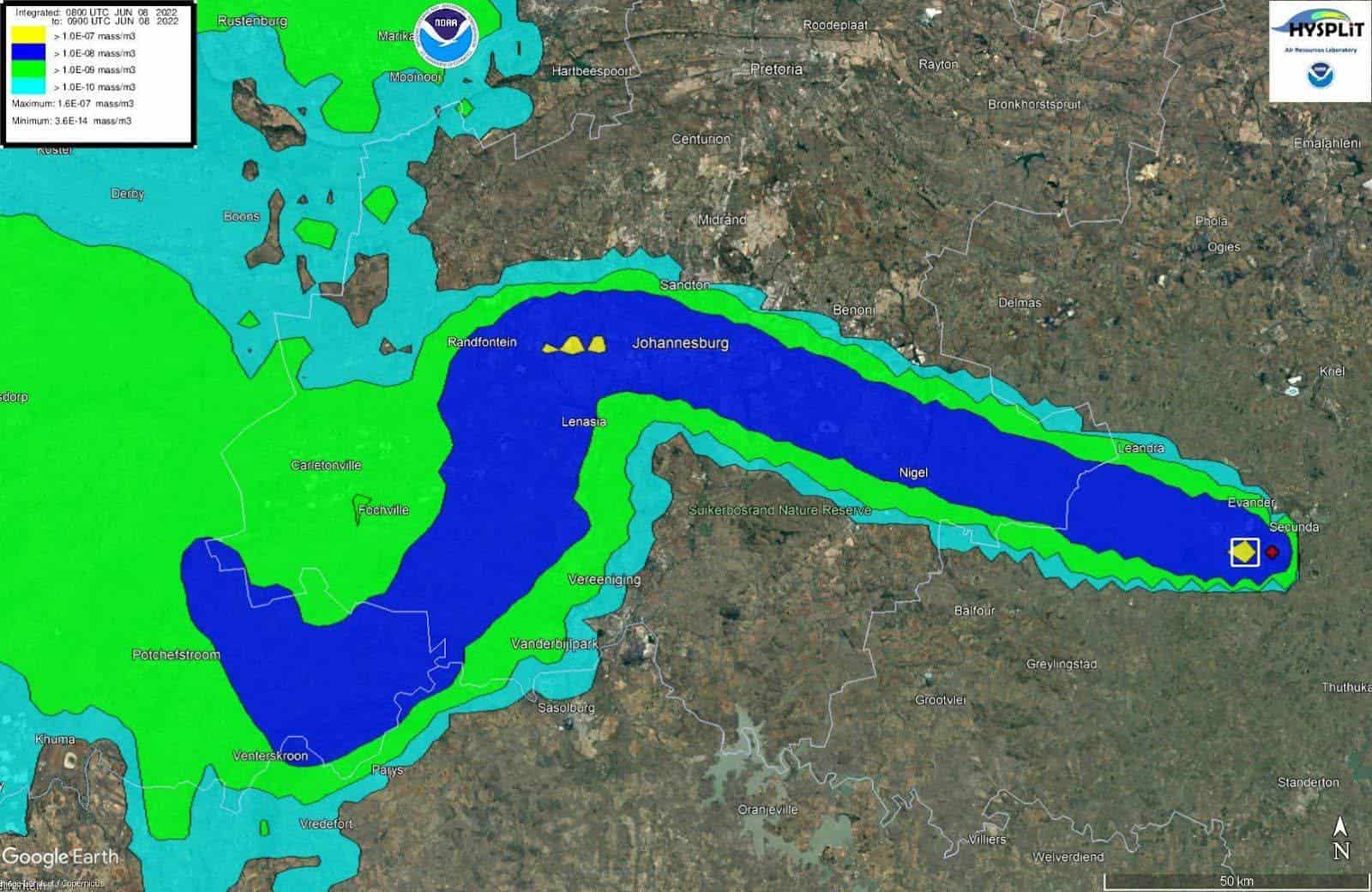
A low-level easterly counter-current regularly carries a sulphurous plume from Secunda in Mpumalanga across the Highveld and right into the Dome (see the attached diagram). We sometimes catch the smell ourselves – unmistakable, sharp, and unpleasant – and know immediately that we are breathing foul air. These gases and fine particles do damage as they travel: to soils, vegetation, and human lungs alike.
When visitors stand in the “Little Kalahari” of aeolian sand and watch it spill and disappear, they feel uplifted by the elegance of Earth’s self-cleansing systems. But there is also a lesson in that vanishing dust. Natural processes are not infinite sinks. They can be overwhelmed.
That is why we must keep pressure on mines, power stations and industry to reduce emissions at source – from smokestacks, dumps and disturbed land.
The wind over the Dome is both blessing and warning. It shows us how beautifully the planet works – and how easily we can poison the very systems that sustain us.
At Caxton, every story is written by humans. We use AI only to perform quality checks - never to generate the news. Happy reading!