Letter: Why wildlife rescue takes time
Parys WADER is not stepping back from conservation—we are laying the foundations for a professional, specialised rehabilitation centre that will serve wetland wildlife in our area for many years to come.
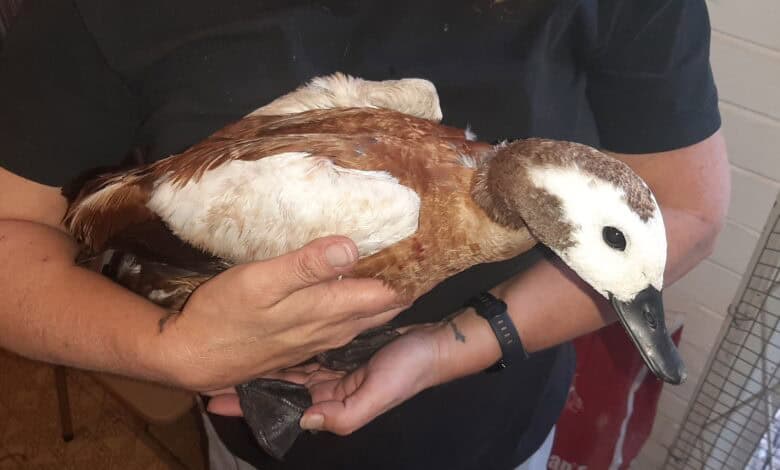
Over the past few months, many people in the Parys community have reached out to ask two very understandable questions: Why is it taking so long for Parys WADER (Parys Wetland Avian Development and Emergency Rescue NPC ) to receive its permit, and why are we no longer taking in common garden birds? I would like to explain both, openly and honestly.
From the outside, wildlife rescue can look simple. A bird is injured, someone steps in to help, and care begins. In reality, operating a wildlife rehabilitation facility in South Africa is highly regulated.
Before we can legally rehabilitate birds under a full permit, we must comply with several environmental and animal welfare laws. These cover everything from biosecurity and disease control to waste management, record keeping, staff training, veterinary oversight, and environmental impact. This process takes time.
Permits are not issued lightly, and rightly so. Authorities must be certain that a facility will not cause harm—whether through the spread of disease, stress to animals, or unintended environmental damage. Every inspection, document, and compliance check exists to protect wildlife and the people who care for them.
While it can be frustrating to wait, this process is essential for doing the work properly and legally.
I also want to be very clear about something important: Parys WADER is not a backyard rehabilitation facility. The premises we currently operate from in town are only the beginning of a much bigger plan. This site is intended to function as an emergency intake and treatment clinic, where birds can be stabilised, assessed, and treated when they first arrive.
Our long-term plan is to move stable patients to a separate property outside town. There, birds will have access to larger enclosures, quieter surroundings, and conditions better suited to recovery and preparation for release.
Building this kind of facility requires careful planning, environmental approvals, and infrastructure that meets strict standards. All of this forms part of the permitting process currently underway.
At the same time, wildlife rehabilitation itself is changing. Conservation authorities are encouraging facilities to specialise rather than try to do everything.
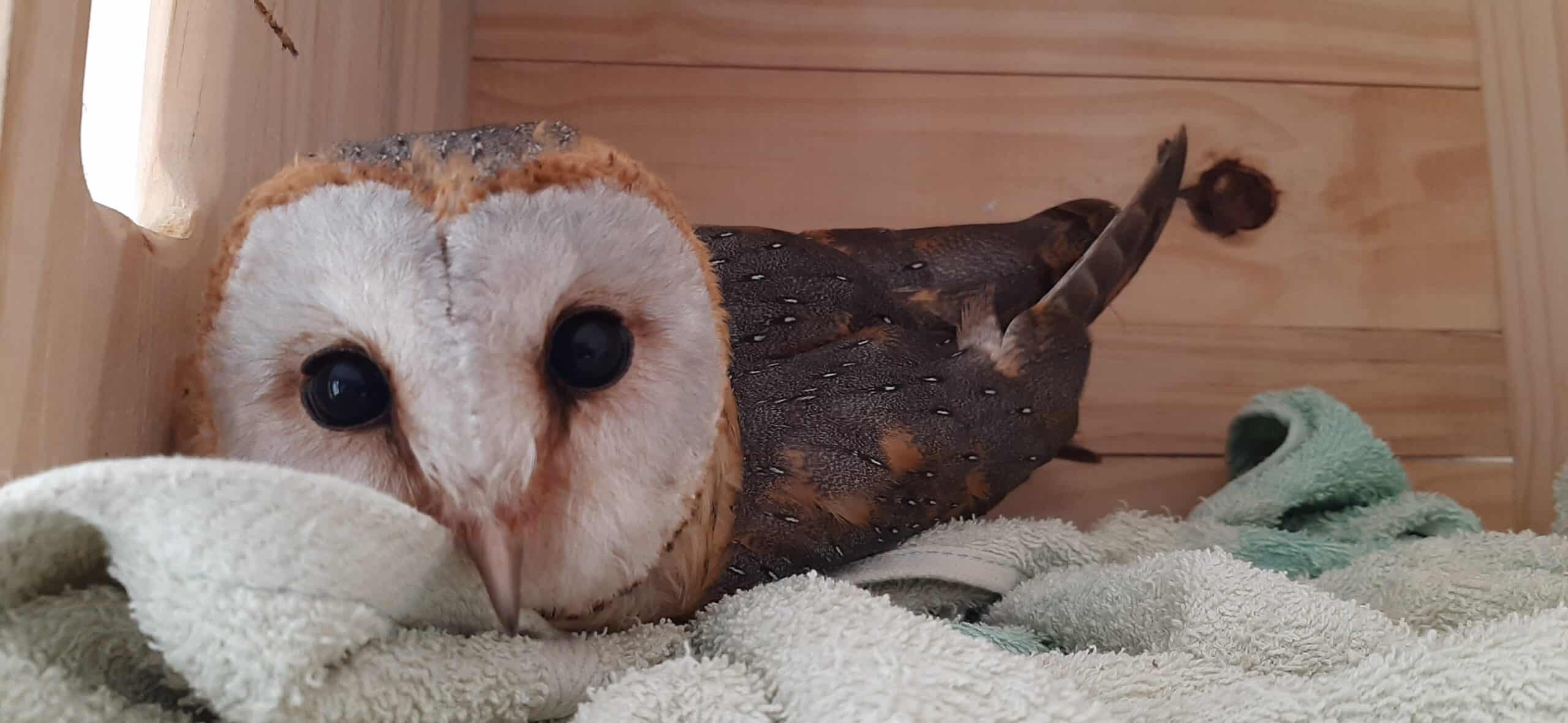
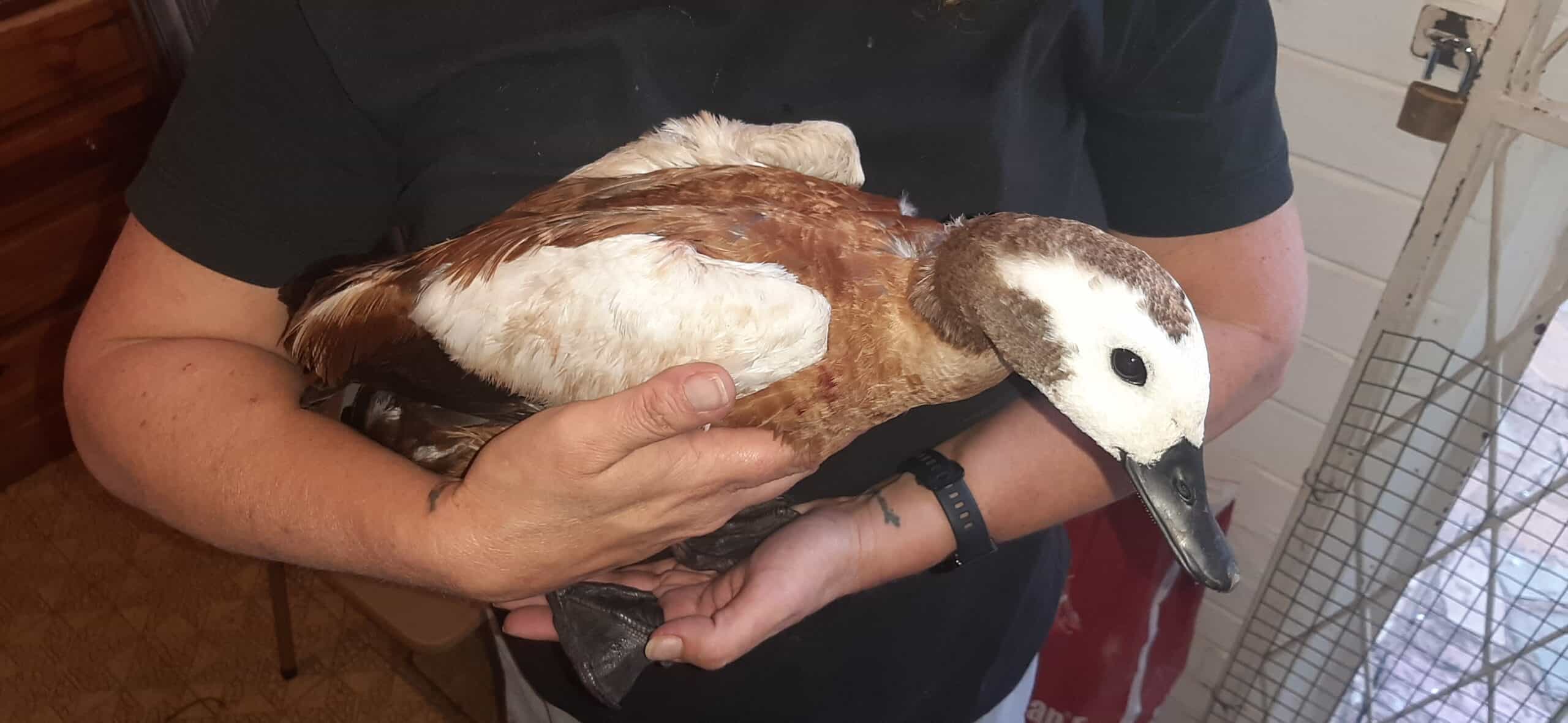
This brings me to the second question: Why we no longer accept most garden birds. Parys WADER focuses on wetland-associated birds—species that depend on wetlands, rivers, and surrounding ecosystems. This includes waterfowl, waders, gulls, ibises, and also owls, which play an important role in wetland food chains.
These birds often need specialised care, housing, and diets that general facilities are not equipped to provide. Common garden birds and urban species—such as sparrows, bulbuls, starlings, thrushes, doves, and pigeons—are widespread and stable. Their populations are naturally adapted to high loss in early life.
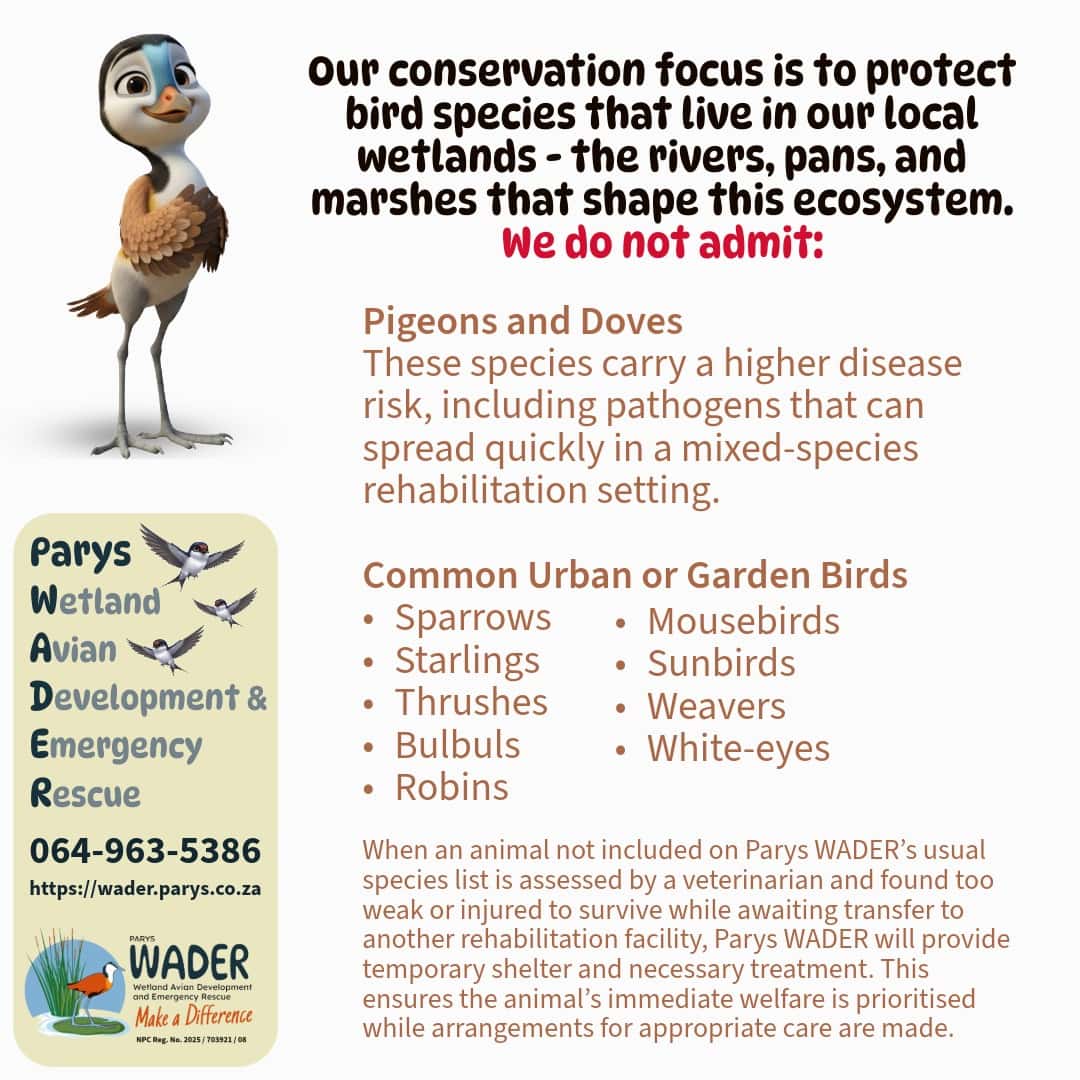
Although it may feel unkind, rehabilitating these birds does not improve conservation outcomes and often takes resources away from species that cannot survive without specialised intervention.
This decision is not about caring less. It is about caring responsibly. By setting clear limits, we can give better care to the birds we do admit, protect animal welfare, and remain compliant with the law.
Wildlife rescue sits at the crossroads of compassion, science, and regulation. The waiting, the paperwork, and the difficult decisions are part of building something that will last.
Parys WADER is not stepping back from conservation—we are laying the foundations for a professional, specialised rehabilitation centre that will serve wetland wildlife in our area for many years to come.
Thank you to everyone in the community who has asked questions, shown concern, and supported this work. Transparency matters, and so does doing things the right way.