
Foot health plays a far greater role in overall wellbeing than you might realise
“It’s easy to ignore them until something goes wrong, but by then the impact has often already travelled through the body.”
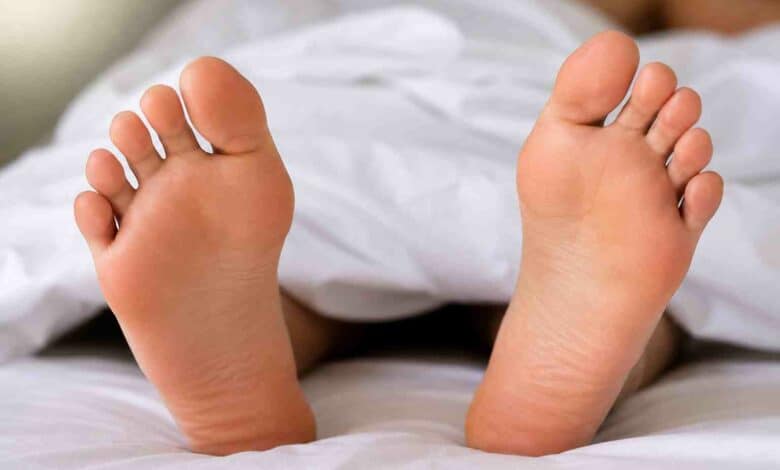
Despite being one of the most complex structures in the human body – containing 26
bones, 33 joints and over 100 muscles, tendons and ligaments – the feet remain one of
the most under-prioritised areas of healthcare.
Every May marks World Foot Health Awareness Month, an international initiative declared by the International Federation of Podiatrists and supported by podiatry associations and healthcare professionals worldwide. raising awareness of the critical role feet and ankles play in overall health, mobility and quality of life.
Foot Health foundational to whole body wellness
In South Africa, where long periods of standing, walking and physically demanding work
are part of daily life for millions, the conversation carries even greater urgency. Yet foot
health is still often treated as cosmetic or reactive, rather than foundational to whole
body wellness.
Yet the reality is simple: everything in the body is connected, and foot health plays a far
greater role in overall wellbeing than most people realise.
“Our body is one unit – one vessel – and we cannot treat it in isolation,” explains Liani
Potgieter, Owner and Physiotherapist at Grimes Physiotherapy. “Imagine your body as a
car. If one tyre is even slightly off, the entire system compensates. Over time, that
imbalance creates friction and strain elsewhere. The same applies to your body. A small
issue in your foot, whether it’s a corn, callus, cracked heel or even a minor ankle injury,
changes the way you walk, often without you noticing.”
“You may still move freely, but another part of your body will compensate for that
discomfort. Over time, this leads to misalignment and strain in areas far removed from the
original issue, like your knees, hips or lower back.” she adds.
This ripple effect is rooted in fascia, the connective tissue that links every muscle, bone
and organ in the body. Much like a spiderweb, tension in one area creates movement
in another, reinforcing the reality that foot health is not isolated, but foundational.
Lynsey Hammond, owner of Kroko Footcare, believes this global awareness month is long
overdue in mainstream health conversations.
“World Foot Health Awareness Month is important because it forces us to zoom out and
recognise the feet not as an afterthought, but as the foundation of human movement,”
she says.
“It’s easy to ignore them until something goes wrong, but by then the impact
has often already travelled through the body.”
In South Africa, this reality is amplified by everyday lifestyle demands. For many, long
hours spent on their feet, whether through physically demanding work or daily
commuting, are not optional, but essential, Hammond says.
“There is a real need to empower South Africans with knowledge and simple, effective
tools to care for their feet consistently,” she says. “Because prevention isn’t just about
avoiding discomfort, it’s about protecting your mobility, your posture and your overall
quality of life.”
This becomes especially relevant when considering how small, everyday foot concerns
can evolve. Conditions like cracked heels, calluses and blisters are often dismissed as
minor, yet they can subtly alter the way we walk, impacting gait, balance and alignment
over time.
For runners and active individuals, this can mean reduced performance or increased risk
of injury. For others, it may show up as persistent tension in the knees, hips or lower back,
with the root cause often going unnoticed.
“The body is incredibly intelligent,” Hammond adds. “It will always find a way to keep you
moving, even if that means compensating. But those compensations come at a cost.
When you take care of your feet, you’re not just solving for comfort in the moment, you’re
supporting your body as a whole.”
If you begin to notice discomfort elsewhere in your body, it may be worth looking down first.
Subtle indicators can include:
● A cracked heel that causes you to shift weight or change your gait
● Uneven wear on shoes suggesting altered movement patterns
● Persistent tightness in one hip or lower back
● Fatigue in the legs after shorter-than-usual periods of standing or walking
● Recurring pressure points, corns, calluses, blisters or areas of irritation
Preventative care remains the most effective approach
● Keep feet well moisturised to prevent cracking, friction and skin breakdown.
● Treat calluses and hardened skin before they affect the way you walk. There are
easy to use at home treatments available like Kroko’s Corn and Callus Remover
which have been on the market for decades.
● Wear supportive, well-fitted footwear suited to daily activity. Correct fitting socks
is important too.
● Address discomfort early, pain is often a late signal, not an early warning
● Incorporate gentle stretching of feet, calves and hamstrings to support alignment
As awareness grows, there is an opportunity to reframe foot health in South Africa, not as
an afterthought, but as a critical component of total wellness. Because when one part
of the body is compromised, the entire system adapts, often silently, and often at a cost.