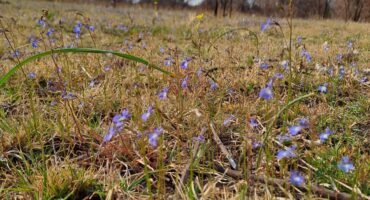
Lessons from nature taught in the wetland classroom
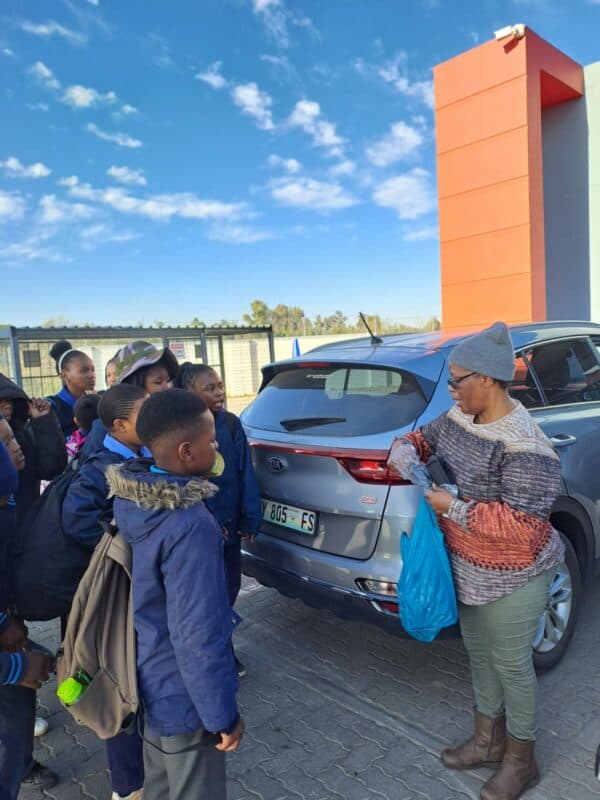
Friday's outreach was an excellent opportunity for the learners to experience what they have learnerd in nature.
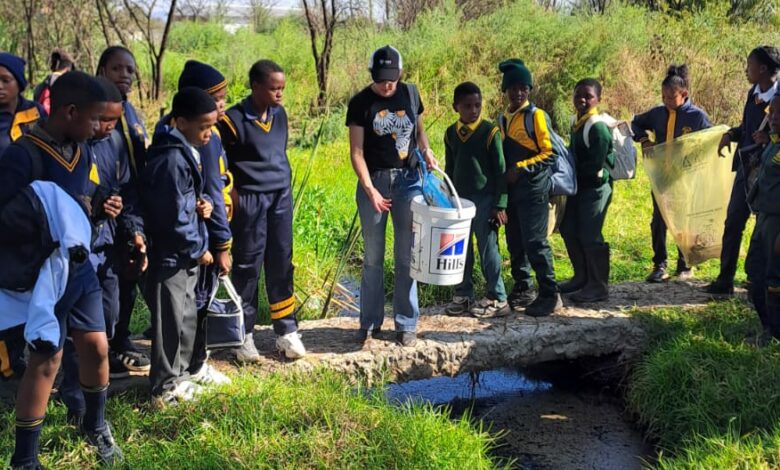
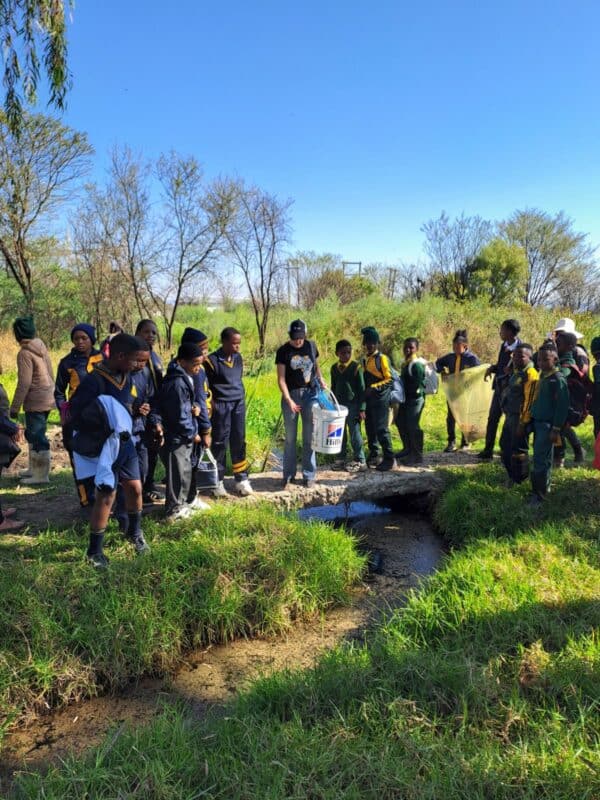
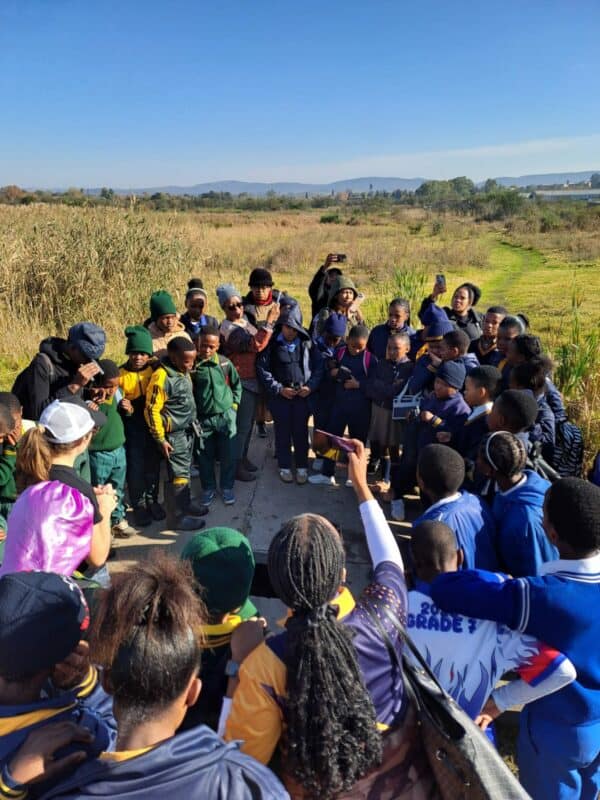
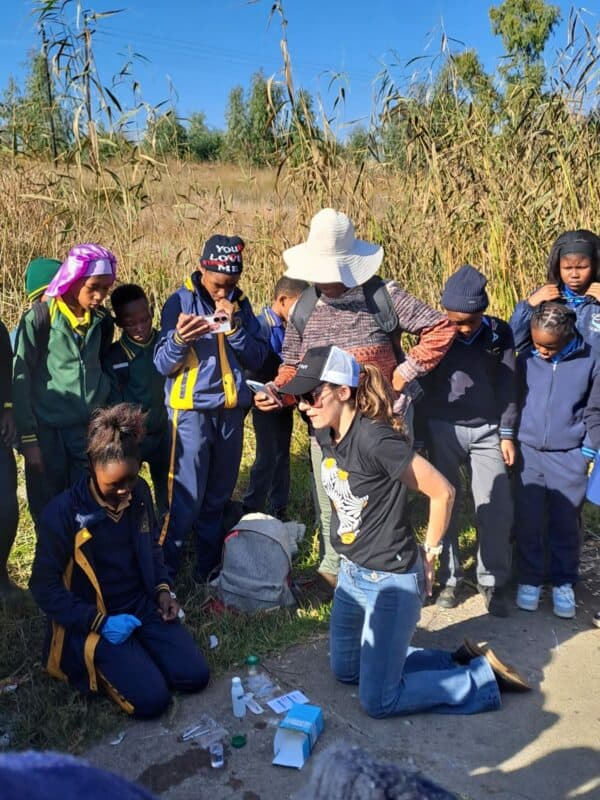
On Friday, learners from five local primary schools learned the lessons taught by nature in the Parys Wetland Park, joining a water testing school outreach. Accompanied by Wetland Park team members, Nelly Komape, Danie Venter, and Dr Tara Walmsley, they were taken on a walk through the wetland to learn about the importance of wetlands as green spaces and as natural filters to clean and protect natural freshwater resources.
Two sites in the wetland are routinely tested for water quality using a WaterCAN test kit. This forms part of a national citizen science initiative sponsored and co-ordinated by WaterCAN that maps water quality across South Africa in real time (watercan.org).
The group tested a natural spring on the upper end of the wetland, which is now covered with a concrete block with a reservoir underneath to collect the water flowing into it from the spring. This is often used by Tumahole residents and by water trucks when there is a water shortage, and the quality of this water is important due to its potential impact on human health.
Secondly, they tested a stream running into the wetland lower down towards the Parys Primary School area of the wetland. This is environmental monitoring to safeguard the quality of freshwater entering natural systems like wetlands and rivers.
These sites are tested several times a year, and the testing is co-ordinated with water quality education initiatives with local schools. Additionally, the environmental health of these streams will also be monitored using a MiniSASS approach that focuses on macroinvertebrates.
This is also a citizen science initiative to encourage anyone who is interested to take part in monitoring the health of our freshwater ecosystems (miniSASS.org).
Test results
Microbiology results for the sample taken in the Spring, indicated 23 coliforms per 1ml of water (equivalent to 2300 per 100ml). This is far above the limit with the standard for drinking water, which should have no detectable coliforms in 100ml of water. According to Dr Walmsley, the results are even too high (considered unsafe) as an environmental freshwater source. The chemical tests indicated that there is some sort of contamination leaking into the spring. “Previous tests have indicated little to no chlorine (which is expected in spring water), but this test shows high chlorine levels as well as high nitrate and phosphate,” says Walmsley.
“This is usually due to industrial or agricultural runoff or as a result of sewage contamination. We do not know what is happening underneath the concrete block that covers the spring, so we can only speculate as to why the water quality has deteriorated. It is most likely due to animal waste or human sewage that is leaking into the water system, or as a result of human activities (such as bathing and clothes washing) that also occur within this water source.
These water sources must be protected by educating people about how to use water and how to ensure it stays safe,” Walmsley added.
Microbiology water results for the bridge stream show high faecal contamination and high coliform contamination. This is most likely due to a combination of sewage and animal waste in this freshwater stream. It must be noted that despite this high microbial contamination, the stream is actually healthier than previously measured and is recovering from a very high volume of sewage contamination from a nearby sewage manhole.
One of the biggest, most persistent, and dangerous forms of pollution for all freshwater in South Africa is sewage. Not only is it destructive to the environment, but extremely dangerous to human health.
The chemistry results show that the water is actually quite healthy. The high nitrate, phosphate and chlorine levels that were observed for the spring are not reflected in this stream. There appears to be less chemical pollution in this water stream, possibly due to the fact that the water is passing through a lot of plants and vegetation and is being cleaned by the wetland as it moves through the system.
An example is the duckweed seen in the Parys Wetland Park. However, the primary pollution that remains in this water is the E. coli and coliforms.
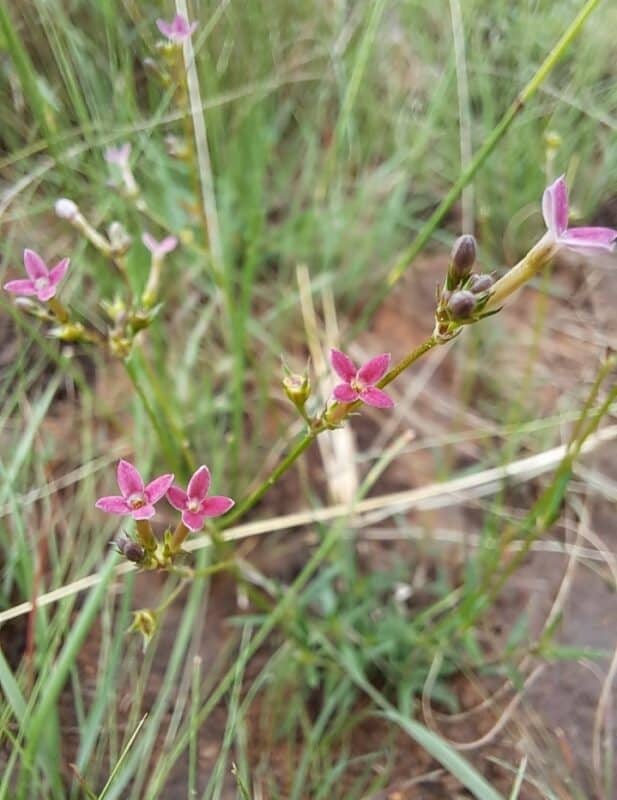
Examples of indigent veld flowers found on Friday were Cordylostigma virgatum (Spindly Trembletop) and the Solanum Mauritianum bugweed flowers.
The beauty of nature in the Parys Wetland Park
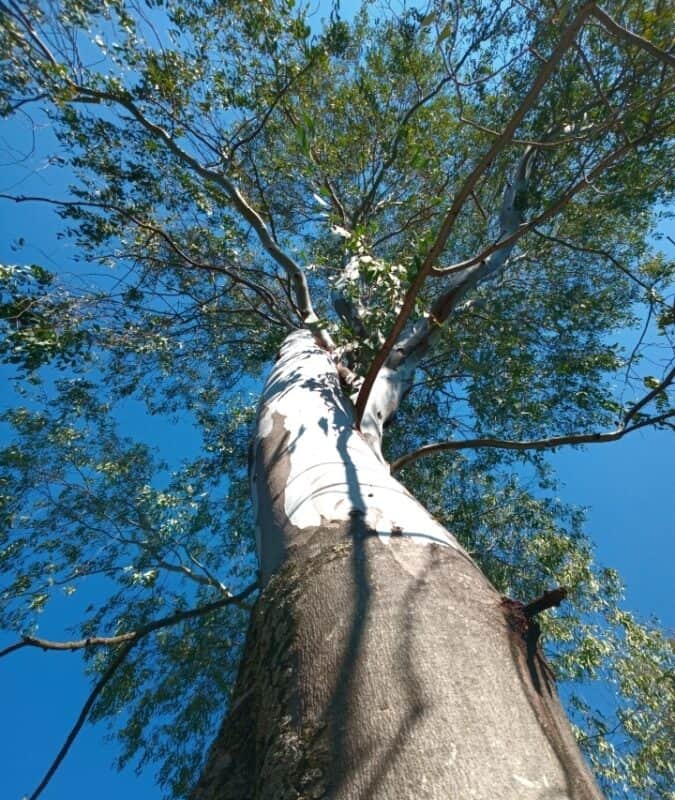
Danie Venter told the children how Eucalyptus trees, as an invasive species, increase the risk of fires due to their highly flammable oils, as well as their extraordinary water consumption. Their leaves can be used for medicinal purposes.
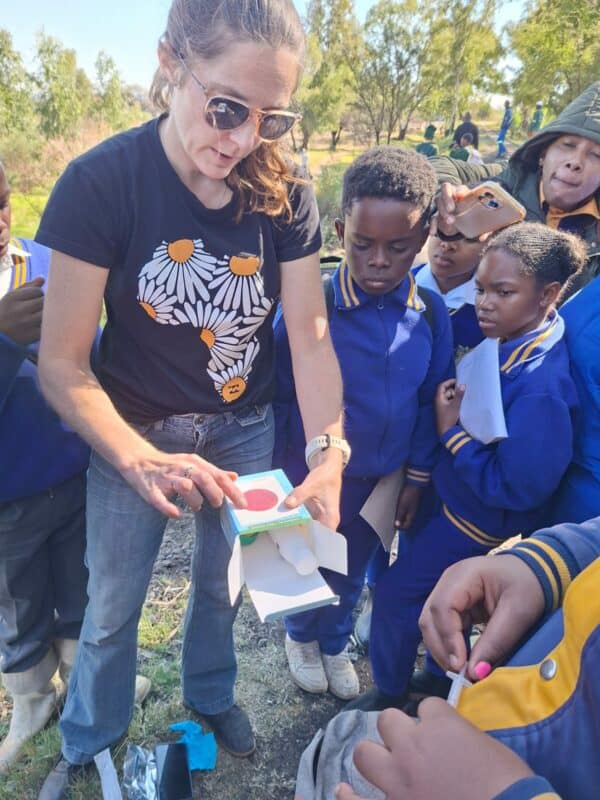
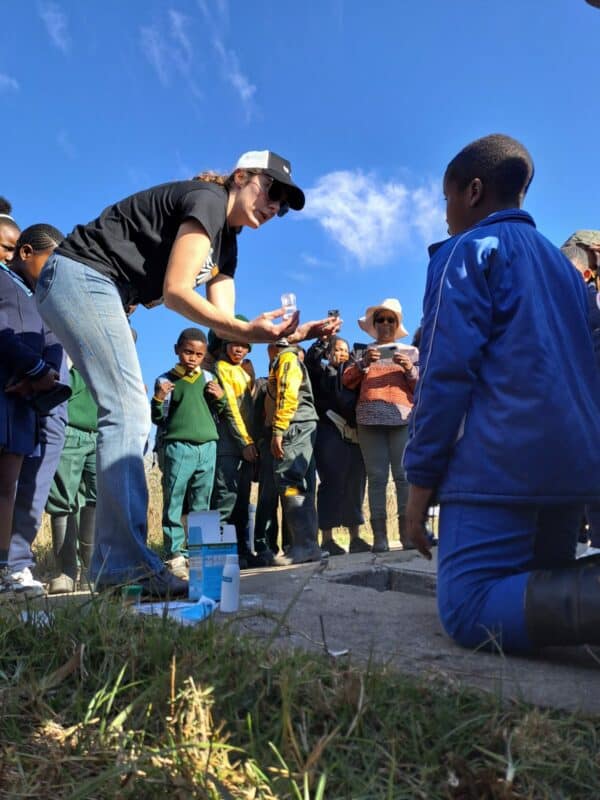
Primary schools that were part of Friday’s event included Botjhabatsatsi, Ntshwephepa, Sindekile, Selogilwe, and Lister Skosana. The outing followed after Nellie’s presentation at the schools, where she discussed various wetland-related topics with them.
They then presented posters on the topics covered during the presentations.
Friday was their turn to experience what they have learned in the wetland itself.