South Africa’s bird of the Year 2017
Birdlife South Africa is a dedicated bird conservation organisation in South Africa. The mission of Birdlife SA is to promote the enjoyment, conservation, study and understanding of wild birds and their habitat and biodiversity. Also through various programmes encourage people to appreciate, enjoy and value nature. Its vision is to see a country and region …
Birdlife South Africa is a dedicated bird conservation organisation in South Africa. The mission of Birdlife SA is to promote the enjoyment, conservation, study and understanding of wild birds and their habitat and biodiversity. Also through various programmes encourage people to appreciate, enjoy and value nature. Its vision is to see a country and region where nature and people live in greater harmony. “Bird of the Year” is one if Birdlife SA’s annual initiatives to create awareness about birds and bird habitat conservation.
By focussing on birds, the sites and habitats on which they depend, the Organisation hopes to improve the quality of life for birds, for other wildlife and ultimately for people. Birds are excellent flagships and important indicators of the state of the environment. Places that are rich in birdlife are also rich in other forms of biodiversity.
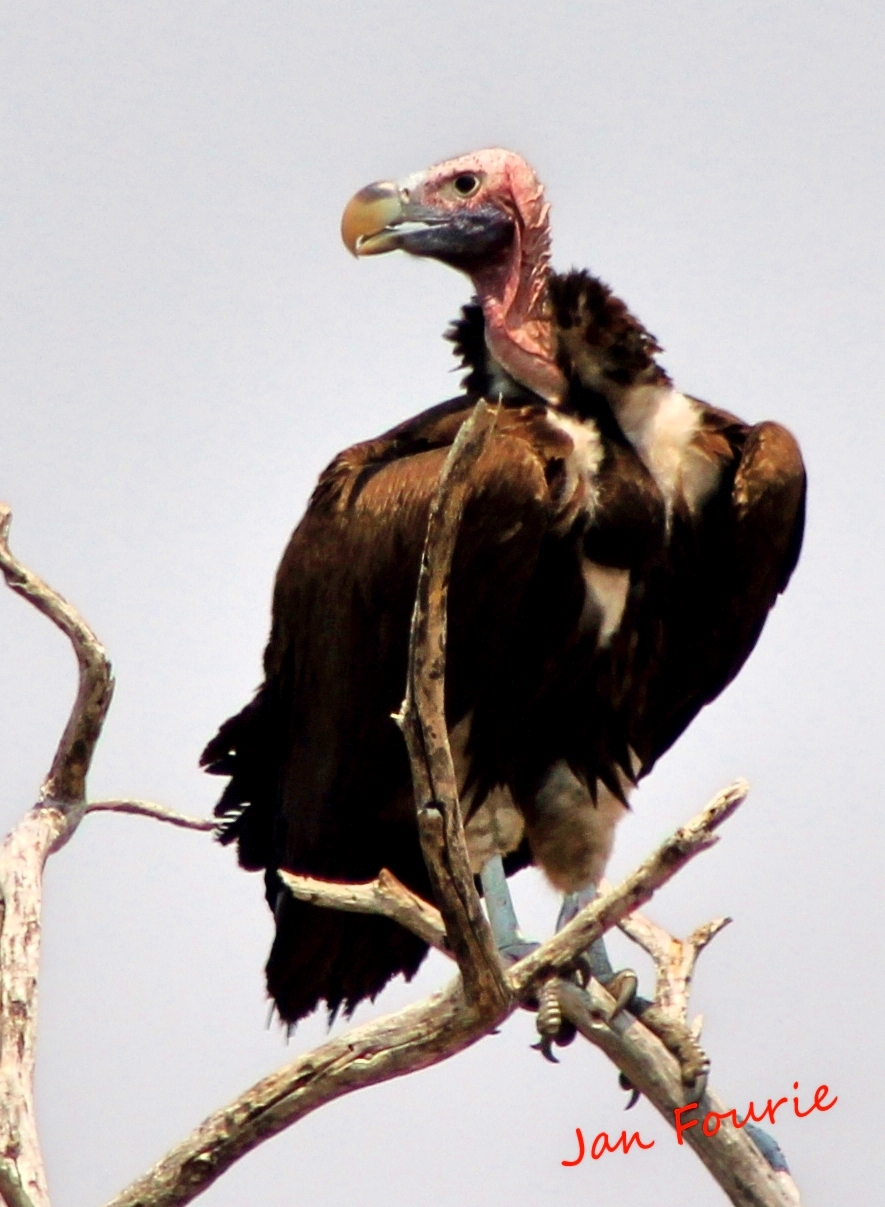
The bird selected as SA’s Bird of the Year for 2017, is one of our 9 vulture species in South Africa, the Lappet-faced Vulture (see Photograph). The Lappet-faced Vulture is possibly the most attractive and certainly most impressive of our vulture species. Its large size, bare face and throat and white feathers on the thighs are diagnostic. It is also known as the king vulture.
Considering the threatened status of Africa’s vultures, the choice of the Lappet-faced Vulture as South Africa’s bird of the year, is most appropriate. At a carcass the Lappet-faced Vulture is respected by the other vultures and is no. 1 in the pecking order. The bird has a powerful beak with a hooked tip to tare of strips of meat and skin. It is also able to open up the carcass of a fallen animal and make it easier for the less powerful vultures to access the carcass.
A tough creature, the Lappet-faced Vulture is a large and powerful bird with a massive wingspan (2.8m) and is always the dominant vultures at a carcass. It consumes large quantities of meat within minutes. A good feed will last the bird for at least four days and it only eats raw meat.
Vultures fulfil an important ecological function by feeding on the carcasses of dead animals and preventing the spread of diseases. They do not hunt and kill their own prey and are depended on the death of other animals, either through illness or carnivore kills. They are resistant to bacteria and their toxins that can kill other animals, such as anthrax and botulism.
The main features of the Lappet-faced vulture, apart from its large size, are the dark plumage, hence its Afrikaans name “Swartaasvoël”, its bear red head and neck with conspicuous skin folds and its enormous yellowish horn coloured bill with a blue-grey base. The male and the female birds look alike. In flight the underwings are mostly black with a narrow white bar.
In South Africa the Lappet-faced Vulture occurs in the northern parts of the region, but we will not easily see it in the Vredefort Dome area. The birds visit water holes and pans regularly to drink and bathe during the middle of the day.
These vultures are monogamous breeders and pairs bond for life. They are solitary nesters with nests of different pairs more than 700m apart. The nest is placed in the crown of an isolated tree. It is built by both members of the breeding pair and it is a large stick structure, lined with dry grass hair and skin.
Breeding season in South Africa is from May to July, one egg is laid and the incubation period is 55 days, performed by both members of the pair. The young is fed by both parents, bill to bill, after regurgitating in the nest. The nestling period is up to 128 days and the fledgling is dependent on the parents for a further 170 days.