A lot of visitors to our crater ask, “Where did the gold come from?” Just why the Witwatersrand is the richest deposit of yellow treasure ever found is hard to grasp when talking about the biggest known asteroid impact on Earth. What’s the connection?
Up to 60 000 metric tons of gold have been extracted, poured as ingots, and usually exported – say to America where the stuff that came out of a hole in the ground in South Africa goes right back into another hole at Fort Knox. About 4600 tons of it are there, originally because the US aimed to back up the dollar with gold.
Gold moves from one darkness to another, with human suffering in between.
The origin of gold was in the explosions of supernovae in deep space. From there – along with all other elements – it migrated to our solar system to form planets and other bodies including asteroids.
Did the Vredefort asteroid bring the gold? No. It was here, embedded in geological layers, long before the huge rock from space did its damage two billion years ago. What the impact did was gouge a scar in the face of our planet and overturn the layers.
When gold was discovered in Johannesburg in 1886, reefs of were breaking the surface. Little did prospectors realise these reefs descended at a 60 degree angle. They dive incredibly deep. Today some mines are 4km down where the rock is so hot and conditions so difficult that miners may be forced to depend on automated machines from now on.
But here’s the thing. Not only was the gold both raised up and punched down by impact, but life has had a role in providing it in rich quantities.
In my talks and tours in the UNESCO world heritage site I have a display of rocks. One set of samples tells the strange and amazing story of how bacteria concentrated the gold in the richest of the Wits reefs. The Black Reef and Carbon Leader contain laceworks of gold that far exceed the rather low grade ore in other reefs.
This is thanks to extremophiles, germs that live at extreme depths where there is little or no oxygen. These primitive creatures process carbon, sulphur and iron to make a living for themselves, and a byproduct of their activity is that gold drops out as deposits.
In the early Witwatersrand, gold was carried invisibly in underground water as tiny dissolved complexes. Certain bacteria living in oxygen-poor, carbon-rich environments metabolised sulphur and iron for their own survival. In doing so, they altered the chemistry of the water — lowering its oxidation state and producing sulphide.
These changes had nothing to do with gold. But gold is chemically sensitive. When the water chemistry shifted, gold could no longer remain dissolved. It precipitated out of solution and attached itself to nearby mineral surfaces, especially newly forming iron sulphides such as pyrite.
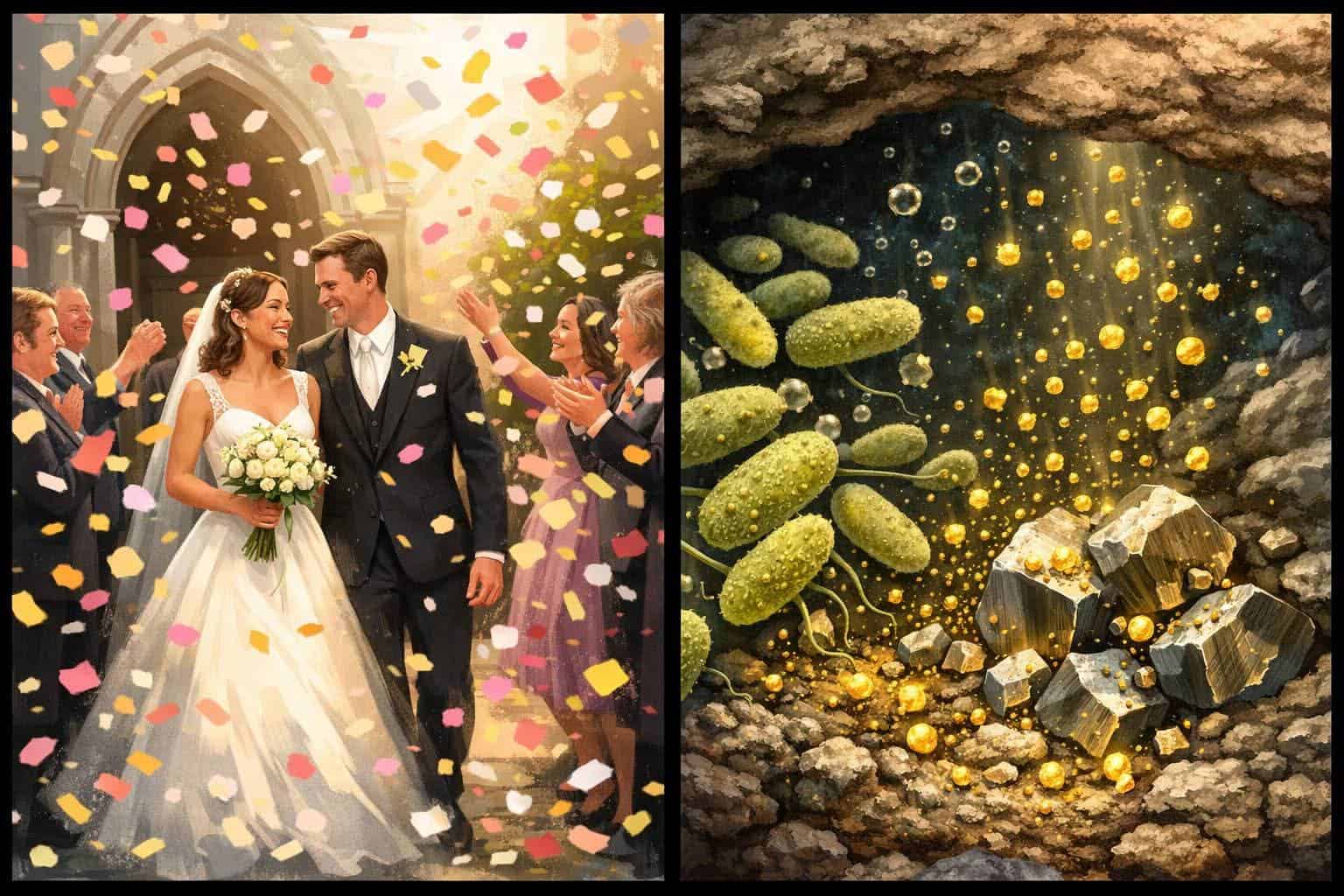
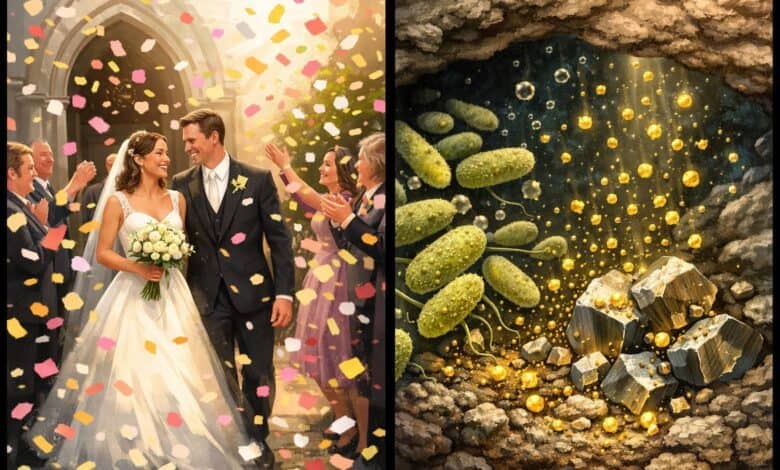
I thought long and hard about how to explain what went on, so deep down, so mysteriously, in hot water streams underground. And I came up with – a wedding!
The bride and groom leave the church and are showered with confetti. The confetti has nothing to do with the marriage itself. It didn’t cause the union, and it isn’t part of the vows. But the act of marrying changes the atmosphere. The solemn interior gives way to celebration, movement, noise — and suddenly confetti appears everywhere.
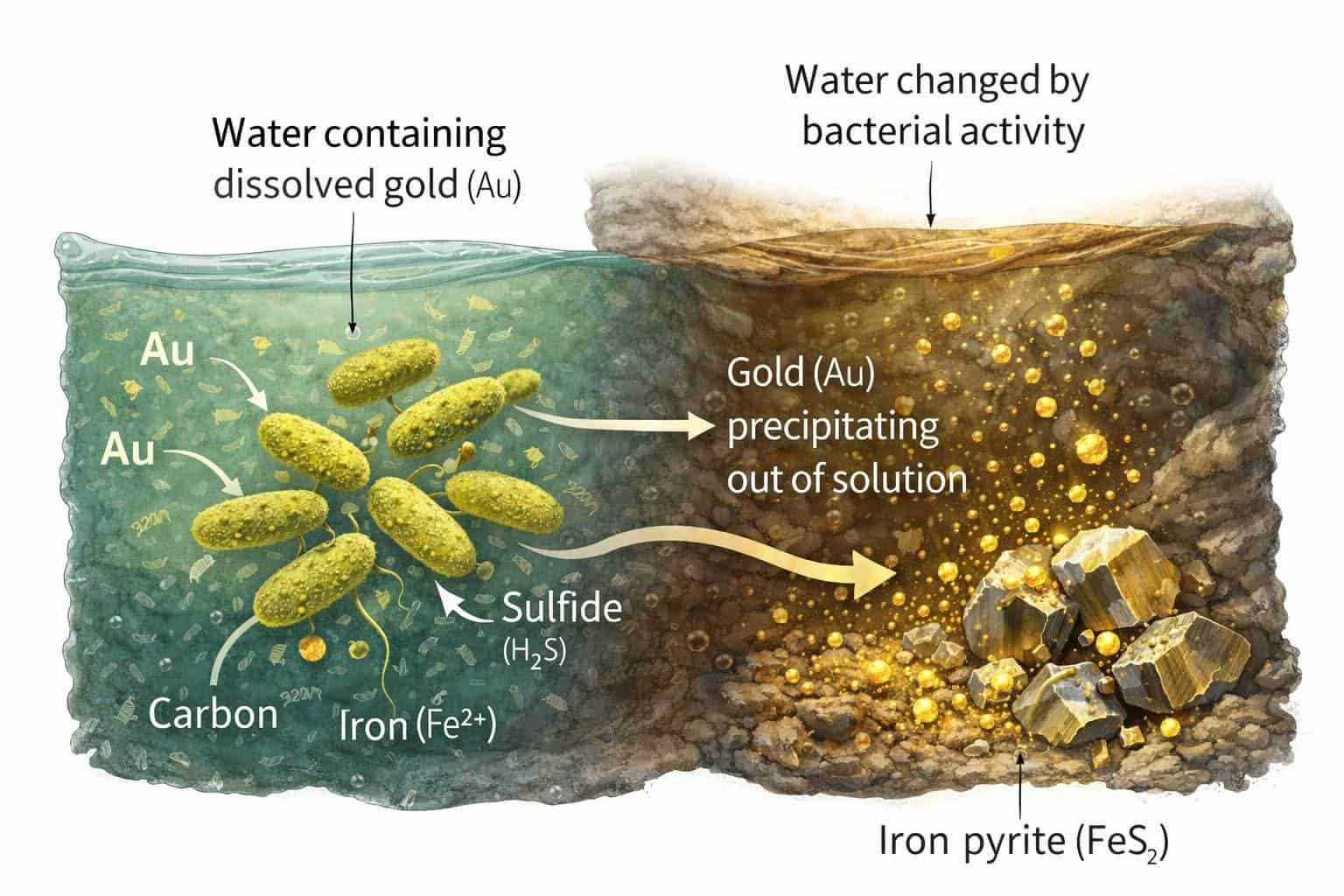
The microbes did not interact with gold directly. Instead, by respiring sulphur and iron compounds for their own survival, they altered the chemistry of underground water, producing sulphide and lowering oxidation potential. Under these conditions, dissolved gold became unstable and precipitated
The bacteria weren’t eating gold — they were running sulphur and iron chemistry to stay alive, and the gold simply dropped out because the water changed.
The gold often attaches to crystals of iron pyrite – or fool’s gold – produced by the bacterial action. That’s why when you see the glittering yellow of fool’s gold on Wits rocks, the chances are there is invisible gold there as well.
* Prof Graeme Addison is known for his informative tours in the Vredefort Dome.
At Caxton, every story is written by humans. We use AI only to perform quality checks - never to generate the news. Happy reading!