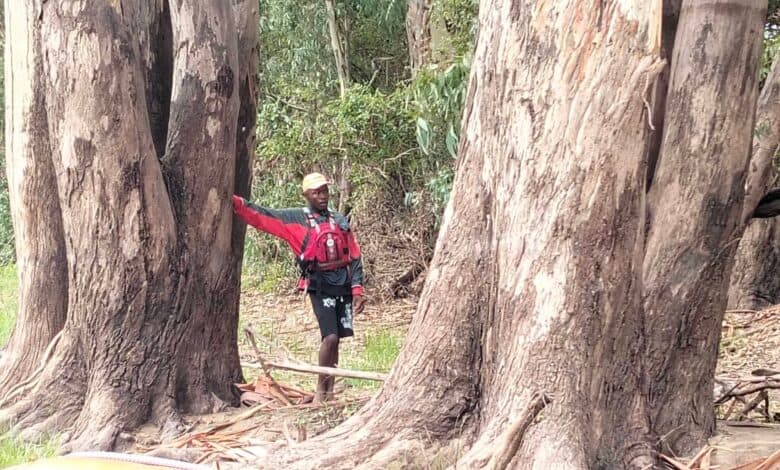
We had stopped for a picnic lunch beneath massive gum trees towering over the Vaal River. As the paddlers enjoyed their tuna salad and fruit juices I mentioned that these riverside giants came from Australia and were now widespread in South Africa.
Originally, gum trees with their straight, strong fast growing trunks were needed for mine props underground in the gold mines of the Witwatersrand. They were then planted in dense clumps as windbreaks, and soon formed part of the timber plantation industry providing firewood and building materials.
But these giants, the red gums, are particularly fond of sandy beaches alongside waterways. The specimems where we stopped were at least a century old and has withstood countless floods.
Their proper name is Eucalyptus camaldulensis, the river red gum, a species native to Australia where it lines great inland rivers such as the Murray River and the Darling River.
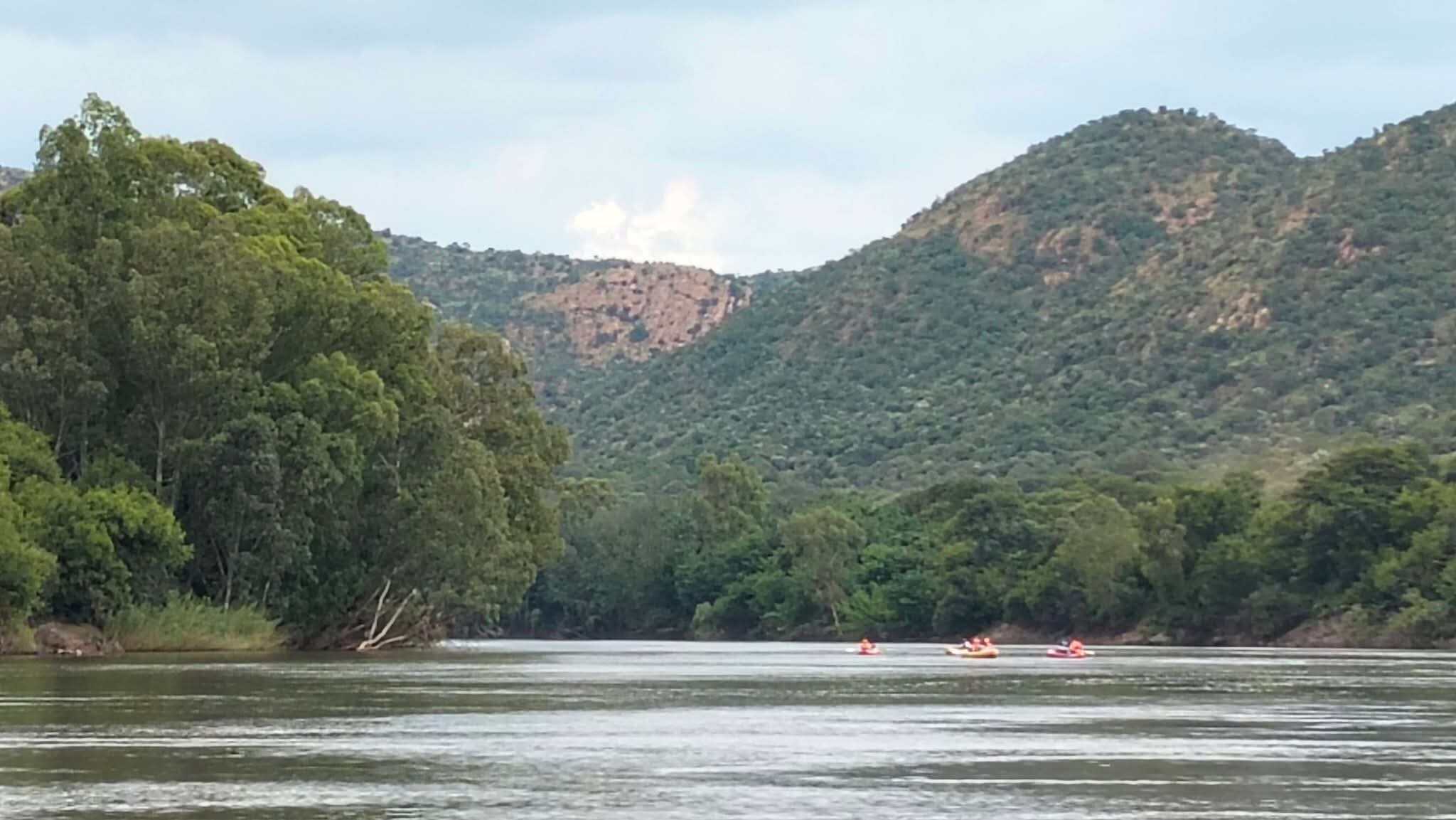
Our party had paddled and floated about five lazy kilometres downstream on the Vaal river where it reaches through the first, mountainous ring of the mighty Vredefort Dome impact crater in South Africa. This is the Dome Drift, one day or two, in the heart of the country.
In the nineteenth century the British Empire quietly linked landscapes as well as peoples. Engineers, miners and prospectors moved easily between its colonies, carrying knowledge, seeds and practical technologies with them.
When the diamond and gold rushes transformed South Africa in the late 1800s, experienced miners from Australia arrived with the techniques that had already been tested in their own goldfields. Among the many ideas that travelled with them was the planting of fast-growing eucalyptus trees.
The mines demanded enormous quantities of timber to support underground tunnels, and local forests simply could not supply the straight poles required. Gum trees grew quickly, shot up tall and straight, and could be harvested repeatedly because the stumps sprouted new shoots.
Before long these Australian trees were being planted widely across South Africa. Farmers valued them as windbreaks. Railways and mines used them for poles and fuelwood. Forestry companies planted them in vast stands as part of a growing timber industry. And along rivers they found a home that suited them perfectly.
River red gums thrive where their roots can reach deep water and where seasonal floods spread fresh sand and silt along the banks.
So from the Murray and the Darling in Australia to the Vaal River, the Wilge River and many other South African waterways, the species settled in and spread.
Today these trees feel almost like part of the landscape. They tower above campsites, shade fishermen and paddlers, and host birds such as fish eagles and herons.
Yet their story is complicated. Because they draw heavily on groundwater and spread easily along rivers, gum trees are not indigenous and can disrupt natural ecosystems when they grow too densely. In many places conservationists try to limit their spread.
Even so, after more than a century in the country, these red river gums have acquired something like honorary citizenship. They are foreigners that have settled in, familiar presences in the South African countryside even if they arrived from far away.
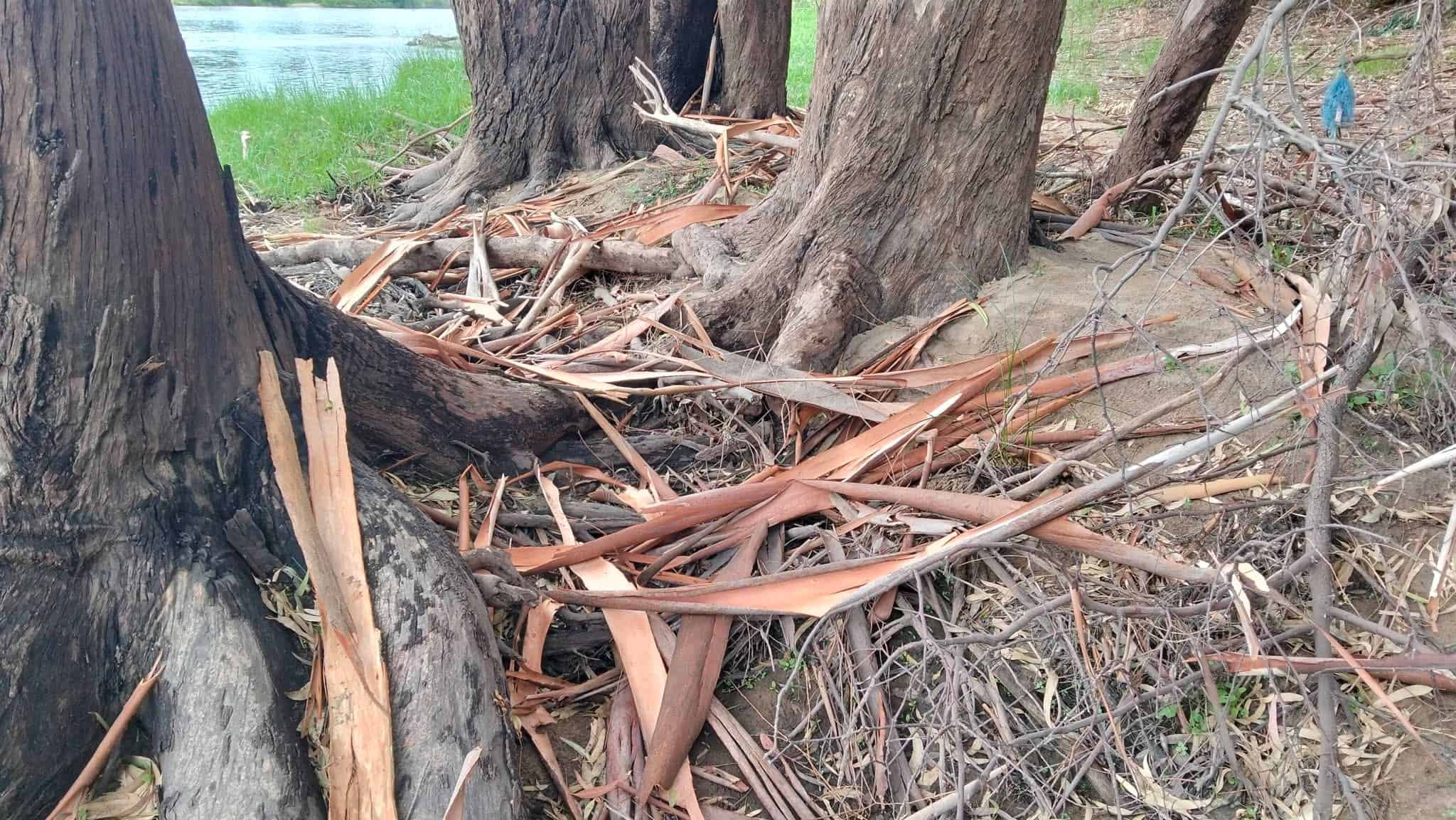
Their smooth bark peels away in long reddish ribbons that scatter the ground beneath them, while the pale trunks show shifting patterns of grey, cream and rust where new bark forms. The roots grip deeply into sandy banks, binding the soil together and helping prevent erosion.
For that reason they often perform a useful service in stabilising riverbanks that would otherwise crumble away.
As we lingered beneath them that afternoon, their tall trunks rising like pillars above the sand, they were doing what they have done for generations: providing shade beside the river.
And they even helped with the lunch. Because we had forgotten to bring spoons, some of the hard curved bark of the red gums was pressed into service to scoop out the tuna salad — imparting a faint, slightly pleasant taste to the food.