
Before you take that snake home
It seems reasonable to assume that once you have paid, it is legally yours. It may not.
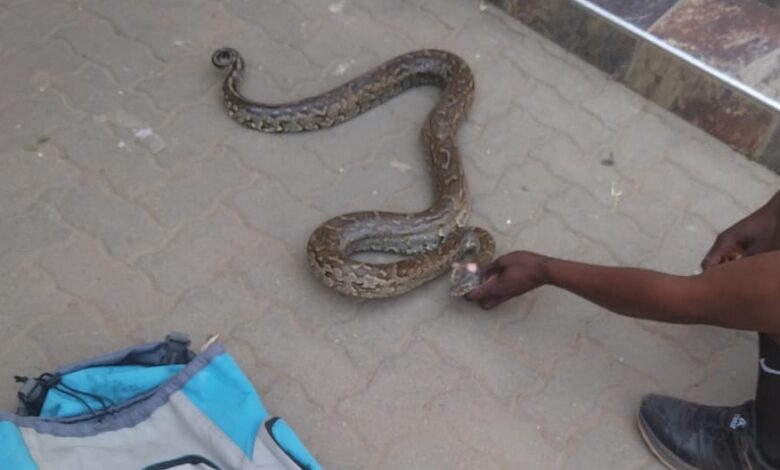
You pause beside a glass enclosure in a Gauteng pet shop. A small snake lies curled beneath its shelter. It looks harmless and, perhaps, even a little cute. The shop assistant explains what it eats, how large it will grow, and which enclosure it needs. The snake is openly advertised for sale, so it seems reasonable to assume that once you have paid, it is legally yours. It may not.
Seeing an animal for sale in a shop does not necessarily mean that you may legally possess it after purchase. The shop may have permission to keep or trade the animal, but its permit does not become yours. As the buyer, you must make sure that you may keep the species and that
the correct paperwork is in place before you take it home.
The Name Matters
Snake, lizard, or spider is not enough information. Ask for the animal’s common and scientific
name. The exact species determines which provincial and national laws apply and whether
documents required under the Convention on International Trade in Endangered Species of
Wild Fauna and Flora, better known as CITES, are needed.
In the Free State, African Rock Pythons, indigenous chameleons, girdled lizards, and indigenous land tortoises are examples of protected animals for which permits are required. Mallard Ducks and exotic tortoises, turtles, and terrapins also appear on the provincial list of regulated exotic animals.
Some indigenous baboon spiders are protected too, so anyone buying a tarantula or baboon spider should first confirm its scientific name and legal status.
The same caution applies to animals we sometimes discuss as though they are ordinary pets.
A meerkat remains an indigenous wild animal, no matter how tame it becomes. An Egyptian
Goose remains a wild bird.
A myna does not become a domestic pet simply because it is common or regarded as invasive.
Then there are animals such as peacocks, emus, exotic ducks, chinchillas, snakes, and smaller lizards. Some have been kept on South African properties for generations, which makes them seem no different from chickens, dogs, or cats. Their legal status, however, depends on the species, where it came from, and what you plan to do with it.
Never assume that a familiar or popular animal is permit-free.
The Drive Home Changes Things
Now return to the snake in Gauteng. You live in Parys, so taking it home means moving it
across a provincial border. Before the animal leaves Gauteng, the required transport permit must be in place. To bring it into the Free State and keep it in Parys, you also need the applicable import and captivity permits from DESTEA, the Free State environmental authority. A receipt proves that you paid
for the animal. It is not a wildlife permit.
The rules do not disappear when somebody gives you an animal instead of selling it. A free
peacock, tortoise, meerkat, or exotic duck may still require permits. Living on a plot or farm does
not create an exemption either.
A large property, a strong enclosure, and plenty of space may help you care for an animal, but they do not give you an automatic right to keep it.
Other activities may require separate permission. A captivity permit does not necessarily allow you to breed, transport, sell, donate, or release the animal. CITES may add another layer when a listed species has entered the international pet trade. Even a captive-bred animal can require documents proving its legal origin.
Ask before you buy
- Before you pay a deposit or agree to take an animal, contact DESTEA with its scientific name.
- Ask which permits and supporting documents apply to the purchase, transport, import into the
Free State, and captivity. - Do not rely only on a seller’s assurance that everything is legal.
One question before you collect the animal may prevent a difficult situation afterwards. - If you already have a wild animal in your care, please do not keep it as a pet while you
investigate the law. Hand it over to a permitted rehabilitation facility. The rehabilitator can
provide appropriate care and, whenever possible, release it back into the wild. If release is not
possible, the rehabilitator may transfer it to a permitted sanctuary.