DA and FF Plus disagree with J.B. Marks adopted budget
The 2021/2022 budget was adopted during the executive mayor’s State of the City address on the morning of 11 June.
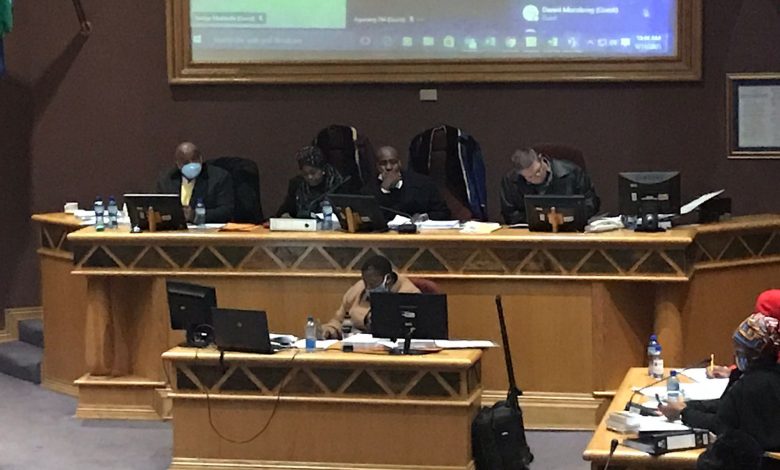
The 2021/2022 budget was adopted during the executive mayor’s State of the City address on the morning of 11 June.
According to Chris Hattingh, the DA constituency head in J.B. Marks, the R2,191 billion budget has a deficit of R168,260,000.
“J.B. Marks consumers will be confronted with a general six per cent increase in rates and taxes, excluding electricity, where the tariffs will increase by 14,59 per cent.
The capital budget has decreased by 35,43 per cent, compared to the previous financial year and is now R213 million. The operational budget was increased by R89,161 million. The city, already struggling with basic service delivery issues, will, therefore, have to pay more for less,” said Hattingh in a statement.
The executive mayor, Mapule Mathaboge, says she respects the DA’s democratic right to freely express their views but is disappointed that they have chosen to put the true state of affairs to residents.
According to her, the adopted budget, which is fully funded, consists of a deficit that has gone down since the last adopted budget.
“The deficit of the budget is not R160 million as stated in the DA’s statement, but rather R126 million, a drastic improvement from the R267 million in the previous financial year,” she added.
The mayor also highlighted the need to increase tariffs to allow the municipality to render services to the public.
“The increase in electricity tariffs is largely determined by Nersa (National Energy Regulator of SA) and Eskom. It means there is no option but to abide by their increase,” she said.
However, Hattingh notes that the municipality had decided to increase its total electricity tariff by 14,59 per cent and not only the increase in the electricity purchase component. “This has led to the J.B. Marks Municipality being one of the most expensive municipalities in South Africa. The exorbitant electricity tariffs have contributed to the municipality being economically non-competitive, resulting in the lack of new investment and job losses,” he said.
In her speech, Mathaboge outlined the challenges the municipality faces, like the ageing and poorly-maintained water, roads, sewerage and electricity infrastructure. “The budget report goes on to say that R258.5 million has been made available for this challenge.” She stated that the loss of revenue due to illegal connections is unacceptable and was something she wanted to address.
“In addition, there is no indication in the budget or the executive mayor’s budget speech that the repeated annual findings of the auditor-general would be addressed. Neither is there any commitment that the J.B. Marks Municipality would stop its serious contraventions of the Municipal Financial Management Act by taking ‘reasonable steps to prevent and investigate’ unauthorised expenditure (of R840,710,494 for 2020), irregular expenditure (of R2,518,186,162 for 2020) and fruitless and wasteful expenditure (of R78,266,834 for 2020).
“The executive mayor’s silence on financial accountability could be regarded as a green light for the looting spree to continue,” Hattingh warned. This ‘looting spree’ has already seen the arrest of the former executive mayor and two officials, and the suspension of the municipal manager and chief financial officer.
According to Mathaboge, the wasteful, fruitless and irregular spending identified by the AG, valid as the matter might be, was not the focus of the debate for the adoption of the budget. “The DA is welcome to request a debate on this subject matter at any other time. They are well aware of the procedure to be followed for the same to happen,” she said.
She made it clear, that, henceforth, if there are legitimate complaints with credible evidence about either officials or councilors, the same must be looked into and the results made known. She does not want the perception that people who might be guilty of serious allegations are being protected.