‘Low-risk offenders’ eligible for Covid-19 parole
This as the correctional service facilities face overcrowding amid health crisis.
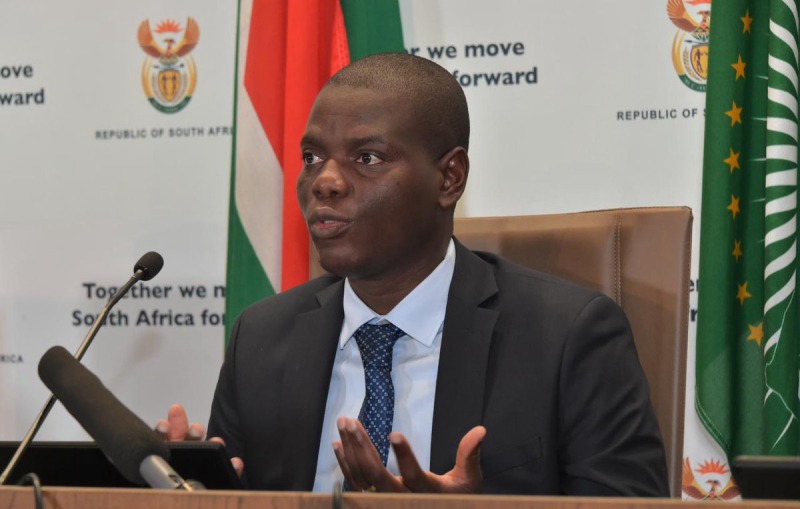
About 19 000 inmates across the country will benefit from conditional parole aimed at easing overcrowded correctional services facilities around the country.
This was according to justice and correctional services minister Ronald Lamola as he briefed the media on the special Covid-19 parole dispensation approved by President Cyril Ramaphosa.
Lamola said inmates that would be considered for parole are those defined by the service as “low-risk” offenders, such as people who committed “petty crimes”.
He said the inmates would have to meet parole board requirements before being released.
Lamola said inmates would be considered on a case-by-case basis.
ALSO READ:Prasa revenue loss due to the lockdown estimated at R199 million
Those who qualify would be placed on parole after all the due processes, including victim-offender dialogues taken place.
He said the country’s correctional services were faced with over-crowding which could contribute greatly to infection levels.
He said he received approval from Ramaphosa to place selected categories of low-risk offenders in the community corrections system.
“Placement on parole will be a decision of the parole boards, the President’s decision only allows that these low-risk offenders be considered for parole by the parole boards.
“It will be done in phases. The most vulnerable, such as those with underlying health problems, elderly (aged above 60 years) and female offenders with infants, will be prioritised,” he said.
The department has confirmed 172 cases.
Lamola said increased levels of infection in overcrowded correctional services made it difficult for physical distancing to take place and it would overwhelm the country’s health system.
ALSO READ:Tshwane Police officer tests positive for Covid-19
“We have a high percentage of overcrowding which currently stands at 32.58%.
“We have a total of 157 208 inmates, whereas our accommodation capacity is 118 572.
“This number includes a total of 56 536 inmates who are in remand detention. This means our accommodation capacity is exceeded by 38 636 inmates,” he said.
Excluded from the remission of sentence process are inmates who were serving sentences for sexual offences, child abuse, murder, attempted murder, armed robbery, sedition, high treason, sabotage, terrorism, offenders declared as dangerous, offenders sentenced to life imprisonment, violations under the Domestic Violence Act, any escaped/absconded inmate who evaded the justice system after being released on bail pending appearance and was still at large on 16 December 2019, those certified as mentally ill and detained under the Mental Health Act of 2002 (Act 17 of 2002).
ALSO READ:18 318 arrests made in KZN in the past two months
He said inmates will first go through a comprehensive screening process including, but not limited to taking off their fingerprints and DNA samples by the SAPS and soliciting inputs from departmental social workers and criminologists, which is a critical criterion for placement on parole.
Lamola said petty crimes were difficult to define; however, he said the process will consider one’s eligibility for parole.
He added that inmates in prisons with low overcrowding percentages will also be considered for parole.
“It is imperative to inform South Africans that of the 14 647 inmates who were released, 99% have not violated their parole conditions.
“It is only a fraction that undermined our efforts and re-offended, they are 50 in total. The law has already dealt with them expeditiously and harshly.”
Lamola said this was to be done to allow space for transfers within the provinces.
Notice: Coronavirus reporting at Caxton Local Media aims to combat fake news.
Dear reader,
As your local news provider, we have the duty of keeping you factually informed on Covid-19 developments. As you may have noticed, mis- and disinformation (also known as “fake news”) is circulating online. Caxton Local Media is determined to filter through the masses of information doing the rounds and to separate truth from untruth in order to keep you adequately informed. Local newsrooms follow a strict pre-publication fact-checking protocol. A national task team has been established to assist in bringing you credible news reports on Covid-19.
Readers with any comments or queries may contact National Group Editor Irma Green (irma@caxton.co.za) or Legal Adviser Helene Eloff (helene@caxton.co.za).
Do you have more information about the story? Please send us an email to editorial@rekord.co.za or phone us on 083 625 4114.
For free breaking and community news, visit Rekord’s websites:
For more news and interesting articles, like Rekord on Facebook, follow us on Twitter or Instagram