Aid needed to alleviate plastic pollution
After its short useful life, plastic embarks on an endless breaking -own process, forming indestructible micro- and nano-particles while releasing endocrine disrupters and other dangerous toxins added in the manufacturing process.
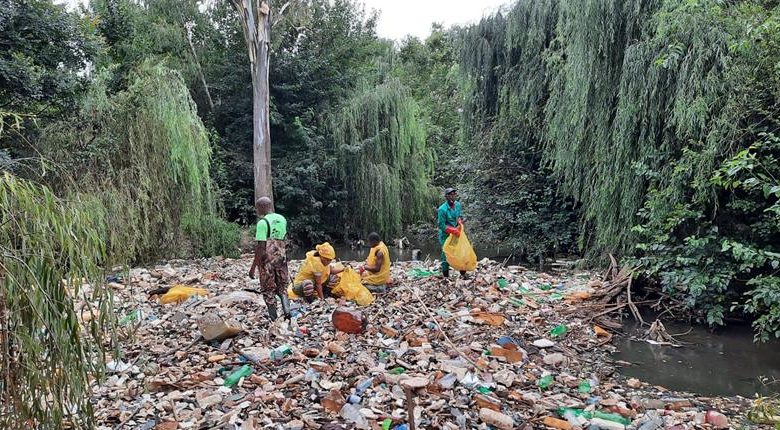
Much help is needed to clean up the massive amount of polystyrene and plastic polluting the banks of the Hennops River before it gets worse and flows into other rivers and lakes, a local NGO says.
“We would like to help organise a joint operation between the SA National Defence Force and special forces on the one side and the Tshwane metro council and private land-owners on the other side,” Fresh NGO’s Willem Snyman said.
“It needs to be done as soon as possible because large floods are expected, which might take it all down.”
This comes amid ongoing rains throughout the city which had even led to flooding in parts of the city, including Centurion.
Snyman said the “gigantic quantity” of plastic, which had accumulated over time, has since formed “large islands”.
“It threatens to engulf the new Crocodile River Reserve downstream, harbouring the last critical bio-diversity,” he said.
From there, the plastics could be swept further downstream into the Hartebeespoortdam.
READ MORE: Man’s body recovered in river near Bronkhorstspruit
At the dam, he said it would form a massive health risk in the irrigation scheme, poison the water and bio-accumulate in the environment while micro-particles would be taken up by food crops which could absorb them.
“In these islands, one sees the origins of the enormous plastic pollution in the oceans,” Snyman said.
He said the problem was unfortunately not that unique as most rivers throughout the world experienced the same problems, including harbours, beaches and seas.
He also discouraged people from consuming plastic, explaining that it posed a “huge health risk”.
“After its short useful life, plastic embarks on an endless breaking -own process, forming indestructible micro- and nano-particles while releasing endocrine disrupters and other dangerous toxins added in the manufacturing process,” Snyman said.
“They turn into micro-plastics, near immortal particles, which can last for 500 years.”
Snyman further noted that the current situation with the “islands” appeared to be deliberate as they had allegedly been dislodged.
“This either happened by natural forces – or by intent as there had been complaints last year that someone had been cutting down the trees holding it up.”
Though this worked against efforts aimed at cleaning the river and decreasing the pollution, a clean-up operation last week saw a temporary trap being put into place.
Do you have more information about the story?
Please send us an email to editorial@rekord.co.za or phone us on 083 625 4114.
For free breaking and community news, visit Rekord’s websites: Rekord East
For more news and interesting articles, like Rekord on Facebook, follow us on Twitter or Instagram