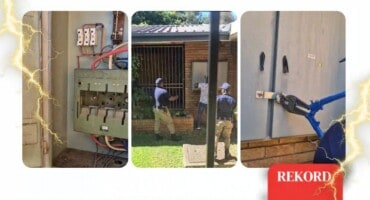
Tshwane discovers meter tampering as meter readers hit streets after billing irregularities
The Tshwane metro will hold operations across Tshwane, specifically targeting accounts and their owners to combat meter tampering.
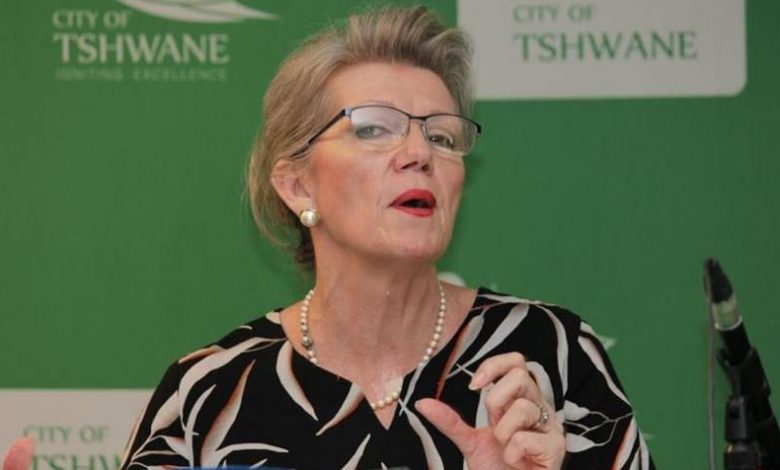
The Tshwane metro said this week it would take action against people who illegally tamper with prepaid electricity meters.
“A multidisciplinary team is setting up a major programme to target identified accounts and take action against them,” said utility services and regional operations and coordination Phillip Nel.
The team includes the energy and electricity department, group financial services, the Tshwane metro police and the metro’s legal team.
This announcement came after the metro said it would ensure that it did regular meter readings after it was instructed to do so by the public protector, who found water and electricity billing irregularities.
“Meter tampering has been picked up in areas across the metro. It occurs when individuals try to bridge meters.”
He said the metro had identified various instances where prepaid electricity meters had been tampered with across Tshwane.
Nel said a strategic plan was underway, after a recent investigation into the revenue from prepaid electricity meters.
He said the objective was to identify meters that were either not vending at all (not buying electricity) or were in the so-called “low-buy” category.
In the “low-buy” category, consumers would buy a much smaller amount of electricity units than estimated minimum usage would account for.
This category was tricky to investigate because in some cases consumers genuinely were just buying very little electricity.
“In many other cases, users have breached the meter and then buy a small number of units regularly to avoid falling into the “no-buy” category.”
The metro’s investigation found several accounts where the prepaid meters fell into the “no-buy” or “low-buy” category.
“We cannot and will not allow the continued theft of electricity and the consequent loss of metro revenue that is critical to maintaining sustainable service delivery.
“This theft impacts all residents and harms every resident by stealing from the money meant to service their areas.”
He said the metro would hold operations across Tshwane, specifically targeting accounts and their owners to combat meter tampering.
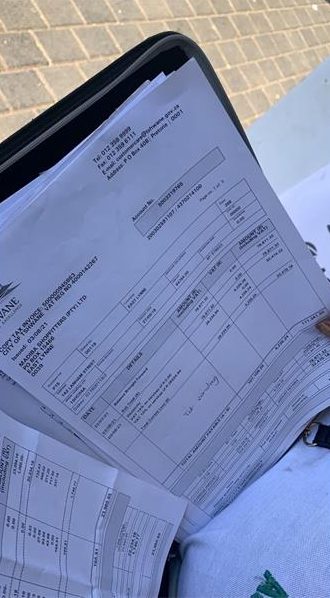
Finance MMC Mare-Lise Fourie said these investigations came after the metro has significantly improved its billing accuracy through extensive meter readings.
Public Protector advocate Busisiwe Mkhwebane recently instructed acting city manager Mmaseabata Mutlaneng to implement remedial action on the metro’s billing system within 60 days.
Mkhwebane received a string of complaints that the metro billed consumers irregularly for water and electricity because those bills were based on estimated consumption instead of regular meter readings.
“We found that it was partly true that the metro billed consumers irregularly for water and electricity based on estimated consumption due to its failure to take meter readings regularly,” said Mkhwebane.
According to her, investigations revealed that the metro employed its own meter readers and engaged private service providers to read meters when there was a budget.
She said due to budgetary constraints, the metro had not approved private meter readings.
“Standard electricity bylaws of 2013 permit the metro to bill consumers based on estimated consumption. The national rationalised specification requires that meters be read at least once every three months. But evidence gathered and also confirmed by the metro indicated that, in some cases, it estimated meter readings beyond a period of three months.
Fourie said the challenges of estimations on customers’ utility accounts, led to some customers disputing their account balances.
She said the Group Financial Services in the beginning of the year, committed to address and improve the reading of meters in Tshwane.
“We can therefore report that there has been a significant improvement in the meter reading performance of the metro.
“The meter reading performance and resultant billing of accounts based on actual readings have improved from 27% since we took office to 85% for September 2021, with a total of 548 568 actual readings recorded,” Fourie said.
“Meter readings in some areas have even reached 99%, in areas such as Soshanguve and Bronkhorstspruit.
“Our aim remains to ensure that account statements reflect actual readings as much as possible and that customers can place reliance on the accuracy of accounts.”
Fourie said there were, however, specific challenges that remained as meter readers faced intimidation by community members, locked gates and protest actions.
“We plead with community members to work with us to ensure that we can read as many meters as possible.”
Do you have more information about the story?
Please send us an email to editorial@rekord.co.za or phone us on 083 625 4114.
For free breaking and community news, visit Rekord’s websites: Rekord East
For more news and interesting articles, like Rekord on Facebook, follow us on Twitter or Instagram