Police educate their own on mental health
“We are well aware of the risk at hand in terms of your mental health and that’s why it is important to prioritise your well-being. Your day-to-day enforcement duties often put you in potentially unsafe situations, as well as expose you to traumatic sessions.”
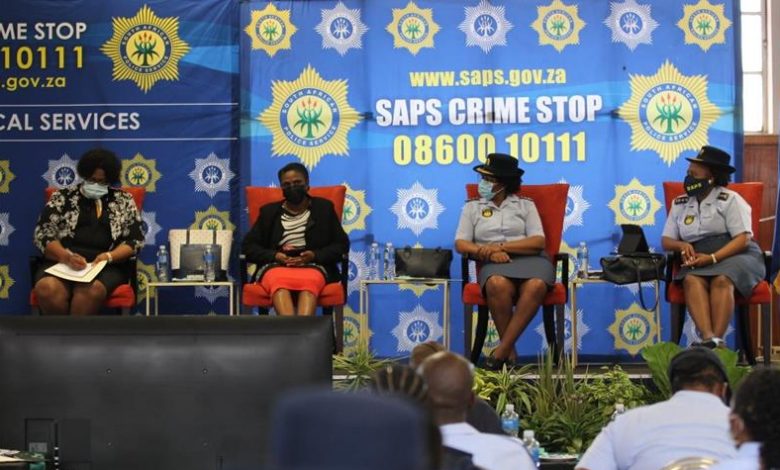
To assist with mental and physical health of law enforcement, the South African Police Service Employee Health and Wellness component held a two-day Mental Health Summit for its employees at the Tshwane SAPS Academy in Pretoria.
The Employee Health and Wellness (EHW) is a component within the SAPS and employs experts in four support professions including chaplains, psychological service staff, social work services and occupational health practitioners.
It currently boasts 604 practitioners nationwide and its services are available 24 hours a day, seven days a week for members.
Spokesperson Colonel Athlenda Mathe said the summit, held last week came at the back of many police members, especially those in the operational environment, who experienced work-related stress, daily, from responding to extremely traumatic incidents such as vehicle crashes, murders and other violent crimes.
“These incidents can affect employees’ mental and physical health, often leading to post-traumatic stress symptoms, depression and suicide.”
Mathe said the summit saw senior managers and employees from operational units and police stations in and around Gauteng as well as key stakeholders such as medical aid partners, Polmed and GEMS, the Criminal Justice System (CJS), NGOs with interest in trauma management and other government departments come together.
She said the summit was aimed at creating a platform for sharing best practices and increasing awareness around mental health issues as well as reducing mental health stigma through education.
She said the summit was further used to advocate for benefits for those members suffering from post-traumatic stress and other mental-ills.
Mathe said to mitigate incidents such as depression and suicide, the SAPS had also implemented several programmes and effective prevention strategies such as the Mental Health and Suicide Management Strategy.
“The key focus areas of this strategy are psychological assessments and evaluations; mental health risk assessments and mitigation; mental health stakeholder engagement and management; SAPS employee empowerment and resilience building through workplace programmes,” Mathe said.
She said the summit also ensured that SAPS employees were also empowered on how to cope with stress and how to access services offered to them by internal and external mental healthcare providers.
“By assisting employees in their search for coping and dealing with stressful situations, and to bring about awareness on suicide and mental health issues, the SAPS aims to intensify its efforts to reach out to both members and their immediate family members.
“SAPS will do this by offering more programmes targeting mental health issues such as depression and bipolar programmes, events that lead to or trigger multiple stressors in an individual, suicide prevention, debriefing services and counselling.”
Constable Malebo Sefala stationed at Tembisa SAPS said the two-day summit was really helpful and would assist her to cope with day-to-day challenges in the workplace.
“This session is helpful because I attend many traumatic scenes and this session has assisted me with advice and how to react and face challenges around the working environment.”
Lieutenant-Colonel Hezekial Motha, a forensic analyst based at the Forensic Sciences Laboratory in Pretoria, also shared his views.
“In my field, I am exposed daily to traumatic scenes. I advise every police officer to seek help through our Employee Health and Wellness (EHW) unit and attend debriefing sessions.”
Deputy National Commissioner (DNC) responsible for support services, Lieutenant-General Franscinah Vuma urged all to attend debriefing sessions regularly to ensure that police officers were always mentally ready to respond to incidents.
“We are well aware of the risk at hand in terms of your mental health and that’s why it is important to prioritise your well-being. Your day-to-day enforcement duties often put you in potentially unsafe situations, as well as expose you to traumatic sessions.
“We know that you are trained to see yourselves as problem solvers, not people with problems but we are here as management to remind you that, you are also human. We plead with you to attend the debriefing sessions regularly or to use your medical aid to seek external help.
“We will be meeting with all commanders regularly to equip them with the knowledge that will assist them as well as their members in curbing mental illness,” concluded Vuma.
Do you have more information about the story?
Please send us an email to editorial@rekord.co.za or phone us on 083 625 4114.
For free breaking and community news, visit Rekord’s websites: Rekord East
For more news and interesting articles, like Rekord on Facebook, follow us on Twitter or Instagram