Undocumented residents at Plastic View to be dealt with – MMC Abel Tau
Giving an update on the relocation of two informal settlements in the east of Pretoria, MMC for human settlements, Abel Tau said home affair’s immigration would be called in to deal with undocumented residents.

Undocumented immigrants living at the controversial Plastic View and Cemetery View informal settlements in the east of Pretoria will be deported per immigration laws.
This was according to human settlement MMC Abel Tau, who was speaking at a community meeting held a week ago, giving feedback on the relocation of the two informal settlements.
Only 30% of people living there will be relocated to the new planned “formal” townships only a short distance away.
Indications were that most residents would remain at the squatter camps because they are mostly foreign nationals.
Tau told residents that those found to be breaking immigration laws would be dealt with by existing laws.
“We are bringing home affair’s immigration in to deal with the violation of immigration laws,” he said, adding that Tshwane had signed a memorandum of understanding with the Department of Home Affairs.
“Our role is to make sure that we count the shacks and make a list of the people living there.
“Once we have verified the number of people who qualify for fully-subsidised housing. If, for example, 20% qualify we will move them to allocated areas. Then, immigration will have to deal with the immigration problem assisted by the metro’s community safety department.”
ALSO READ: Veggie garden gives hope to women of Cemetery View

Tau said this could only be done once the planned Pretorius Park extension 40 township development was completed.
He said while the metro had the obligation to provide housing for those in need, the country still had laws for which punishments should be handed down if they are broken.
“If you break immigration laws, you have broken the law. Therefore, you need to be processed according to existing laws,” he said.
“We did the same thing in Orchards 110 where we relocated informal settlements. We brought in immigration during the relocation.”
In 2008, the Pretoria high court made a list of orders to the Tshwane metro aimed at the relocation or formalisation of the settlement.
Until then, the metro was ordered to, among others, supply basic needs to the residents, such as water and sanitation as well as waste management services.
The metro was also ordered to control the growth of the settlement as well as ensure access control.
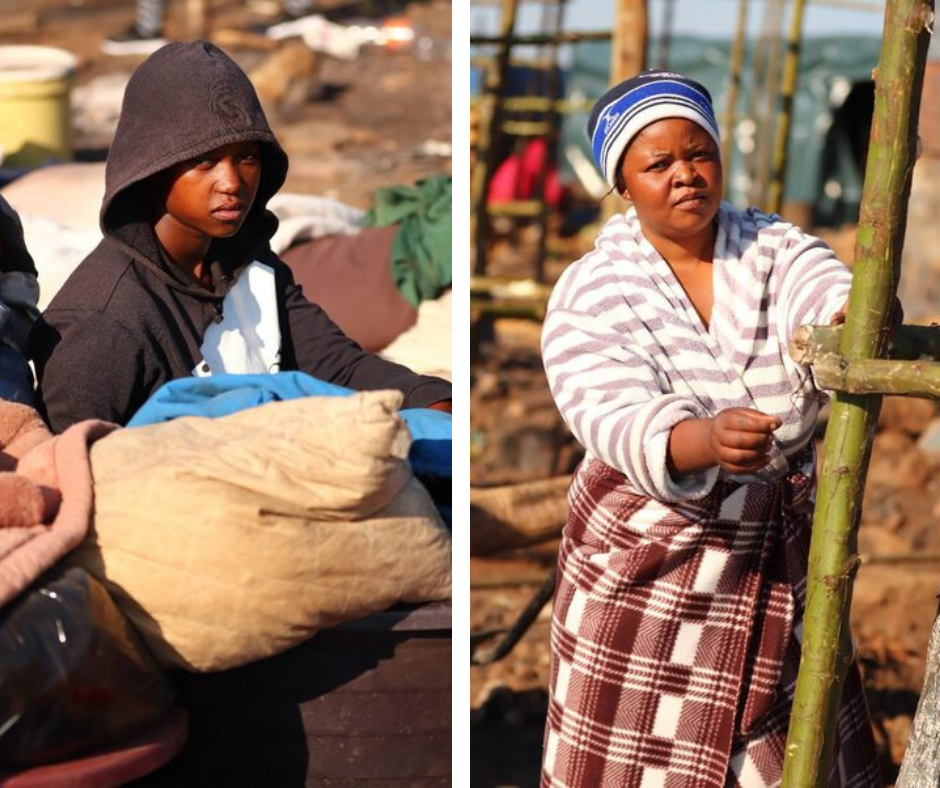
Despite this, the informal settlement has continued to grow and some blamed this on the metro’s failure to adhere to the court orders.
“There are now fivefold shacks, nothing is going to happen,” said Johan Booysen of the Hillside estate, who has been involved in the court proceedings since the inception of the battle.
“As long as the municipality fails to implement the court orders as well as access control to put up a wall or a fence, which the court told you to do, not asked you to do, this problem will never be solved.”
Booysen said there were 15 000 people at the informal settlement, some of whom set up new shacks.
He said this meant when one group was relocated, another will stay behind, leaving the metro with the same legal dilemma.
Resident Isaac Chauke said the metro was failing everyone – including the people in Plastic View.
“The community of Plastic View is not here [at the meeting]. You might have the leaders, but the community is not here,” Chauke said.
“Look around. You’ve got concerned middle-class people from the estates who filed cases.
“This is something that involves not only them. There are other affected parties whom you should have engaged.
“As long as the metro is not taking this matter with the might that it deserves, we will be here again next year. You will not be able to evict them if you cannot prove that you involved them,” he said.
His comments led to tension among residents as some agreed with him, but others didn’t.
One resident who agreed with Chauke said, “Why are you not inviting the people?
“They are not sub-humans, they are part of the community whether you like it or not. They deserve to be here.”
Screaming then ensued from a group of men, asking if he was a resident and what gave him the right to speak.
One man screamed: “Only those who pay tax can be here.”
Legal matters
Johan Greef, the attorney handling the matter on behalf of the metro, said there have been objections raised by various members of the community and forums to the proposed township application.
“Some of those have been addressed already. Some of them will, once the comment process has been finalised, be referred to the tribunal within the city for those objections to be addressed and heard by the presiding officer who will then make a final decision,” he said.
“If there is a positive decision in favour of the township process, the establishment will then take place; thereafter, the metro will be able to continue with the development of Pretorius Park ext. 40 to allocate those individuals that qualify in terms of the housing act.”
Until that time, the metro was trying to adhere to the court order.
Human rights
University of Pretoria’s Jason Oberholster said the metro was not meeting the minimum provision of water and sanitation to the people of the informal settlements.
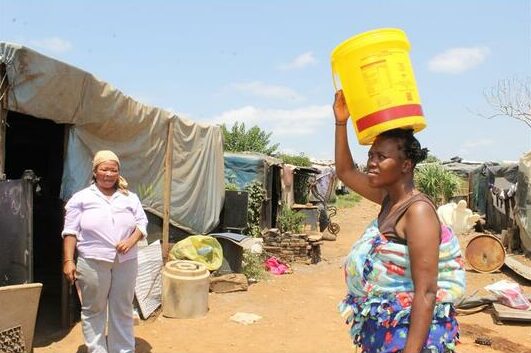
“You guys are providing three JoJo tanks a day, but close to 9 000 people are living there,” he said.
“Twenty-eight litres is the minimum that the metro needs to provide for each person per day. They are providing less than eight litres of water per person per day currently. Twenty toilets are being shared between 9 000 people.”
Sanet Fagan, a women and child activist as well as director for NGO SA Cares for Life, highlighted the need for schooling for the children of the settlements as there were not sufficient English medium schools in the area to address the right to basic education.
Fagan, whose organisation works at the informal settlements, said there are many issues relating to waste management.
“There are no skips currently in Plastic View for waste management,” she said, rebutting the metro’s claim that they provided waste skips for the community.
“We bring in skips and we pay for them.
“I would just like for the truth to be told and the solution to be brought.”
While few residents understood the issue to be a human rights matter, others didn’t seem to care much about the metro’s responsibility, enshrined in the country’s constitution, to provide basic service to the dwellers of the informal settlement.
“If we stop paying for our rates and taxes, will the metro provide us with portable toilets and water?” asked resident Peter Kruger, whose question was followed by applause.
The relocation
Petal Thring, the acting group head for human settlements, said mixed-use development would be established.
In 2014, the shack marking process started and qualifying residents were identified from both Plastic View and Cemetery View.
All people whose shacks were marked were placed on a list.
Only 151 out of 854 people at the two informal settlements qualified for free housing.
“There were only 30% that would possibly meet the criteria for a human settlement subsidy. So we had to think very carefully about the area that needs to be developed,” she said.
“One high-rise development would be done that would accommodate as many people as possible.”
In total 854 units would be built, 500 units were made for rental property that would be part of the development.
“Because there is a high number of people that don’t qualify for fully subsidised housing, we would have to have rentals as well,” she said.
The development would cater for needs such as schools.
Thring said all pre-planning processes and feasibility studies have been completed, including the geotechnical studying, flood line reports and certificates the traffic impact plan as well as the basic environmental report.
She said the next step would be for the economic development and spatial planning department to compile a report to present at the municipal planning tribunal for approval.
“Once the township is approved and the conditions of its establishment are complied with, we will then begin the development.
“At this stage, the project complies with all the legislative requirements. We are looking at an integrated development and social inclusion is very critical to human settlements.”
Security
Over the years the informal settlements have been the scene of many crimes including murders, mob justice and robberies.
Residents at the meeting raised issues around the lack of response to incidents of crime by law enforcement due to a fear of being attacked by informal settlement dwellers.
Some residents questioned how the residents would even be relocated if law enforcement were scared to go into the informal settlement.
While no direct answer was given to this, Deputy Chief for TMPD Rex Mahlaole said a security company was appointed to do access control at the informal settlement and would be monitoring any erected structures.
“What we have done is that we have brought the satellite station closer to Pretorius Park for a quicker response to address most of the issues that are raised here,” he said.
“In addition to that, the city has got service providers in terms of security, which will assist in terms of monitoring the expansion of the buildings.”
Mahlaole said his officers often held operations at the informal settlements where they confiscated liquor and made some arrests. He said getting rid of illegal dumping was also a priority at the settlement which was also getting attention.
He said his officers would now respond to any reported incidents pertaining to by-law infringements and were working closely with forums to respond better.
His promises were not well received by residents who claimed that “the TMPD was simply not interested in following the court order by enforcing by-laws”.
What about other informal settlements? residents asked
While various settlements have been cropping up in the east of Pretoria, settlements such as Wolwespruit in Erasmuskloof, the Graskloof landfill site, and other emerging settlements along Solomon Mahlangu did not form part of the relocation.
ALSO READ: Four injured and hundreds displaced after Cemetery View fire
Do you have more information about the story?
Please send us an email to editorial@rekord.co.za or phone us on 083 625 4114.
For free breaking and community news, visit Rekord’s websites: Rekord East
For more news and interesting articles, like Rekord on Facebook, follow us on Twitter or Instagram