Security guards protest over insourcing, disrupt tabling of Tshwane budget
Protesters accuse the metro of simply hiring 17 new companies to safeguard its infrastructure after terminating the contracts of the previous 17 companies which they worked for.
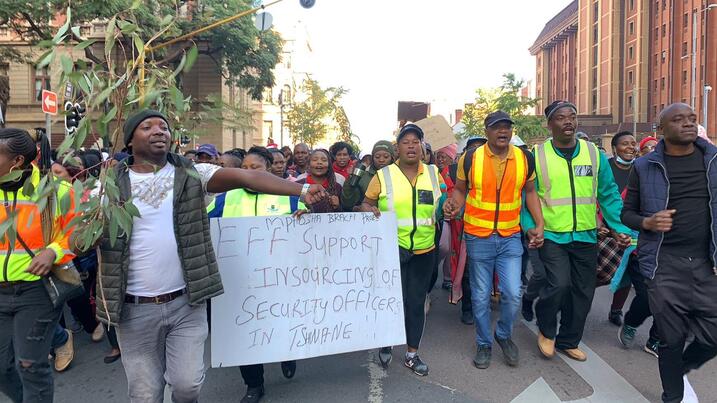
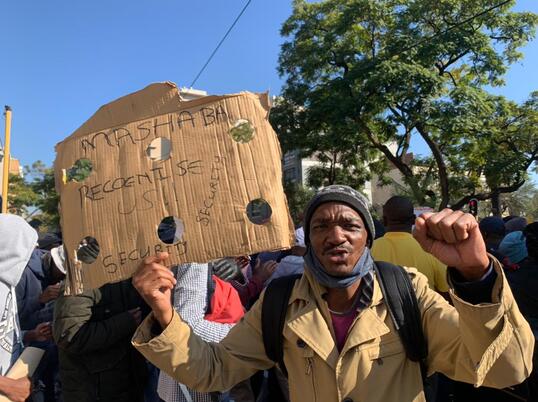
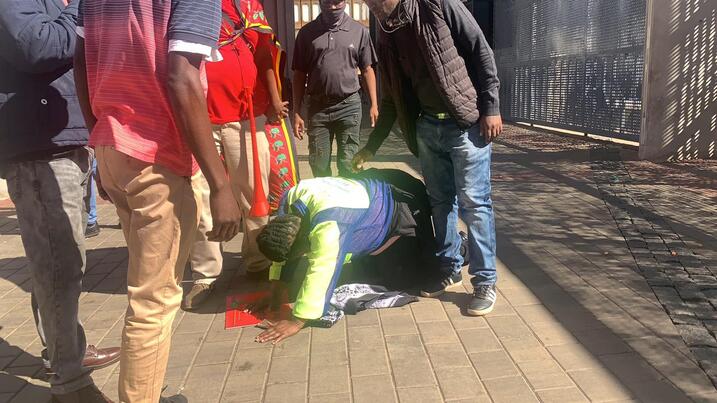
Security guards protested against outsourcing outside Tshwane House in the Pretoria CBD today, hoping to disrupt the tabling of the metro’s 2022/23 budget.
This was as council speaker Murunwa Makwarela was to convene a special sitting where finance MMC Peter Sutton would table the budget speech.
The metro was confident that the new budget will pave the way to better services for Tshwane residents.
Joshua Modau, who spoke on behalf of the security guards, said they were protesting because they wanted mayor Randall Williams “to keep his promise to insource us”.
According to him, the council resolved in 2018 to insource 4 000 security guards in three phases.
Insourcing means directly employing the guards and giving them full medical benefits, pension, etc.
Outsourcing means that the guards only indirectly work for the metro because they are instead working directly for a private company appointed by the metro.
“Phase 1 happened last year and around 1 300 security guards were insourced.”
He said this number was supposed to be 1 500; however, vetting by the metro found that some of the workers due for insourcing had criminal records.
Instead of outsourcing more guards, he accused the metro of hiring 17 new companies to safeguard its infrastructure after terminating the contracts of the previous 17 companies which they worked for.
“It is clear we are not being taken seriously,” said Modau.
He said the groups were tired of pleading with the DA and ActionSA, which used the guards’ issue for electioneering purposes.
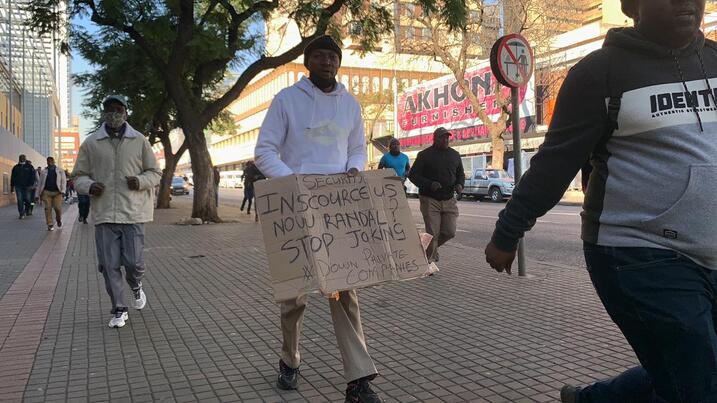
“Through this protest, we are hoping to be heard. For 10 years, we have been working for the metro through outsourcing.”
EFF regional chairperson Obakeng Ramabodu said it was disappointed with the DA-led administration’s intention to reverse the “monumental milestone achieved” in 2019 to insource security guards and cleaners.
“These security guards and cleaners have been subjected to capitalistic exploitation.”
Ramabodu said that only “tenderpreneurs” who were “politically connected to the white minority” benefitted from outsourcing.
Tshwane metro mayoral spokesperson Sipho Stuurman said its insourcing process was paused because it would cost more than R1-billion.
“The metro is not in the financial position to enter into such a commitment at the time,” he said.
He said the metro had completed phase 1 of insourcing workers.
“The all-inclusive cost of that insourcing with the logistics, material requirements and salaries came to approximately R350-million per year.”
Stuurman said due to the high cost and financial implications for the metro, it could finalise phase 1 only.
“We are still working on stabilising the metro’s financial health and sustainability.
“We cannot move towards insourcing until we are in a financially viable position to do so.”
ALSO READ: Stabbed security guard: Woman accused of partner’s murder books herself into psychiatric hospital
Do you have more information about the story?
Please send us an email to editorial@rekord.co.za or phone us on 083 625 4114.
For free breaking and community news, visit Rekord’s websites: Rekord East
For more news and interesting articles, like Rekord on Facebook, follow us on Twitter or Instagram